The Birth of Synthetic Polymers (1907-1938): The Bakelite Revolution
Cellulose Xanthate
The Golden Revolution in Textile History
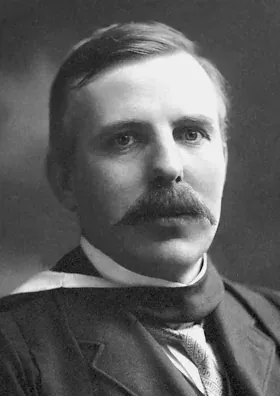
In December 1908, the Nobel committee gave its chemistry prize to a physicist. Ernest Rutherford had spent the previous decade proving that radioactive elements do not simply decay: they transmute, one element quietly becoming another as it throws off particles. It was an odd prize for a man who insisted he was not a chemist, but the committee’s reasoning was sound: nothing in matter, it turned out, was as fixed as it looked. That same year, in Detroit, Henry Ford’s new Model T rolled off the line: not the first automobile, but the first one built to be exactly identical to the next one off the line, at a price a great many more people could afford.
Plate I
.jpg)
Both of those stories share a theme with this one: matter, treated correctly, will change into something else and then hold that new shape reliably, at scale. Nobody in 1908 was celebrating cellulose xanthate specifically (it had already existed as a laboratory reaction for sixteen years by then), but this was the year its own inventors took stock of it in print, in a long review for the Society of Chemical Industry surveying just how far cellulose chemistry had travelled since their original patent. It was also the year the technology began seriously crossing the Atlantic, as the British firm that had licensed it started angling for an American manufacturing foothold. 1908, in other words, is the year this particular transformation stopped being a curiosity and was recognized, on paper, as an industry.
Plate II

.jpg)
A Reaction Sixteen Years in the Making
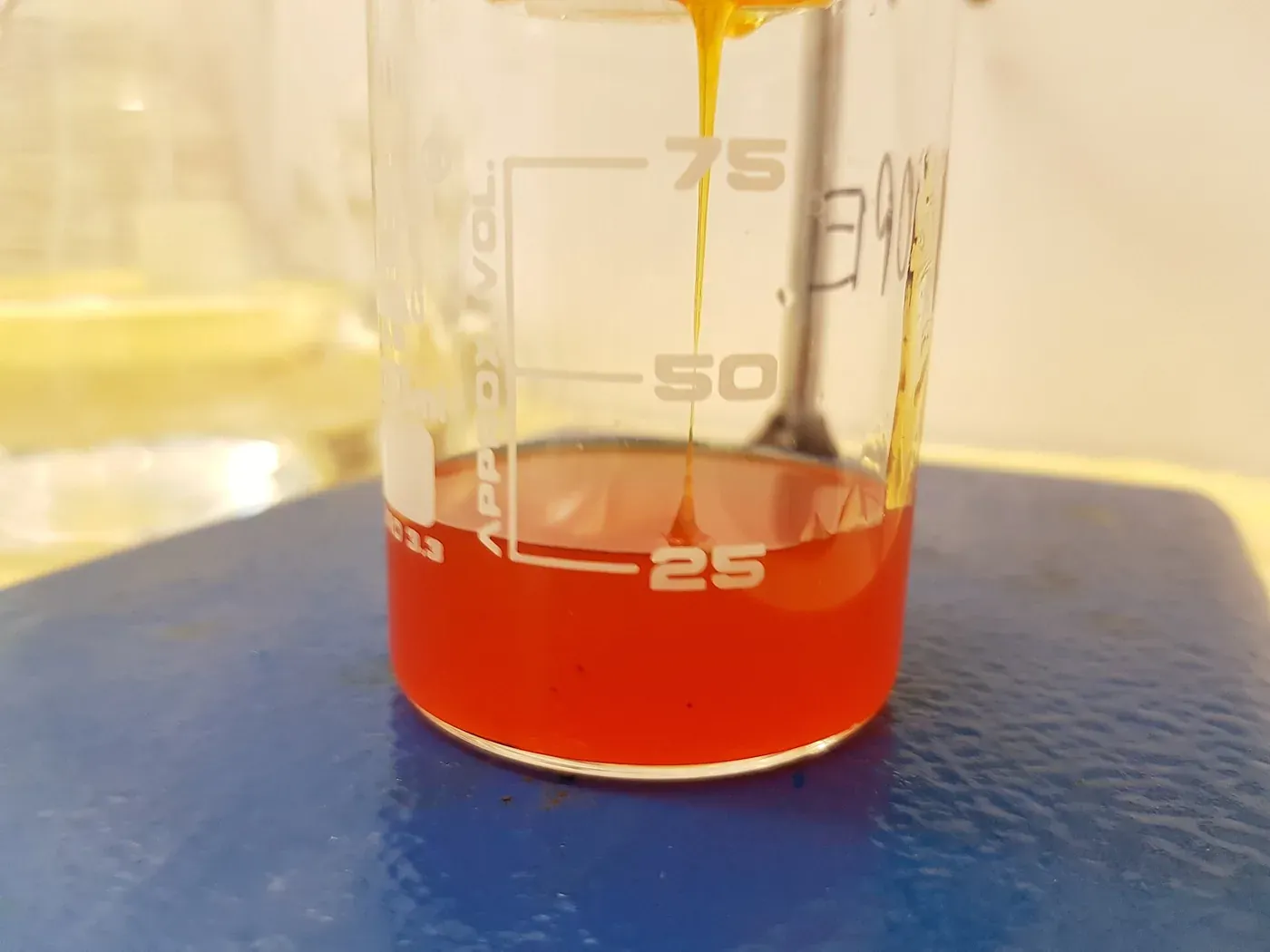
The chemistry itself belongs to 1891 and 1892, not 1908. Three British chemists, Charles Cross, Edward Bevan and Clayton Beadle, found that cellulose pulp, first swollen in sodium hydroxide to make what is called alkali cellulose, would react with carbon disulfide to form a new, soluble compound: sodium cellulose xanthate, a thick, honey-colored, golden-yellow liquid utterly unlike the fibrous solid it started from. They patented the reaction in 1892 and called the resulting spinning solution viscose, after its syrupy consistency. What they had actually done was solve the one problem that had limited every artificial-silk process before theirs: earlier attempts, including Chardonnet’s, worked with nitrocellulose, which is flammable by nature. Xanthation dissolves cellulose without changing what it fundamentally is, so the fiber that comes back out at the far end of the process is just cellulose again: no nitrate groups, no fire risk, only a temporary costume the molecule wears in between.
An Ordinary Molecule in a Borrowed Disguise
Xanthation works by attaching a xanthate group, built from carbon disulfide and the alkali already swelling the fiber, to some of the hydroxyl groups strung along cellulose’s glucose rings. That single substitution is enough: what was an insoluble, densely hydrogen-bonded fiber becomes something that dissolves freely in dilute alkali. The disguise is temporary by design. Once the golden solution is extruded through a spinneret into an acid bath, the acid strips the xanthate groups away as quickly as they were attached, and the cellulose chains recombine into solid filament again (not the same physical arrangement they started with, since a regenerated fiber crystallizes differently than the wood pulp it came from, but chemically identical). Nothing about the finished thread remembers that it was ever dissolved.
Plate III

A Material With No Properties of Its Own
Ask what cellulose xanthate is like as a material and the honest answer is that it barely qualifies as one. It has no density worth recording, no glass transition, no tensile strength, because it is never meant to exist as a solid object; it is a working fluid, mixed, aged, filtered and gone within hours or days of being made. The only property that actually matters is the one that defines it entirely: solubility in dilute alkali, the temporary trait that lets a solid natural fiber travel as a liquid from a mixing vat to a spinneret. Every property a reader might expect from a materials profile (how stiff it is, how it fails under load, how it resists heat) belongs to whatever it becomes afterward: viscose rayon fiber if it is drawn through fine holes, cellophane if it is cast through a flat slit. Cellulose xanthate itself is not a destination. It is the means of travel between one form of cellulose and another.
One Golden Intermediate, Several Finished Products
That in-between status is exactly why this single reaction ended up underwriting more than one industry. Spun through a spinneret into an acid bath, the regenerated cellulose becomes viscose rayon fiber, spooled and woven into fabric. Extruded instead through a flat slit, the same chemistry becomes cellophane, a continuous transparent sheet rather than a thread. Decades later, manufacturers found a third shape for it entirely: forced through a narrow tube and coagulated around a column of ground meat, cellulose xanthate’s regenerated cellulose became the artificial sausage casing that has since largely replaced natural animal gut in industrial food production. One reaction, discovered to solve a fire hazard in artificial silk, ended up supplying a textile industry, a packaging industry, and a corner of the meat industry from the same vat of golden liquid.
Plate IV
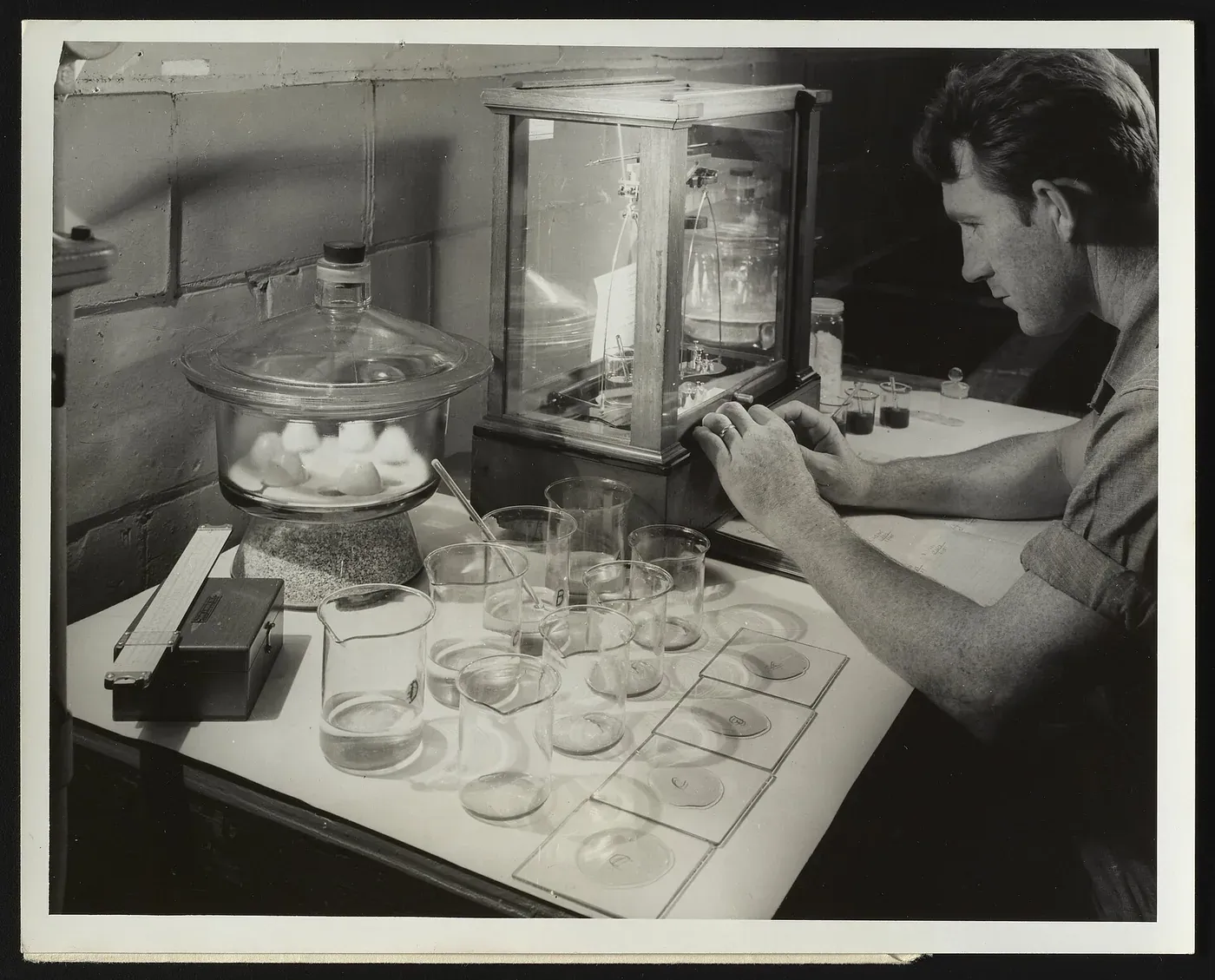

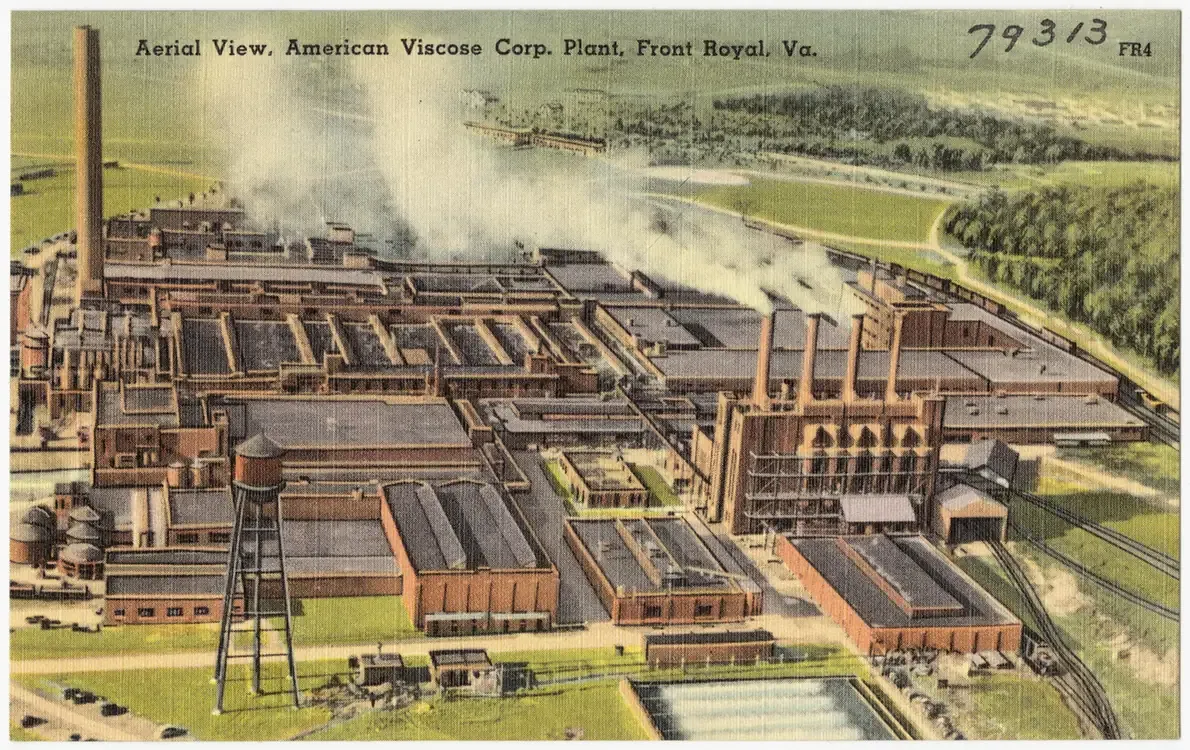
By the middle of the twentieth century, the same chemistry Cross, Bevan and Beadle had reduced to a laboratory review in 1908 was running at a scale none of them could have pictured, in dedicated works built solely around the xanthate reaction and the acid bath that undid it.
Plate V

values with [n] cite the numbered references·estimates are flagged·“not yet available” and “N/A” are honest states, not gaps
- Abbreviation
- —
- Type
- polymer family (hub)
- CAS number
- None (heterogeneous class or not assigned)
- Resin ID code
- none assigned
- Formula
- Sodium cellulose xanthate, [C6H7O2(OH)2(OCS2Na)]n, a soluble derivative of cellulose formed by xanthation, not a distinct polymer synthesized from its own monomers.
- Repeat unit (BigSMILES)
- Sodium cellulose xanthate, [C6H7O2(OH)2(OCS2Na)]n, a soluble derivative of cellulose formed by xanthation, not a distinct polymer synthesized from its own monomers.
- IUPAC name
- —
- Synonyms
- sodium cellulose xanthate; viscose (in solution form)
- Also known as
- sodium cellulose xanthate
- Chemical family
- cellulosic
- Backbone class
- heterochain
- Polymerization mechanism
- natural-biosynthesis
- Constitutional monomer
- D-glucose (as the cellulose precursor)
- Polymer class
- —
- Year of origin
- 1908
- Era
- The Birth of Synthetic Polymers (1907-1938): The Bakelite Revolution
- Key figures
- Charles Frederick Cross · Edward John Bevan · Clayton Beadle
- Polymerization type
- not yet available
- Common monomers (feedstocks)
- not yet available
- Catalysts
- carbon disulfide (xanthation agent)
Alkali cellulose (cellulose pulp treated with aqueous sodium hydroxide) is reacted with carbon disulfide to form soluble sodium cellulose xanthate, which dissolves in dilute NaOH to give the 'viscose' spinning solution. The xanthate is the key soluble intermediate later regenerated into viscose rayon fiber (by acid coagulation) or cast into cellophane film. Patented by Charles Cross, Edward Bevan, and Clayton Beadle in 1892.
- Tacticity
- not yet available
- Crystal structure
- not yet available
- Typical crystallinity
- Not applicableExists in solution as the viscose spinning dope; crystallinity is a property of the regenerated fiber/film, not the xanthate intermediate itself.
Molecular weight
- Number average (Mn)
- not yet available
- Mass average (Mw)
- not yet available
- Dispersity (Mw/Mn)
- not yet available
Mark-Houwink constants
not yet available
- Density
- not yet available
- Melt flow index
- Not applicable
- Refractive index
- not yet available
- Transmittance
- not yet available
- Haze
- not yet available
- Gloss
- not yet available
- Water absorption
- not yet available
- Dielectric constant
- not yet available
- Dielectric strength
- not yet available
- Electrical conductivity
- not yet available
- Glass transition (Tg)
- Not applicable
- Melting temperature (Tm)
- Not applicable
- Crystallization (Tc)
- Not applicable
- Heat deflection (HDT)
- Not applicable
- Decomposition onset
- not yet available
- Thermal conductivity
- Not applicable
- Tensile modulus
- Not applicable
- Yield strength
- Not applicable
- Tensile strength at break
- not yet available
- Elongation at break
- Not applicable
- Impact strength (Izod)
- Not applicable
- Impact strength (Charpy)
- Not applicable
- Hardness
- Not applicable
- Flexural modulus
- Not applicable
- Poisson's ratio
- not yet available
- Coefficient of friction
- not yet available
- Solvent: dilute_sodium_hydroxide
- Soluble (forms the viscose spinning solution)[1]
- Weathering / UV
- Not applicable
- Hydrolysis resistance
- Not applicable
- Flammability (UL94)
- Not applicable
- Limiting oxygen index
- not yet available
- Solubility parameter (δ)
- not yet available
Gas permeability
not yet available
Polymer-solvent interaction parameter (χ)
not yet available
- Processing methods
- xanthationwet spinning (as viscose)film casting (as cellophane precursor)
- Drying required
- not yet determined
- Processing temperature
- Not applicable
- Shrinkage rate
- Not applicable
- Textilessoluble intermediate for viscose rayon fiber spinning
- Filmsoluble intermediate for cellophane casting
- Recyclable
- No
- Biodegradable
- Yes
- Degradation pathway
- Regenerates to biodegradable cellulose once processed into fiber/film.
The xanthation step uses carbon disulfide, a hazardous reagent with real occupational/environmental concerns distinct from the biodegradability of the final regenerated cellulose product.
- LD50 (oral, rat)
- not yet available
- NFPA health
- not yet available
- NFPA flammability
- not yet available
- NFPA reactivity
- not yet available
- Carcinogenic classification
- not yet available
- [1]ViscoseWikipediaAccessed 2026-07-14https://en.wikipedia.org/wiki/Viscose[wiki-viscose]
Illustrations
- Plate IErnest Rutherford, photographed around the time of his 1908 Nobel Prize in Chemistry, awarded for showing that one element could transmute into another.Wikimedia Commons
- Plate IIA 1909 Ford Model T: proof, the same year cellulose chemists were taking stock of their own process, that identical, affordable, mass-produced objects were now possible.Wikimedia Commons
- Plate IIICellulose xanthate dissolved in dilute alkali (the 'viscose dope'), photographed mid-pour. This golden, honey-thick liquid is the entire process in one image.Wikimedia Commons
- Plate IVA technician at the Hercules Powder Company plant in Hopewell, Virginia, checking the composition of viscose solutions in 1951: the same quality-control step every batch of cellulose xanthate had to pass before it could be spun.Wikimedia Commons
- Plate VThe American Viscose Corporation's works at Front Royal, Virginia, in a mid-century postcard: one of several purpose-built plants that scaled the xanthate-and-acid-bath process from Cross and Bevan's laboratory reaction into a national viscose rayon industry.Wikimedia Commons