The Smart Materials Era (2000-2015)
Polyhydroxyalkanoates (PHAs)
When Bacteria Became Polymer Engineers
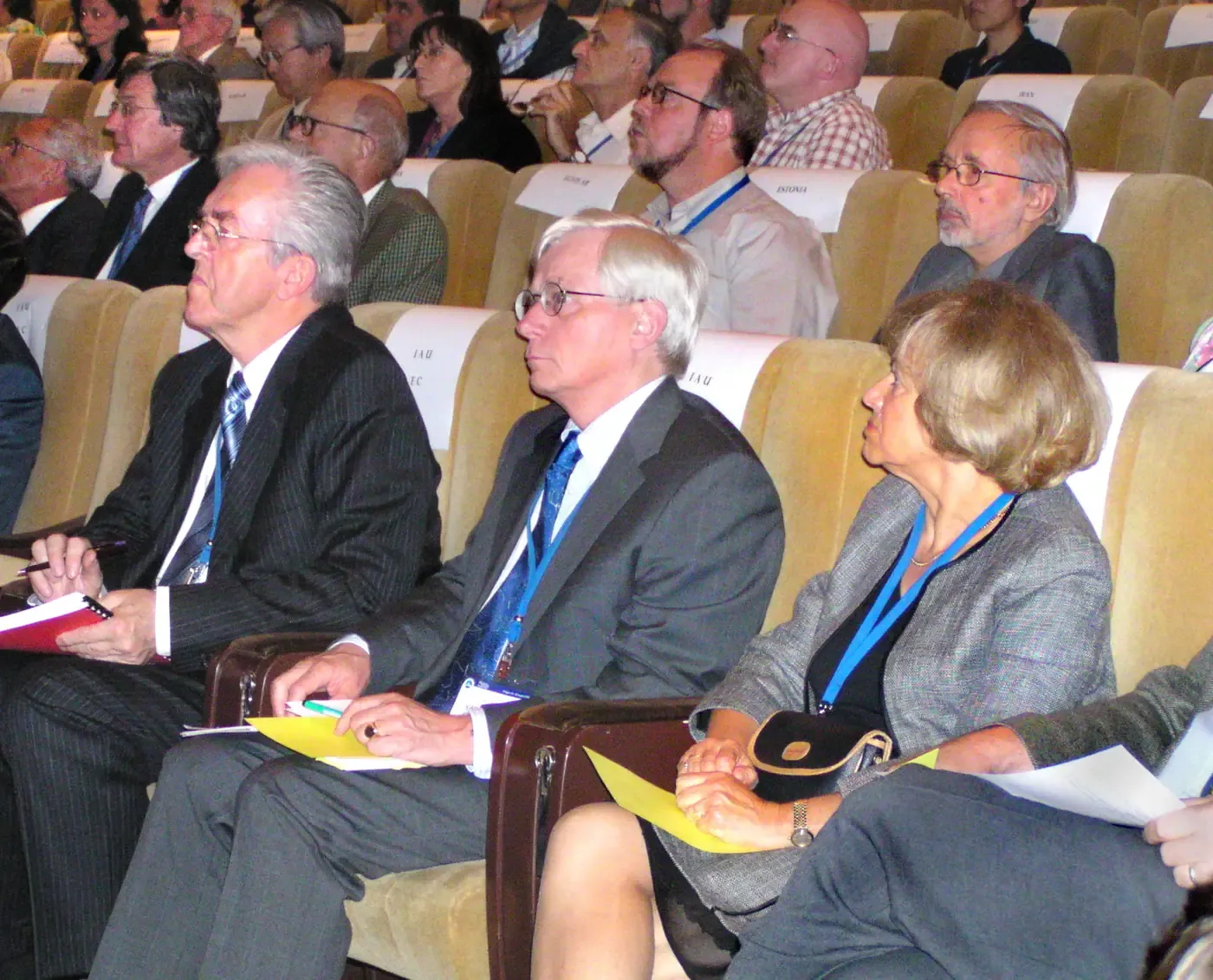
On 19 January 2006, an Atlas V rocket lifted off from Cape Canaveral carrying NASA’s New Horizons probe on a nine-year run to Pluto, at that moment, still comfortably the solar system’s ninth planet. It did not stay one for long. That August, in Prague, the International Astronomical Union spent its General Assembly arguing over what a planet actually was, and on the 24th it voted to answer the question by creating an entirely new category. Pluto was moved into it. “Dwarf planet” entered the language that week, and so did the reminder that a family of things is not fixed by its oldest or most famous member; it is decided collectively, and it can be redrawn.
Plates I & II



A much quieter reclassification was under way that same year in industrial biotechnology, and it ran in the opposite direction. On 13 February 2006, Metabolix and the agribusiness giant Archer Daniels Midland announced a joint venture, later named Telles, to build a fermentation plant in Clinton, Iowa, and produce bacterial polyesters at a scale nobody had previously attempted. The material Lemoigne had found accumulating inside soil bacteria eight decades earlier was not being promoted from a laboratory curiosity to a single commercial plastic; it was being recognised as the founding member of an entire family of them, one a bacterium’s diet could tune across an enormous range of behaviour. That recognition, arriving in a single announced venture rather than any one discovery, is why this Atlas dates the polyhydroxyalkanoate family to 2006, even though polyhydroxybutyrate (the family’s first known member) has its own entry on this Atlas dated 1976. A variant preceding its own family’s formal recognition by three decades is not a mistake here; it is exactly how families of natural materials tend to get discovered, one member first and the category only afterward.
One Backbone, A Hundred and Fifty Costumes
Every polyhydroxyalkanoate shares the same basic repeating skeleton: an ester linkage and a short carbon backbone, with a side group (chemists call it the R group) hanging off one carbon. Change that side group and almost everything about the resulting material changes with it. Alexander Steinbüchel’s laboratory work through the 1990s and 2000s catalogued more than a hundred and fifty different hydroxyalkanoate monomers that bacteria are known to incorporate into these chains, which makes the PHA family less like a single polymer and more like a shared grammar that many different bacterial species can write in, depending on which carbon source they are fed.
Plate III
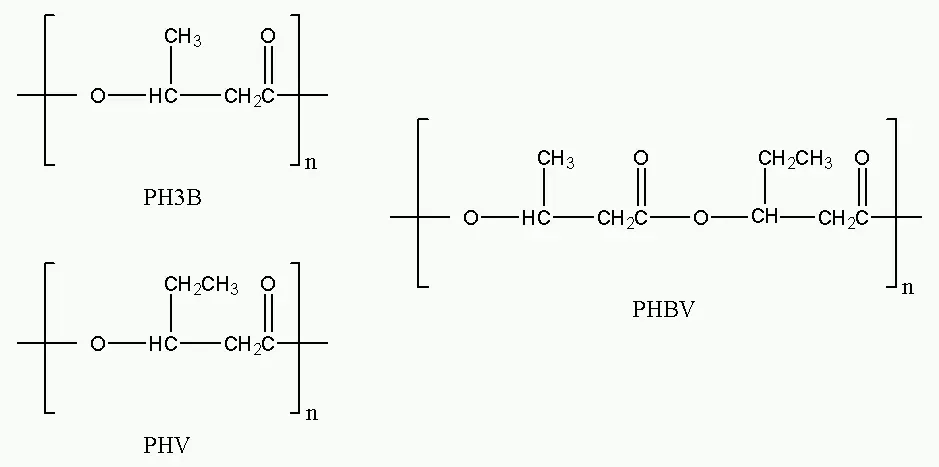

At one end of the family sits PHB itself: a short methyl side group, high crystallinity, and a material that behaves like a stiff, brittle commodity plastic. Lengthen the side group by one carbon and the family gains polyhydroxyvalerate, softer and less crystalline; copolymerise the two together as PHBV and the blend can be tuned continuously between those two extremes simply by adjusting the ratio fed into the fermenter. Push the side group longer still (into the medium-chain-length PHAs, with side groups of four carbons or more) and the polymer stops behaving like a rigid plastic altogether and starts behaving like a rubber, an elastomer flexible enough for applications a brittle polyester could never serve. The family’s range, from something that snaps like a dropped picture frame to something that stretches like a rubber band, all comes from that one substitution repeated at different lengths.
The Same Trick, on Purpose
The biology underneath every member of the family is the one already described on this Atlas’s polyhydroxybutyrate page: a bacterium presented with abundant carbon but starved of nitrogen or phosphorus converts what it cannot otherwise use into granules of polyester and stores them inside the cell, then draws them back down for energy when conditions turn hard again. What changes from one PHA to another is simply which carbon source the bacterium is fed and which species (or which genetically engineered strain) is doing the fermenting. Cupriavidus necator fed glucose or plant oil tends toward short-chain-length PHAs dominated by PHB and PHV; various Pseudomonas species fed fatty acids or alkanes tend to produce the longer-side-chain, more rubbery medium-chain-length PHAs instead. The organism has not changed its underlying trick; the menu has changed what the trick produces.
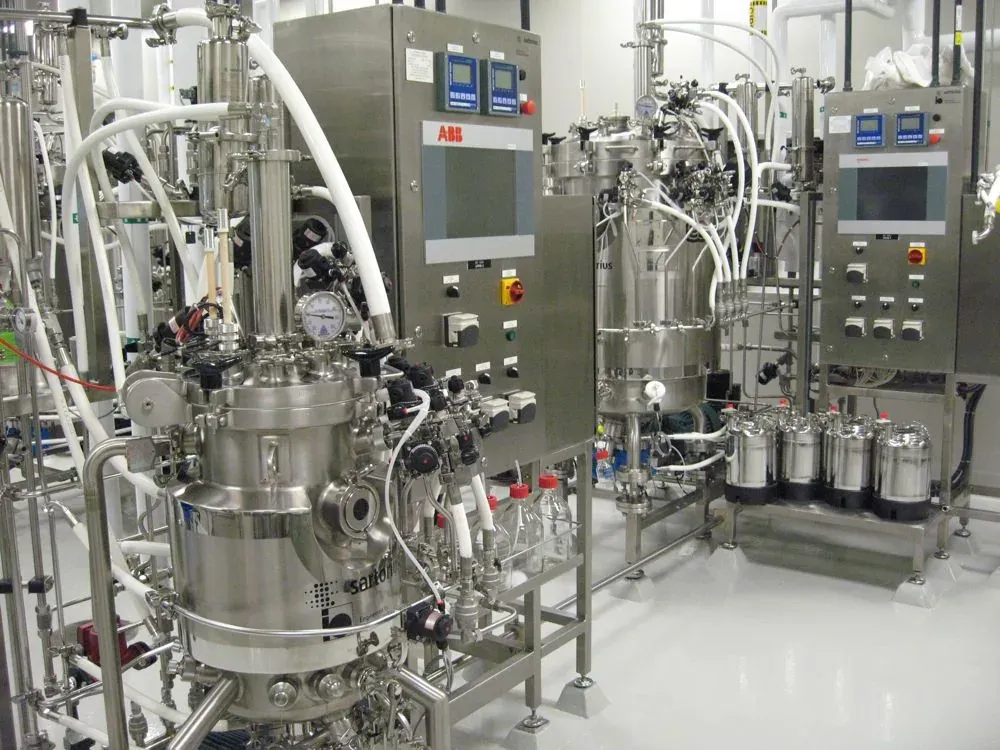
Plate IV

Properties Without a Single Answer
Because the family spans such a wide range of side-chain chemistry, no single sentence can describe “the” properties of a PHA the way one can for a more conventional plastic. Crystallinity alone runs from barely present to dominant across the family, which is the single biggest reason two PHAs can behave nothing alike: a highly crystalline short-chain-length PHA is stiff, glassy at room temperature, and a good barrier to gas and moisture, while a medium-chain-length PHA with a longer side chain is closer to amorphous, soft, and rubbery well below room temperature. What every member of the family shares regardless of that range is the trait that matters most commercially: complete biodegradability in the presence of the right microbes, whether in soil, compost, or, for some family members, seawater, without the byproducts of petroleum-based plastics that never fully leave the environment they end up in.
A Venture That Did Not Last, and a Family That Outgrew It
Telles never became the sustained commercial success its 2006 announcement promised. ADM withdrew from the joint venture in January 2012, citing uncertain returns, and Metabolix’s Mirel-branded PHA business changed hands more than once in the years afterward. That commercial stumble is worth stating honestly rather than glossing over: bacterial fermentation at the scale a plastics market demands turned out to be considerably harder to make profitable than the 2006 announcement implied. What survived the venture’s collapse was the science underneath it: PHAs continue to be produced, in smaller volumes and by a wider range of companies than Telles alone, for applications where biodegradability is worth paying for even at a premium (absorbable medical sutures and tissue scaffolds, agricultural films and seed coatings that are meant to break down in the field, and biodegradable packaging aimed at composting rather than landfill). Research into PHA-based fishing net materials, blended with other biodegradable polyesters to reduce how long lost gear keeps “ghost fishing” after it is abandoned at sea, is an active area of the same kind: real, published, and still a research direction rather than a fixture on any fishing boat.
values with [n] cite the numbered references·estimates are flagged·“not yet available” and “N/A” are honest states, not gaps
- Abbreviation
- PHAs
- Type
- polymer family (hub)
- CAS number
- None (heterogeneous class or not assigned)
- Resin ID code
- none assigned
- Formula
- Family classification covering 150+ possible hydroxyalkanoate monomer combinations; poly(3-hydroxybutyrate) (PHB, this hub's earliest and simplest member, already covered in its own variant entry dated 1976, decades before this family classification itself emerged) is the archetype, but the family as a whole has no single repeat unit.
- Repeat unit (BigSMILES)
- Family classification covering 150+ possible hydroxyalkanoate monomer combinations; poly(3-hydroxybutyrate) (PHB, this hub's earliest and simplest member, already covered in its own variant entry dated 1976, decades before this family classification itself emerged) is the archetype, but the family as a whole has no single repeat unit.
- IUPAC name
- —
- Synonyms
- —
- Also known as
- —
- Chemical family
- biodegradable-polyesterpolyester
- Backbone class
- heterochain
- Polymerization mechanism
- natural-biosynthesis
- Constitutional monomer
- 3-Hydroxybutyrate (simplest/archetypal member)
- Polymer class
- thermoplastic
- Year of origin
- 2006
- Era
- The Smart Materials Era (2000-2015)
- Key figures
- Alexander Steinbüchel · Metabolix
- Events referenced
- New Horizons launches toward Pluto (19 January 2006) · International Astronomical Union votes to define "dwarf planet" and reclassifies Pluto (24 August 2006) · Metabolix and ADM announce the Telles joint venture to produce PHA at commercial scale (13 February 2006)
- Polymerization type
- not yet available
- Common monomers (feedstocks)
- not yet available
- Catalysts
- not yet available
Family of polyesters built from over 150 possible hydroxyalkanoate monomers, combinable to give materials with extremely different properties, ranging from short-chain (e.g. PHB) to medium-chain-length variants. Imperial Chemical Industries developed the copolymer poly(3-hydroxybutyrate-co-3-hydroxyvalerate) (PHBV) during the 1980s, marketed as 'Biopol' and later distributed by Monsanto and Metabolix. Made via bacterial fermentation: microorganisms accumulate the polyester intracellularly (up to 80% of dry cell weight) as a carbon/energy reserve, then it is extracted and purified by optimizing fermentation conditions on sugar, glucose, or vegetable oil feedstocks.
- Tacticity
- not yet available
- Crystal structure
- not yet available
- Typical crystallinity
- 2–70 %[1]Wide range depending on family member/composition.
Molecular weight
- Number average (Mn)
- not yet available
- Mass average (Mw)
- not yet available
- Dispersity (Mw/Mn)
- not yet available
Mark-Houwink constants
not yet available
Side-chain length and monomer composition across the 150+ possible PHA monomers give this family an unusually wide property range within one polyester class.
- Density
- not yet available
- Melt flow index
- not yet available
- Refractive index
- not yet available
- Transmittance
- not yet available
- Haze
- not yet available
- Gloss
- not yet available
- Water absorption
- not yet available
- Dielectric constant
- not yet available
- Dielectric strength
- not yet available
- Electrical conductivity
- Not applicable
- Glass transition (Tg)
- not yet available
- Melting temperature (Tm)
- 110 (40–180) °C[1]Wide range depending on family member/composition.
- Crystallization (Tc)
- not yet available
- Heat deflection (HDT)
- not yet available
- Decomposition onset
- not yet available
- Thermal conductivity
- not yet available
- Tensile modulus
- not yet available
- Yield strength
- not yet available
- Tensile strength at break
- not yet available
- Elongation at break
- not yet available
- Impact strength (Izod)
- not yet available
- Impact strength (Charpy)
- not yet available
- Hardness
- not yet available
- Flexural modulus
- not yet available
- Poisson's ratio
- not yet available
- Coefficient of friction
- not yet available
- Weathering / UV
- not yet available
- Hydrolysis resistance
- Fully biodegradable[1]
- Flammability (UL94)
- not yet available
- Limiting oxygen index
- not yet available
- Solubility parameter (δ)
- not yet available
Gas permeability
not yet available
Polymer-solvent interaction parameter (χ)
not yet available
- Processing methods
- injection moldingextrusionfilm blowing (PHBV grades)
- Drying required
- not yet determined
- Processing temperature
- not yet available
- Shrinkage rate
- not yet available
- Packagingflexible bioplastic packaging (PHBV)
- Medicalsutures · bone plates · stents · surgical mesh · tissue scaffolds · wound dressings
- Recyclable
- No
- Biodegradable
- Yes
- Degradation pathway
- Fully biodegradable; specific pathway depends on family member (see polyhydroxybutyrate entry for the PHB-specific case).
- LD50 (oral, rat)
- not yet available
- NFPA health
- not yet available
- NFPA flammability
- not yet available
- NFPA reactivity
- not yet available
- Carcinogenic classification
- not yet available
- [1]PolyhydroxyalkanoatesWikipediaAccessed 2026-07-14https://en.wikipedia.org/wiki/Polyhydroxyalkanoates[wiki-phas]
Illustrations
- Plate INASA's New Horizons spacecraft launches toward Pluto on 19 January 2006, bound for a planet that, seven months later, would no longer officially be one.Wikimedia Commons
- Plate IIDelegates at the International Astronomical Union's 26th General Assembly in Prague, photographed on 24 August 2006, the day the IAU voted to define 'dwarf planet' and reclassify Pluto.Wikimedia Commons
- Plate IIIThree members of the PHA family drawn side by side: polyhydroxybutyrate (PH3B) and polyhydroxyvalerate (PHV) differ only in the length of one side group, and PHBV combines both monomers in a single copolymer chain.Wikimedia Commons
- Plate IVPilot-scale stainless-steel bioreactors of the kind used to ferment PHA-producing bacteria at increasing scale. That scale-up is the unglamorous engineering step between a laboratory culture and a commodity material.Wikimedia Commons