Caribbean · Main Course
Jamaican Oxtail Stew
Oxtail browned in caramelised sugar and braised for hours with butter beans, allspice, thyme and scotch bonnet until the meat falls from the bone.
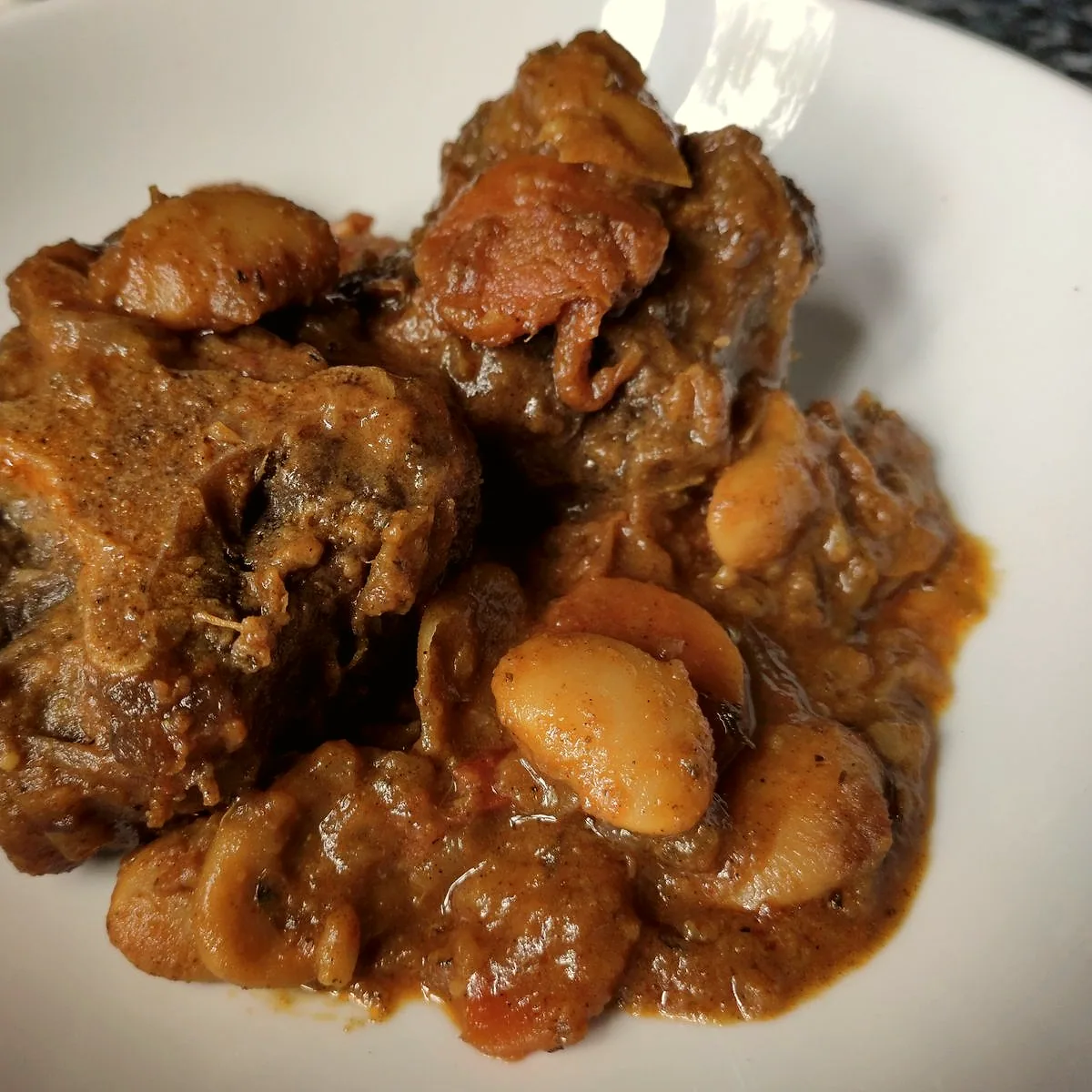

CC BY-SA 4.0. Cropped and colour-adjusted for this site.
Method
Season the 1.6 kg oxtail with the 8 g fine sea salt and 2 g ground black pepper.
Cover and refrigerate for 8h.
Heat the 20 ml vegetable oil in a heavy pot over a medium-high heat and stir in the 15 g light brown sugar, cooking for 3m until it darkens and turns syrupy.
Caramelising the sugar to the edge of burning before the meat goes in gives the stew its traditional dark colour and a bitter-sweet depth that plain browning from searing alone does not produce.
Add the oxtail to the pot in batches and brown on all sides for 15m in total, turning to coat each piece in the caramelised sugar.
Return all the oxtail to the pot with the 100 g yellow onion, 3 garlic cloves (15 g), 10 g fresh ginger, 6 g scotch bonnet, 4 g ground allspice, 3 g fresh thyme and 1 ½ spring onions (25 g), and cook for 6m, stirring, until fragrant.
Pour in the 15 ml light soy sauce and 700 ml beef stock, add the drained 150 g dried broad beans, and bring to a simmer. Cover and cook at a bare simmer for 3h, until the meat is tender enough to fall from the bone.
Common pitfallOxtail carries more connective tissue than most cuts and stays chewy if the braise is cut short; the collagen only fully breaks down once the meat is at the point of falling off the bone.
Stir in the 150 g carrot and simmer uncovered for 15m, until the carrot is tender and the sauce has thickened to coat the back of a spoon. Discard the whole scotch bonnet before serving.
Oxtail earned its place in Caribbean and Black American kitchens by being worth almost nothing. During slavery, the cuts of the animal considered worth selling went to slavers and buyers; what was left over, including the tail, went to enslaved cooks, alongside other offal like pig's feet and chitterlings [1]. Those cooks turned it into braises, soups and gravies, discovering, out of necessity rather than choice, that the bone's high collagen content was exactly what a long, slow cook needed to turn a tough, cheap cut into something tender [1].
That economics held for generations. As late as the 1960s and 70s, oxtail sold for around twenty-nine cents a pound in the United States, a price that reflected its status as an undesirable, throwaway part of the cow rather than any shortage of demand [1]. Within living memory in Jamaica, meat shops gave oxtail away free to regular customers, and home cooks reached for chicken, beef or mutton before they reached for it [2]. Stewed oxtail with butter beans, served over rice, is eaten as a main dish across Jamaica and the wider Caribbean today, worked into the island's core seasoning vocabulary of allspice, scotch bonnet, thyme and scallion.
The dish's status has since reversed entirely. Global demand for a cut once priced as scrap has pushed oxtail toward luxury pricing; by the mid-2020s it was selling for fourteen to fifteen dollars a pound in American markets, with pandemic-era supply disruptions accelerating a rise that gentrification of the ingredient had already begun [1]. Import disruptions and diaspora demand had already more than doubled American retail prices in a matter of weeks once before, in 2021, when oxtail briefly reached nineteen dollars a pound in some stores [2]. The stew itself has not changed to match; it remains a braise built on patience and a handful of Caribbean seasonings rather than an expensive ingredient list, and its price today says more about the cut's cachet elsewhere than about anything in the Jamaican kitchen that made it worth cooking in the first place.
Sources
- An Oxtail Story: Black Communities' Ode to a Dish's Legacy, Cuisine NoirTraces oxtail's origins as a discarded cut given to enslaved cooks, its transformation into braises and soups, and its price rise from cents to double-digit dollars per pound.
- Jamaicans in US Have Beef with Oxtail Hike, Jamaica GleanerRecalls oxtail being given away free by meat shops within living memory, and reports its 2021 price surge in both the United States and Jamaica.