Chinese · Main Course
Dan Dan Noodles
Wheat noodles in a small bowl of chilli oil, doubanjiang and Sichuan pepper, tossed with a savoury minced pork and preserved vegetable topping, dry rather than in broth.
Also known asDandanmian
Not the same asHong Kong-style dan dan noodles (A soup-based, milder adaptation developed outside Sichuan, sometimes thickened with sesame paste or peanut butter, quite different from the dry, chilli-forward Chengdu original this recipe follows.)
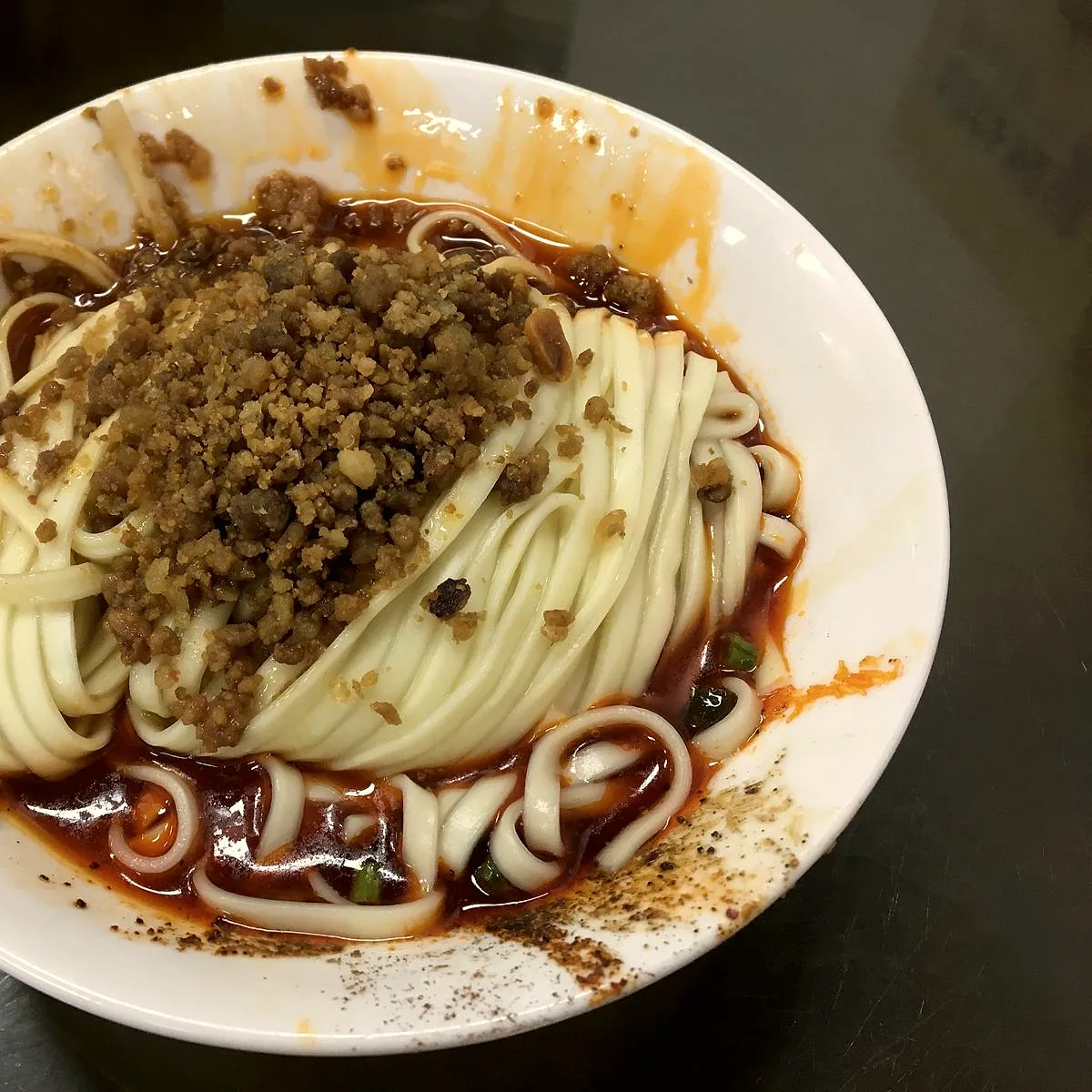

CC BY-SA 4.0. Cropped and colour-adjusted for this site.
Method
Put the 20 g chilli flakes in a heatproof bowl. Heat the 40 ml vegetable oil until just beginning to smoke, then pour it over the chilli, taking 5m, and stir in the 3 g whole Sichuan pepper.
Heat the 20 ml peanut oil in a wok and stir-fry the 200 g pork mince, breaking it up, until browned. Add the 40 g preserved radish, 15 ml Shaoxing wine and 15 ml light soy sauce and cook for 8m, until dry and fragrant.
Meanwhile, boil the 250 g dried wheat noodles for 4m, until just tender, then drain well.
Divide the 15 g doubanjiang, 20 ml light soy sauce, 15 ml black vinegar, 1 ½ garlic cloves (8 g) and the chilli oil mixture between the serving bowls. Loosen the 20 g toasted sesame paste with the 40 ml water and add it to the bowls, taking 5m.
Building the seasoning in the bowl before the noodles arrive, rather than tossing everything together in a pan, is what keeps this dish dry rather than soupy; the noodles are meant to be tossed at the table, coating themselves in a small, concentrated amount of sauce.
Pile the drained noodles into the bowls and top with the pork mixture, 1 ½ spring onions (25 g) and 30 g roasted peanuts. Toss well at the table before eating, over 2m.
The name has nothing to do with flavour. A dandan is a bamboo carrying pole, balanced across a vendor's shoulders with a basket hanging from each end (one holding noodles, the other the sauce, seasonings and a small stove), and the dish is named for that method of selling rather than for any ingredient in the bowl [2] [1].
The most repeated account of who first sold noodles this way names a peddler called Chen Baobao, said to have started carrying and selling them in the Sichuan town of Zigong in 1841 before the style spread to Chengdu, where vendors began adding minced pork to what had been a plainer noodle. It is presented, even in the retelling, explicitly as legend rather than settled history: a single named figure standing in for what was more likely a wider street-food practice among Sichuan's mobile noodle vendors [1].
The dish most non-Sichuan diners know by this name is, by most accounts, not really the same dish. The Chengdu original is dry: noodles tossed in a small, concentrated pool of chilli oil, doubanjiang and Sichuan pepper, with barely any liquid beyond what clings to the strands. A soup-based version, milder and sometimes thickened with sesame paste or peanut butter, developed later in Hong Kong and became the more widely exported form abroad, even though it is comparatively uncommon in Sichuan itself [2] [1]. The distance between the two versions is less a matter of one being more authentic than the other than of two different cities solving the same problem (how much sauce a bowl of wheat noodles needs) in opposite directions.
Sources
- Tracing the Origin: Hong Kong's Dan Dan Noodles, MICHELIN GuideSets out the Chen Baobao legend explicitly as legend, and traces the carrying-pole method and its move from Zigong to Chengdu.
- Dandan noodles, WikipediaDescribes the dry, sauce-coated Chengdu original against the soup-based Hong Kong adaptation eaten more widely outside Sichuan.