Filipino · Main Course
Pancit Canton
Egg noodles stir-fried with pork, shrimp, carrot and cabbage in a soy-and-oyster-sauce broth until the liquid is absorbed.
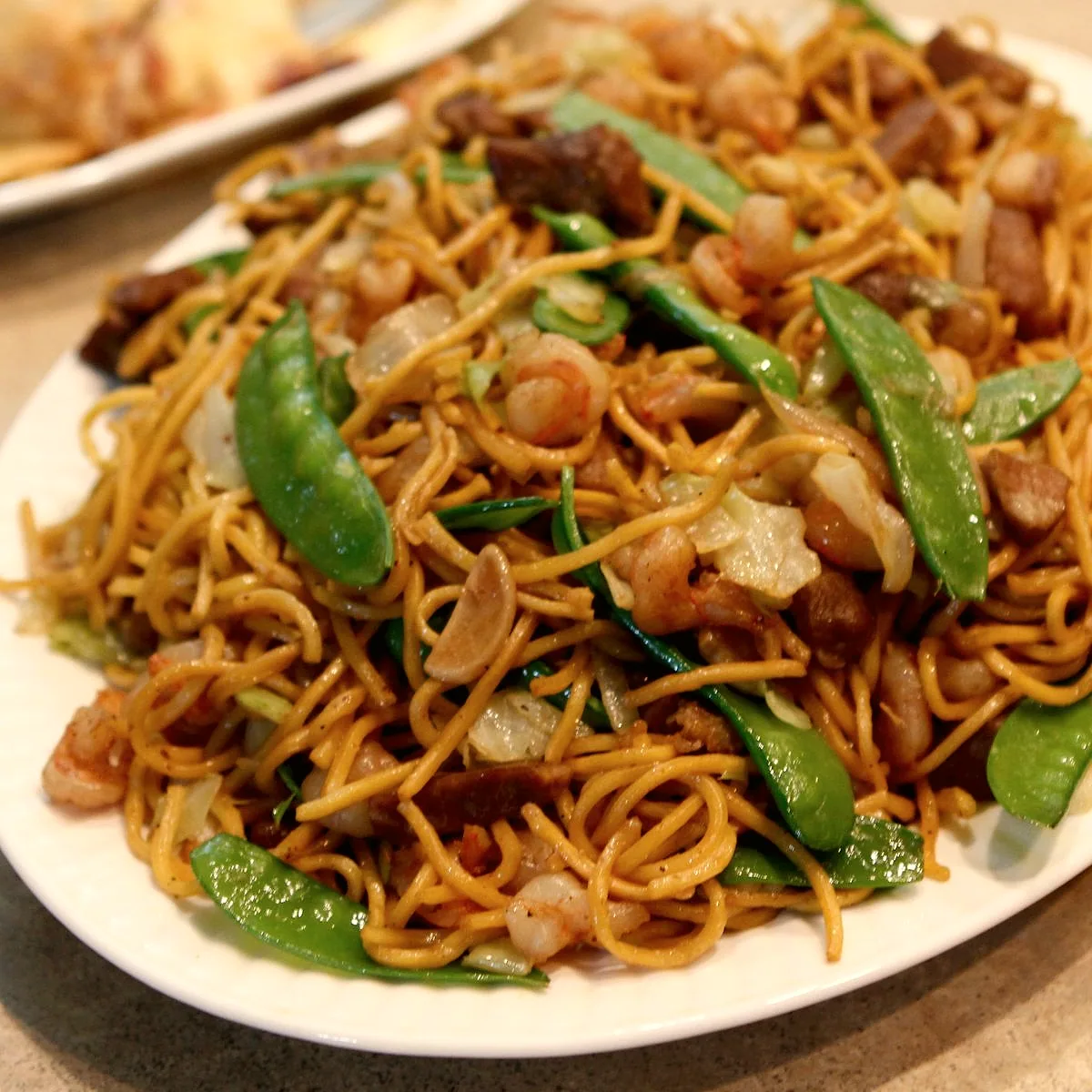

CC BY 2.0. Cropped and colour-adjusted for this site.
Method
Heat the 30 ml vegetable oil in a wok over a high heat and stir-fry the 150 g pork shoulder for 6m until browned, then add the 150 g shrimp and cook until pink. Lift both out and set aside.
Add the 3 garlic cloves (15 g) and 60 g yellow onion to the same wok and stir-fry for 3m, until softened and fragrant.
Add the 80 g carrot and 150 g white cabbage and stir-fry for 4m, until just starting to soften.
Pour in the 350 ml chicken stock, 30 ml light soy sauce and 20 g oyster sauce and bring to a simmer for 2m.
Return the pork and shrimp to the wok, add the 250 g dried egg noodles and toss for 6m, until the noodles have softened and absorbed most of the liquid. Scatter with the 1 spring onion (15 g) and serve with the 2 calamansi (30 g) alongside.
Common pitfallDried canton noodles keep absorbing liquid after they look done, so the pan should still look a little wet when the noodles go in; left too dry, they turn stiff rather than tender by the time they finish cooking.
Pancit is a borrowed word before it is a dish: it comes from Hokkien Chinese, most plausibly from a phrase meaning "something conveniently cooked" (fast food, in the original sense) carried to the islands by Chinese immigrant traders and merchants [1] [2]. Noodles themselves were their introduction: rice flour stood in for wheat early on, and the dishes built from it were nativized quickly, gaining Spanish-era touches as they spread rather than staying a purely Chinese import.
That spread had an economic engine. Chinese panciteros sold noodles as a fast, portable meal to factory workers during the Spanish colonial period, whose limited time for cooking made a quick noodle dish attractive; the roadside stalls that grew out of this trade are described as among the country's first covered eateries [2]. Pancit's association with long life (noodles left uncut, eaten whole to avoid "cutting short" a life) comes from the same Chinese lineage and is why pancit still appears on Filipino birthday tables today [1] [2].
Pancit canton, the stir-fried egg-noodle version most familiar outside the Philippines, is a puzzle in one specific respect: nothing about it traces to Canton, the old name for Guangdong province. No source has settled why the name stuck: the likeliest explanation on offer is that an enterprising pancitero attached it to suggest an authentically Chinese dish to customers, but this is speculation rather than a documented account [1] [2].
Sources
- Pancit, WikipediaGives the Hokkien etymology, the birthday "long life" noodle tradition, and pancit canton's description as a Filipino take on lo mein and chow mein.
- Pancit: The History of this "Long Life" Noodle, Pepper.phBy Serna Estrella; covers the panciteros who sold noodles to Spanish-era factory workers, and the unresolved question of pancit canton's name.