Caribbean · Main Course
Arroz con Gandules
Puerto Rican rice cooked in one pot with pigeon peas, diced ham and a sofrito base, coloured and seasoned with achiote.
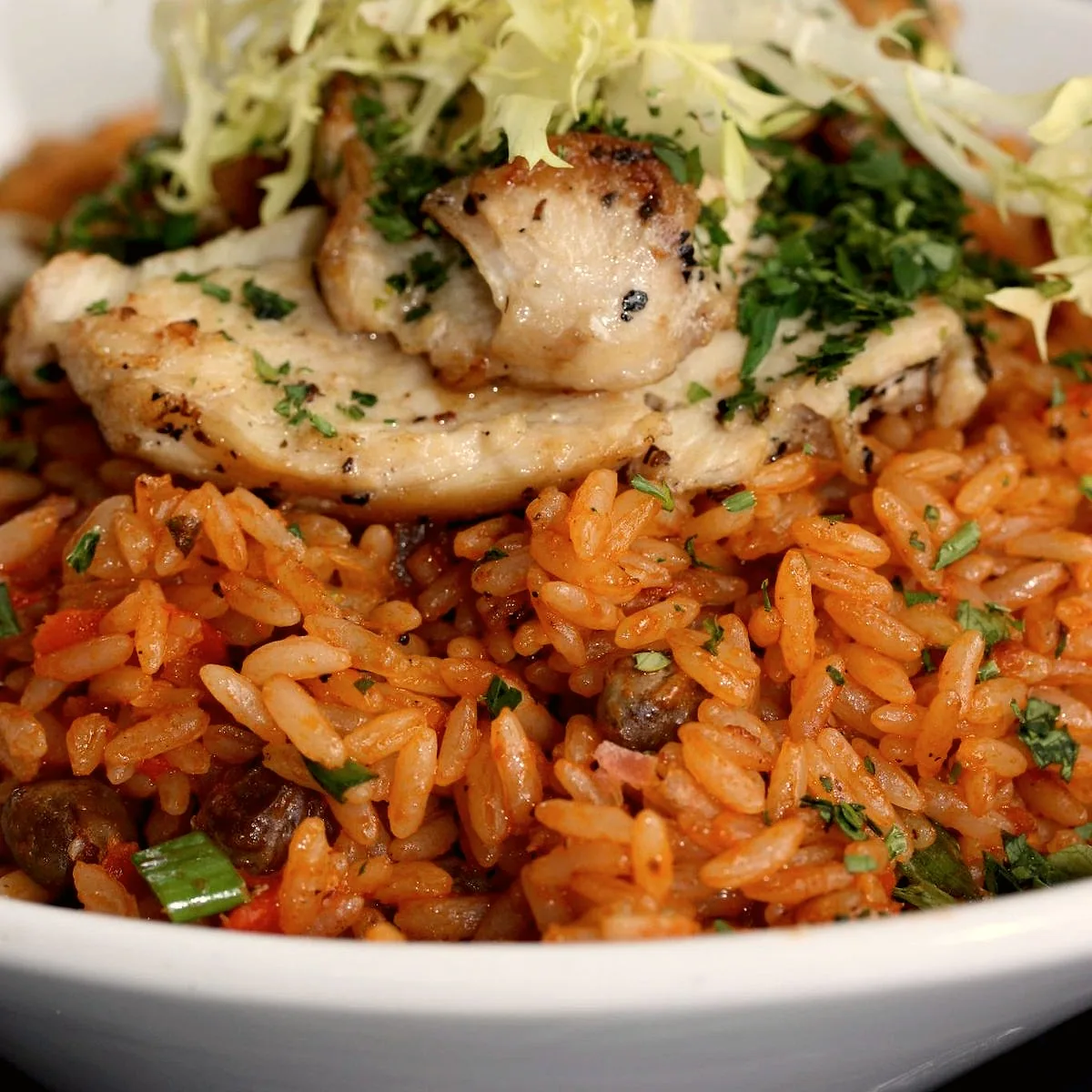

CC BY 2.0. Cropped and colour-adjusted for this site.
Method
Finely chop the 90 g white onion, 70 g green pepper, 2 ½ garlic cloves (12 g) and 10 g fresh coriander and combine them in a bowl; this is the sofrito.
Heat the 30 ml extra-virgin olive oil in a heavy pot over a medium heat and cook the 100 g sliced ham for 6m, until it colours lightly at the edges.
Stir in the 5 g achiote and cook for 3m, until the oil turns a deep orange-red.
Blooming the ground achiote in hot fat before anything else goes in dissolves its colour into the oil, so the whole pot turns an even orange-red rather than showing streaks of unmixed spice.
Add the sofrito to the pot and cook for 6m, until the vegetables soften, then stir in the 30 g tomato purée, 30 g green olives, 10 g capers, 2 g oregano and 2 bay leaves (0.4 g).
Add the 400 g canned pigeon peas, 380 g rice, 480 ml chicken stock and 6 g fine sea salt, stirring once to distribute the peas evenly, and bring to a boil for 5m.
Cover, reduce the heat to its lowest setting and cook undisturbed for 25m, until the liquid is fully absorbed and the rice is tender.
Common pitfallLifting the lid to check on the rice lets steam escape that the grains need to finish cooking, and can leave the bottom layer underdone while the top dries out.
Take the pot off the heat and leave it covered for 10m before fluffing the rice with a fork.
Arroz con gandules is one pot built from three separate arrivals. The pigeon pea itself has the longest journey of any ingredient in it: an old crop of both Africa and South Asia, it was carried between the two by traders, and its origin between them has long been argued [1]. From West Africa, it reached Puerto Rico with enslaved people transported there under Spanish colonial rule, who carried the dried pea as a familiar staple of their own diet [2]. Rice and pork, meanwhile, were Spanish introductions, planted and raised on the same island the Taíno already farmed, and it was Taíno cooking practice, seasoning a single simmered pot with local peppers and herbs, that gave the combination its form [2].
The pea proved suited to Puerto Rico's climate in a way that mattered beyond flavour: it grew reliably where other crops failed, and a dish built around it functioned as a hedge against hunger for the island's poorer agricultural communities before it was later taken up more widely [2]. That dual identity (practical sustenance food and, eventually, festive centrepiece) persists in how the dish is eaten today: it appears on tables across the island year-round but is especially associated with Christmas and other holiday gatherings.
Sofrito is what turns the three components into one dish rather than three things cooked side by side. The blended base of onion, garlic, peppers and culantro or coriander is stirred through the rice before the liquid goes in, so every grain cooks in it rather than being seasoned only on the surface. Today arroz con gandules is widely regarded, together with roast pork, as Puerto Rico's national dish, and closely related versions travelled with Puerto Rican and other Caribbean communities to the Dominican Republic and beyond, each keeping the same rice-and-pea base while naming and seasoning it slightly differently.
Sources
- Ag History of Pigeon Peas, USDA National Agricultural Statistics Service, Puerto Rico Field OfficeGives the older view of the pigeon pea as native to tropical Africa and carried by traders to India, with its cultivation there documented.
- The History of Arroz con Gandules, Familia KitchenTraces the pigeon pea's arrival in Puerto Rico through the transatlantic slave trade and its adoption as a Taíno-Spanish-African composite dish.