Filipino · Starter
Sisig
Pig's ears and liver, boiled until tender, grilled until charred, then chopped fine and tossed with onion, chilli, vinegar and calamansi on a sizzling plate.
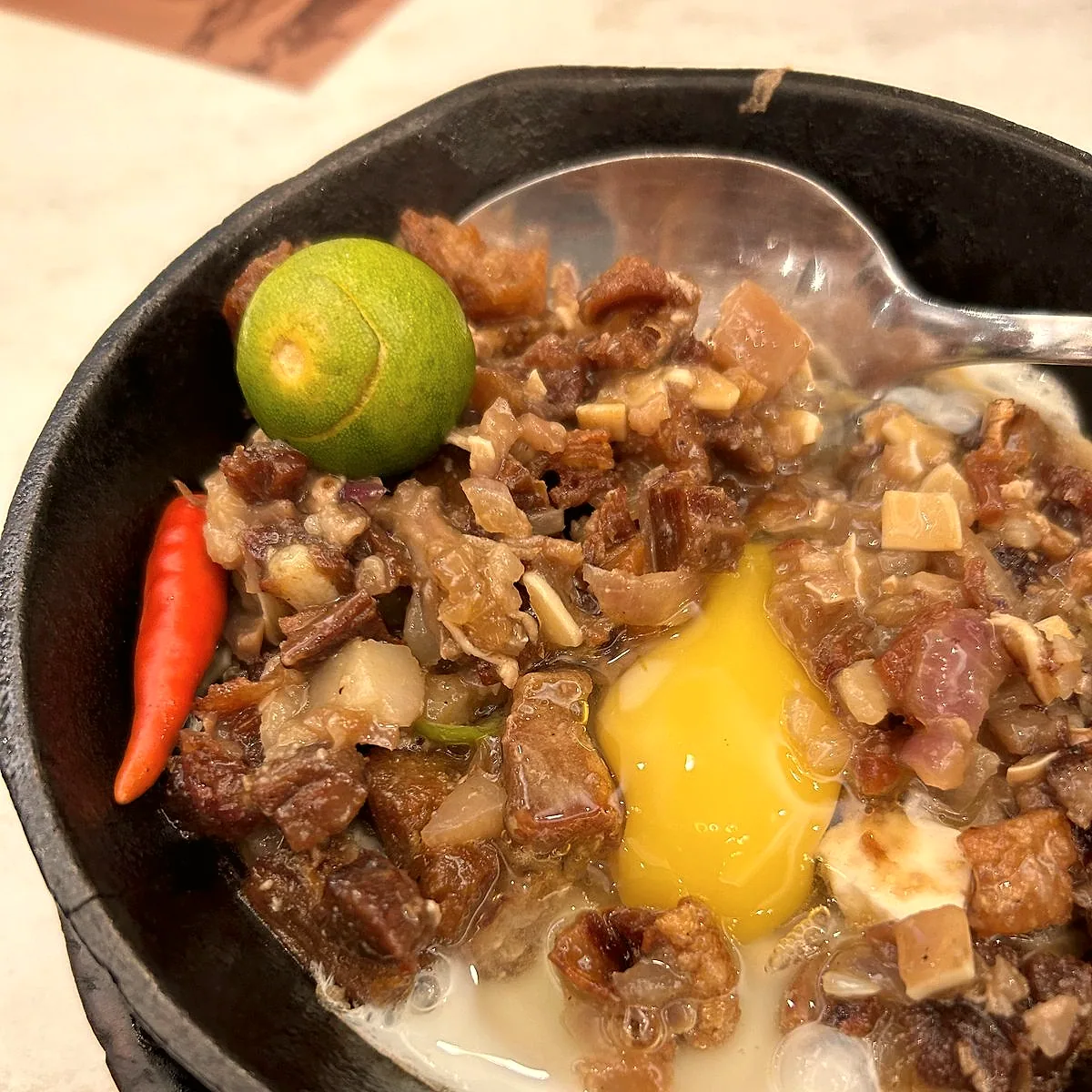

CC BY-SA 4.0. Cropped and colour-adjusted for this site.
Method
Combine the 600 g pig's ears, 150 g pork liver, 1.5 L water and 2 bay leaves (0.4 g) in a pot, bring to the boil, then lower the heat and simmer for 1h, until both are fully tender. Drain and pat dry.
Boiling the ears until fully tender before they ever meet the grill is what lets the grilling stage char and crisp the surface without leaving the cartilage underneath tough.
Grill the ears over a high heat for 15m, turning, until charred at the edges and crisp on the outside.
Finely chop the grilled ears and the boiled liver for 10m, until the pieces are small and even.
Common pitfallPieces left too large chew unevenly, cartilage against soft liver in the same bite. Chopping fine and even is what makes the texture read as one dish rather than two.
Heat the 15 ml vegetable oil in a pan, preferably one that can go straight to the table, and toss in the chopped mixture with the 80 g red onion, 2 ½ serrano chillies (20 g), 20 ml cane vinegar, 2 calamansi (30 g), 4 g fine sea salt and 2 g ground black pepper. Cook for 5m, stirring, until piping hot.
Crack the 1 egg (60 g) over the top while the pan is still hot and stir it through for 2m, letting the residual heat just cook it into the mixture.
The word is centuries older than the dish it now names. Sisig is recorded in Fray Diego Bergaño's 1732 Pampango-Spanish dictionary, where it meant a salad of sour fruit dipped in salt and vinegar; it was the kind of sharp, acidic snack craved in pregnancy, with no meat in it at all [1]. For generations after that, sisig babi meant simply boiled pig's head, sliced and dressed with nipa-palm vinegar, onion, salt, pepper and chilli; it was closer to a cold salad than to the hot, sizzling dish served today [1].
The grilled, chopped version now known worldwide was created in Angeles City, Pampanga, by the restaurateur Lucia "Aling Lucing" Cunanan in the 1970s, working from a row of barbecue stalls near the city's railroad crossing [2] [1]. By her family's account, she began from a kitchen accident: a batch of pig's ears left too long on the grill, burnt rather than discarded, which she chopped and dressed the way the older boiled version had been, calling it her own take on the traditional recipe [1]. It caught on immediately with local diners, drawing customers from as far as Manila, and Cunanan's name became attached to the dish's reinvention [2] [1].
The dish kept evolving after her. In the 1980s another Angeles City cook, Benedict Pamintuan, began serving it on a sizzling hot plate rather than a regular one, and chef Claude Tayag's Quezon City restaurant added chopped chicken liver to the mix. That combination, on a hot skillet, is what spread sisig across Manila and beyond its home province [1].
Sources
- Sisig's Origin Story, Positively FilipinoBy chef Claude Tayag; traces the word from the 1732 Bergaño dictionary through boiled sisig babi to Aling Lucing's grilled version and its later sizzling-plate format.
- Farewell to Aling Lucing, sisig queen, Philippine StarObituary crediting Lucia "Aling Lucing" Cunanan with inventing the grilled, chopped sisig in the mid-1970s and describing Angeles City's association with the dish.