Egyptian · Main Course
Koshari
Rice and vermicelli, lentils, macaroni and chickpeas, layered under crisp fried onion and a garlic-and-vinegar tomato sauce.
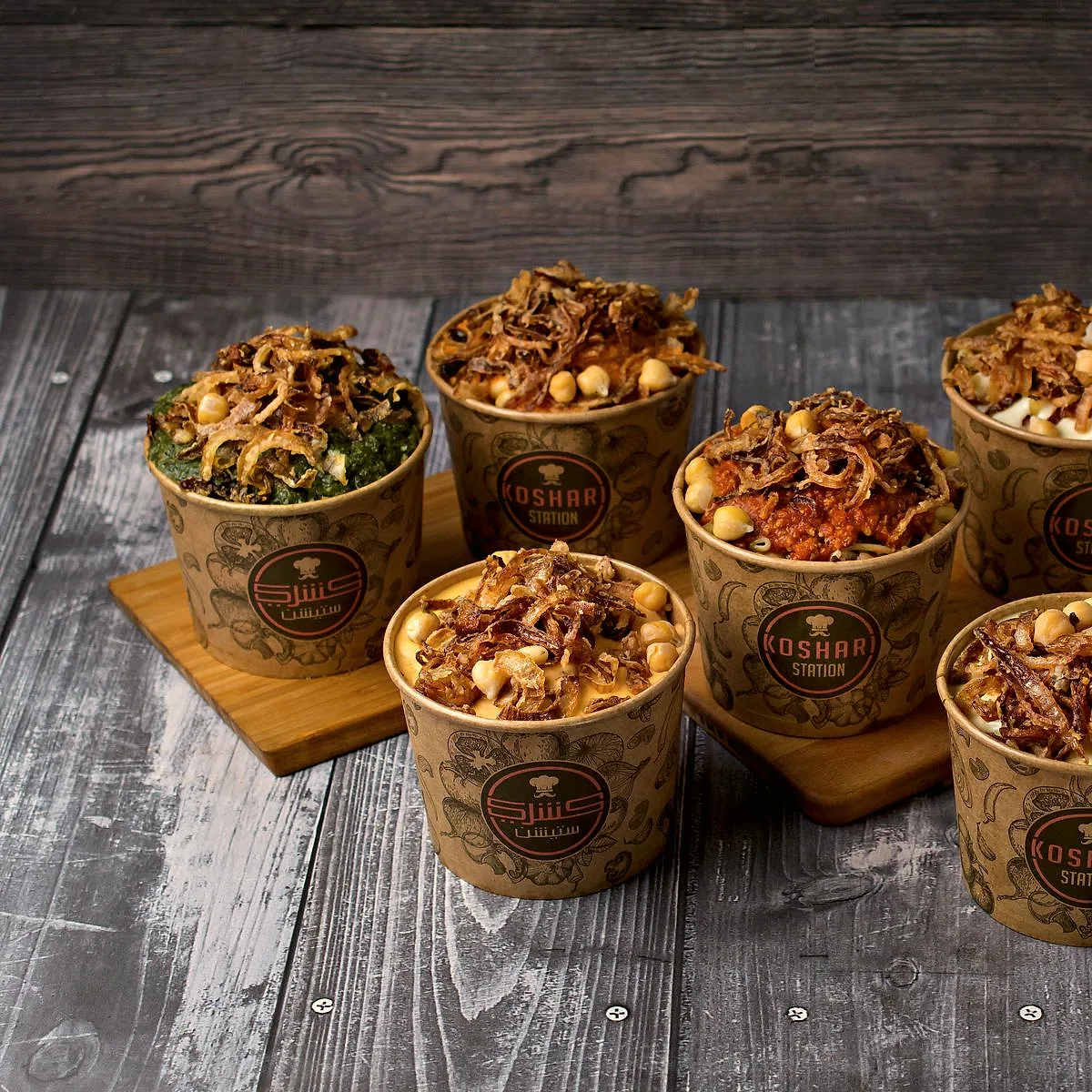

CC BY-SA 4.0. Cropped and colour-adjusted for this site.
Method
Drain the soaked 100 g dried chickpeas, cover with the 500 ml water and simmer for 1h 15m, until tender. Drain and set aside.
Meanwhile, heat the 100 ml vegetable oil in a wide pan and fry the 300 g yellow onion for 20m, stirring occasionally, until deep golden and crisp. Lift out with a slotted spoon and drain on paper towels.
Common pitfallOnions pulled from the pan the moment they look done keep cooking in their own residual heat and turn from golden to burnt within moments. Lifting them slightly before they reach the target colour and draining them at once avoids this.
Heat the 15 ml vegetable oil in a pot and toast the 40 g dried vermicelli until golden. Add the 200 g rice and 350 ml water, cover and cook for 20m, until the liquid is absorbed and the rice is tender.
Toasting the vermicelli in oil before the rice and water go in is what gives it its brown colour and nutty flavour, rather than the pale, soft strands that boiling it raw alongside the rice would produce.
In a separate pot, cover the 120 g brown lentils with the 400 ml water and simmer for 25m, until tender but still holding their shape. Drain any excess liquid.
Cook the 150 g macaroni in the boiling 1.5 L water for 12m, until just tender, then drain.
Meanwhile, heat the 10 ml vegetable oil and cook the 3 garlic cloves (15 g) briefly, then stir in the 100 g tomato purée, 150 ml water, 15 ml white vinegar, 2 g ground cumin and 4 g fine sea salt. Simmer for 15m, until slightly thickened.
Combine the 5 ml vegetable oil, 2 garlic cloves (10 g), 15 ml white vinegar, 3 g chilli flakes, 2 g ground cumin and 4 g fine sea salt for 5m, to make a sharp, garlicky dressing.
Layer the rice, lentils, macaroni and chickpeas in bowls, top with the fried onion, and serve with the tomato sauce and dakka alongside for spooning over, working for 10m.
The earliest written record of anything resembling koshari comes from the English explorer Richard Burton, who described Suez residents eating a dish of rice, lentils and onions in an account from the 1850s [1] [2]. What it was called then, and how directly it connects to the layered dish sold today, is not settled.
The popular story traces koshari to Indian khichdi, a rice-and-lentil dish, supposedly carried to Egypt by Indian soldiers and merchants. Food historians are split on how seriously to take it. The food archaeologist Mennat-Allah El Dorry allows that the resemblance is plausible, since rice-and-lentil dishes turn up in several countries along historic pilgrimage routes, India among them [1]. The anthropologist Rania Hilal disputes the connection more directly, arguing that khichdi is closer to a spiced, curried pudding in texture and seasoning, while koshari keeps its components (rice, lentils, pasta) distinct and leans on a tomato-based sauce that has no real equivalent in the Indian dish [1]. Pasta itself is a later addition again, by one dated account added only after Egypt's monarchy ended in 1953, when rice grew expensive and macaroni offered a cheaper way to bulk out the same bowl [1].
What is not disputed is koshari's present standing. Sold from street carts and dedicated koshari houses across the country, it is treated as Egypt's national dish regardless of which account of its past (Indian import, homegrown layering tradition, or something worked out between the two) turns out to be right.
Sources
- The Layered History of Koshary, Egypt's Most Beloved Street Food, Smithsonian MagazineBy Mariam Ehab; quotes food archaeologist Mennat-Allah El Dorry and anthropologist Rania Hilal on opposing views of the khichdi connection, and dates the addition of pasta to after 1953.
- Koshary, WikipediaCovers the unverifiable ancient-Egyptian "Koshir" attribution to the historian Manetho and Richard Burton's account of a lentil-and-rice dish eaten in Suez.