Filipino · Main Course
Kare-Kare
Oxtail simmered until tender, then finished in a thick peanut and toasted-rice sauce coloured with annatto, served with aubergine, long beans and bok choy.
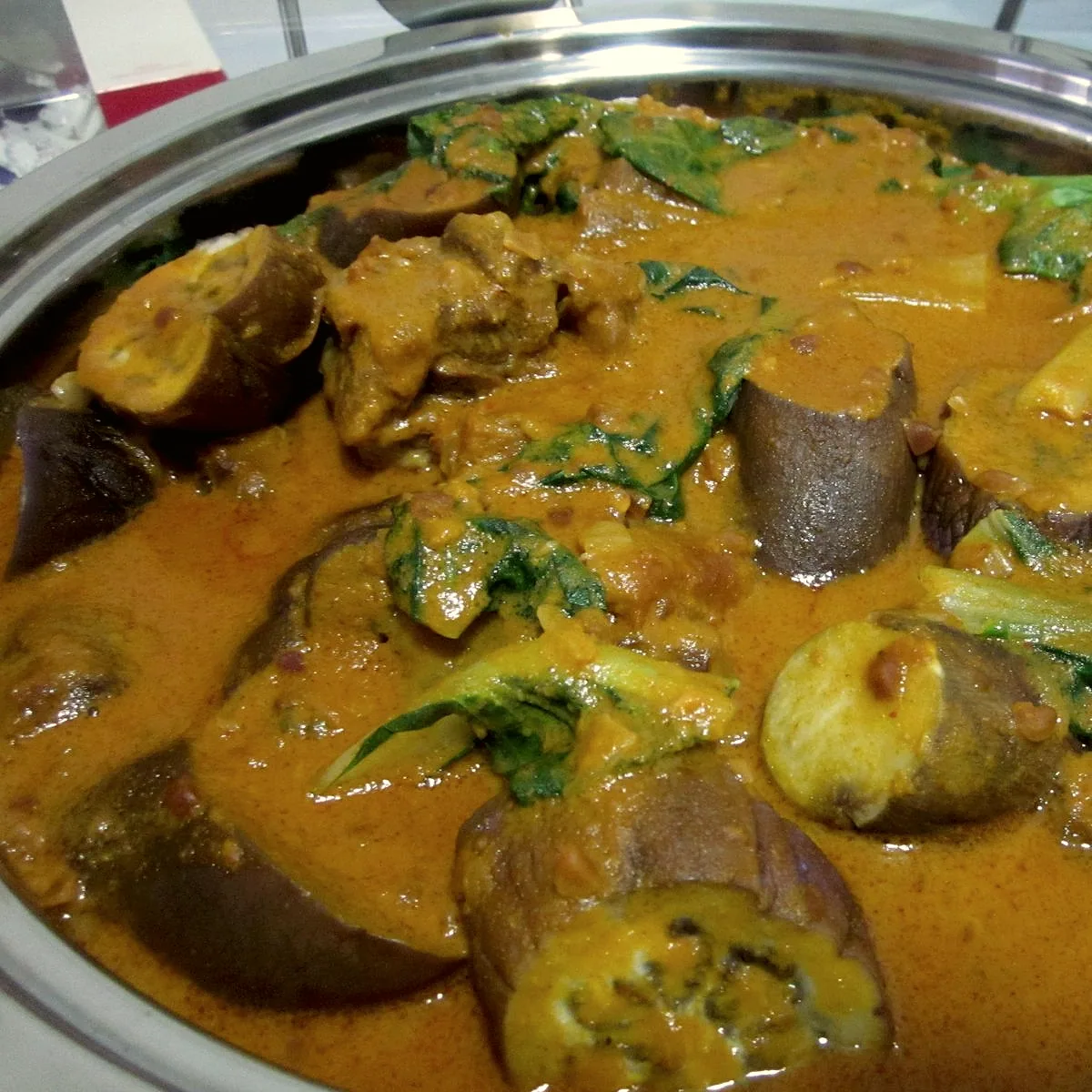

CC BY 3.0. Cropped and colour-adjusted for this site.
Method
Combine the 1.2 kg oxtail, 2 L water and 100 g yellow onion in a large pot, bring to the boil, skim, then lower the heat and simmer for 2h, until the meat is fork-tender. Lift out the oxtail and reserve the broth.
Meanwhile, heat the 20 ml vegetable oil in a separate pan and cook the 2 garlic cloves (10 g) until fragrant. Stir in the 8 g achiote and cook briefly to colour the oil, then add the 120 g roasted peanuts and 25 g rice and enough of the reserved broth to loosen into a thick, pourable sauce, stirring for 8m.
The rice is toasted dry before grinding, which is what gives the sauce its nutty depth and lets it thicken without tasting starchy the way raw rice flour would.
Return the oxtail to the pot with the sauce, adding more reserved broth as needed, and simmer gently for 10m, until the sauce coats the meat thickly.
Add the 200 g aubergine and 150 g long beans and simmer for 8m, then stir in the 200 g bok choy for the final minute, just until it wilts.
Common pitfallAubergine and bok choy take very different times to cook through. Added together rather than staggered, one is always either raw or collapsing.
Separately, heat the 10 ml vegetable oil and cook the 2 garlic cloves (10 g) until golden. Add the 60 g shrimp paste and cook for 5m, stirring, until fragrant. Serve alongside the stew as a condiment.
The name is the more settled part: kare-kare is generally traced to kari, the Malay word for curry, adapted into Filipino usage [1] [3]. The dish itself contains none of the spices a curry would suggest, drawing its colour from annatto and its body from ground peanuts and toasted rice.
Where the dish came from is genuinely unsettled. The account repeated most often makes it a Kapampangan invention, from cooks of Pampanga said to have run the first eateries serving kari in Manila; a rival account credits the South Indian sepoys brought by the British during their occupation of Manila in 1762–1764, some of whom stayed on after the British withdrew and sold curry from what became carinderias [1] [2].
The culinary historian Ruston Banal, himself from Pampanga, set out to confirm the Kapampangan claim and came back instead with the sepoy account, presenting it at the 2024 KainCon culinary-heritage conference [2] [1]. Neither story is settled by documentary evidence, and the dish is better described as unresolved than as definitively Kapampangan.
What is not disputed is the dish's shape: oxtail (often alongside tripe or pork hock) simmered with aubergine, long beans and other vegetables in a peanut sauce coloured with annatto, and served with a side of sautéed shrimp paste to cut the sauce's richness.
Sources
- Kare-kare, WikipediaSets out the three competing origin theories and the dish's traditional composition and accompaniments.
- The History of Filipino Dish 'Kare-Kare': Philippine Cuisine Explored at KainCon 2024, Stylish Magazine, 2024-04-15Reports Ruston Banal's KainCon 2024 talk: his inquiry into the Kapampangan-origin claim and the sepoys left behind after the British occupation of Manila, selling curry in carinderias.
- What Is Kare-Kare?, Scholastic (Kid Reporters' Notebook)Quotes chef Marlon Ahorro on the dish's name being adapted from Malay culinary influence.