Chinese · Condiment
Chilli Oil
Coarse dried chilli and Sichuan pepper infused in hot oil poured over aromatics in stages, left to steep into a fragrant, deep red condiment.
Also known asHongyouLajiaoyou

CC0. Cropped and colour-adjusted for this site.
Method
Combine the 8 g whole Sichuan pepper, 3 g whole star anise, 1 cinnamon stick (3 g) and 5 bay leaves (1 g) in a dry pan over a low heat and toast for 3m, until fragrant.
Add the 400 ml vegetable oil, 3 garlic cloves (15 g), 10 g fresh ginger and 1 ½ spring onions (20 g) to the pan and warm gently over a low heat for 15m, until the aromatics turn golden and smell toasted. Strain, discarding the solids, and return the oil to the pan.
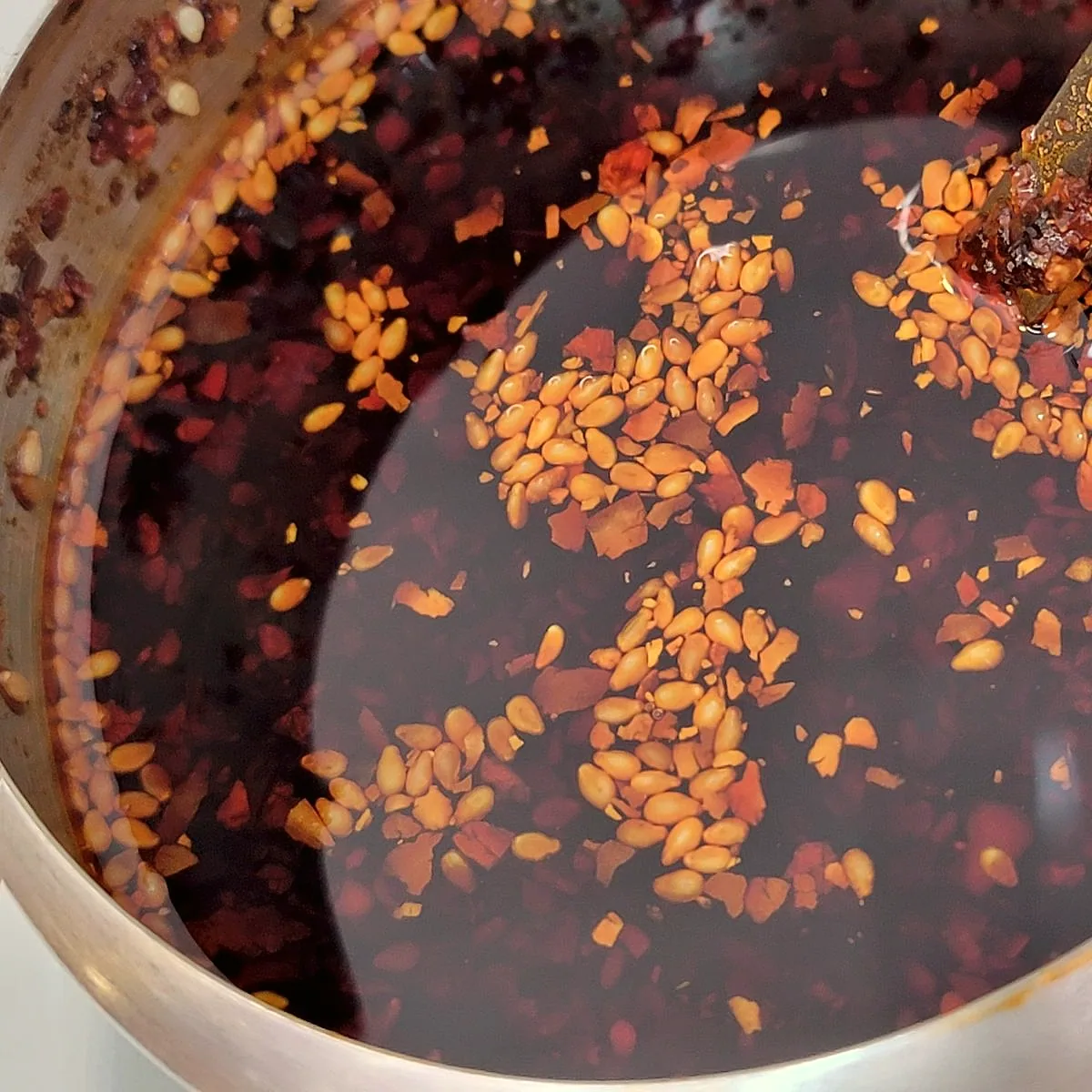
Put the 60 g chilli flakes, 10 g sesame seeds and 4 g fine sea salt in a heatproof bowl. Reheat the strained oil until just beginning to smoke, then pour it over the chilli in two or three additions, stirring between each, over 3m.
The hot oil is poured over the chilli flakes and sesame seed in two or three additions rather than all at once, letting the temperature drop between pours so the chilli colours and flavours the oil without scorching into bitterness.
Leave the oil to cool and steep for at least 1h before bottling, undisturbed, so the sediment can begin to settle.
Chilli peppers are American plants, and nothing resembling this condiment existed in Sichuan before Europeans carried the pepper to Asia following Columbus's voyages, sometime in the sixteenth century [2]. What is less expected is how long the pepper then took to reach Sichuan's own kitchens. Neighbouring Guizhou was already using chillies as a salt substitute by the late seventeenth or eighteenth century, but no surviving record shows Sichuan cooks doing the same at that time, and the province's own authoritative cookbooks from the mid-eighteenth century still make no mention of hot peppers at all [1]. Sichuan's identity as China's chilli-hot cuisine only takes shape in written sources during the nineteenth century, and by 1909 a traveller could describe local diners as unable to imagine a meal without extreme spice [1].
Before the chilli arrived, the province's heat came from an older, unrelated spice: Sichuan pepper, whose numbing quality is why the cuisine's characteristic sensation is called málà, "numbing and hot," rather than heat alone. Chilli oil brings both together deliberately (chilli flakes for colour and burn, Sichuan pepper infused into the same oil for the tingling numbness) rather than treating either as a substitute for the other, and the same balance the two ingredients strike is what separates Sichuan's condiments and braises from a plain chilli heat found elsewhere in Chinese cooking [2].
Once adopted, the chilli spread through Sichuan cooking with unusual speed and thoroughness, ending up in pastes, sauces and infused oils rather than staying a garnish, and chilli oil is one of the simplest and most direct results of that adoption: a way of capturing the pepper's colour and aroma in a form stable enough to keep on hand and spoon over almost anything.
Sources
- Hot Peppers, Sichuan Cuisine, and the Revolution in Modern China, World History ConnectedHongjie Wang's account of chilli pepper's slow, patchy adoption into Sichuan cooking, well after its arrival in China and its uptake in neighbouring provinces.
- How Asians Embraced the Chilli Pepper, South China Morning PostOn the chilli's American origin, its introduction to Asia by European traders, and its gradual spread across regional cuisines over centuries rather than at a single point.