American · Dessert
Carrot Cake
An oil-based, spiced cake built on grated carrot rather than creamed butter, finished with a cream cheese icing.
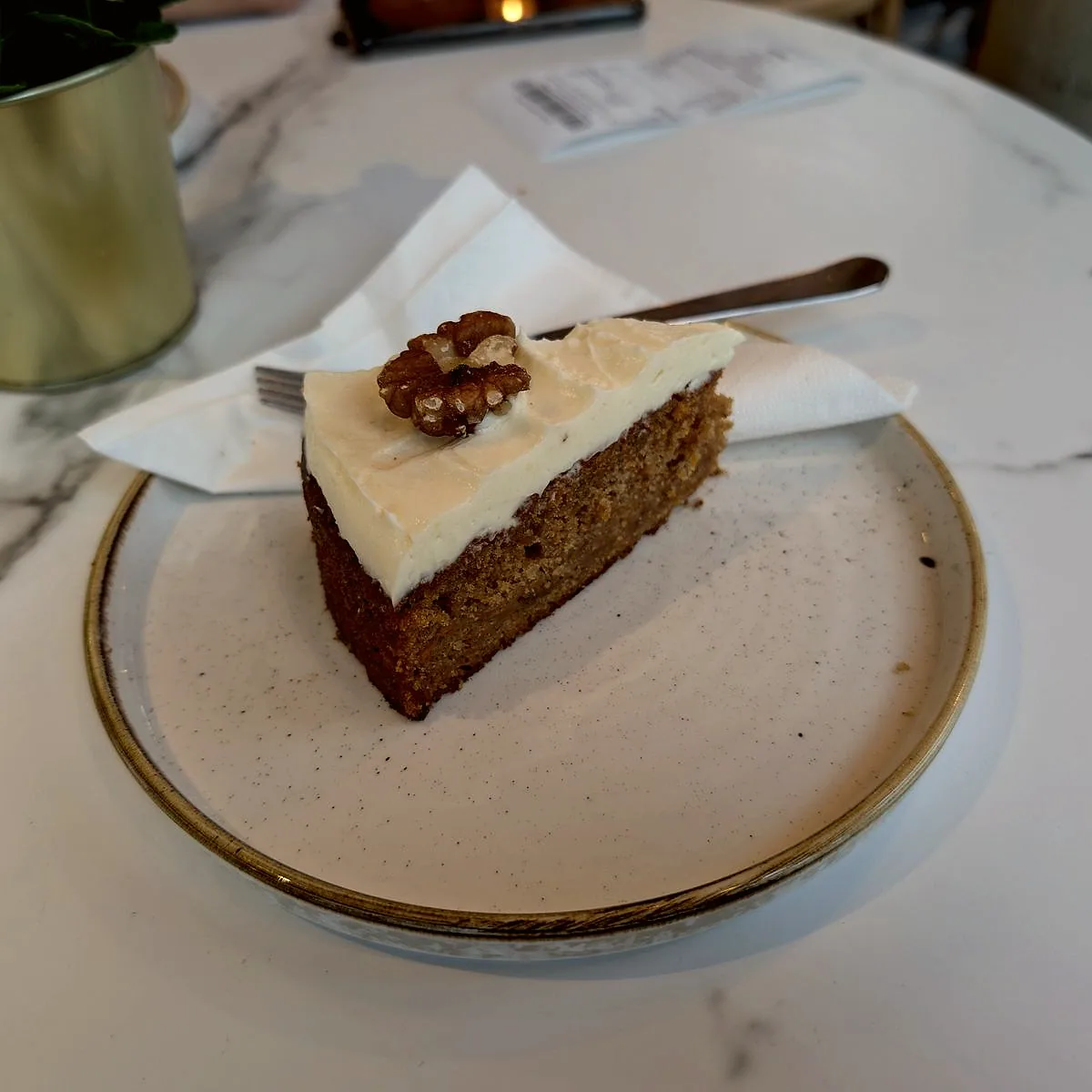

CC0. Cropped and colour-adjusted for this site.
Method
Whisk together the 280 g plain flour, the 8 g baking powder, the 4 g bicarbonate of soda, the 6 g ground cinnamon, the 2 g ground nutmeg and the 4 g fine sea salt. This takes 3m.
Meanwhile heat the oven to 175 °C, giving it 15m to settle, and butter and line two round cake tins.
Whisk the 180 g caster sugar and the 100 g light brown sugar into the 200 ml vegetable oil, then whisk in the 3 eggs (150 g) and the 8 ml vanilla extract, over 4m, until smooth and glossy.
An oil-based batter has no butter to cream for aeration, so the lift here comes entirely from the baking powder and bicarbonate; the eggs and sugar are whisked mainly to dissolve and combine, not to trap air.
Fold the dry ingredients into the wet ingredients, then fold through the 300 g carrot and the 70 g pecans, using 4m and stopping as soon as no dry flour is visible.
Divide the batter between the tins and bake for 35m, until a skewer pushed into the centre of each comes out clean and the tops spring back when pressed lightly.
Turn the layers out onto a rack and leave them to cool completely, for 1h, before frosting.
Meanwhile beat the 250 g cream cheese with the 60 g unsalted butter until smooth, then beat in the 180 g icing sugar and the 4 ml vanilla extract over 6m, stopping as soon as the frosting is thick and holds its shape.
Set one cooled layer on a stand and spread a third of the frosting over the top. Set the second layer on top and cover the whole cake with the remaining frosting, using 8m to keep the sides even. Scatter the 30 g pecans over the top to finish.
Common pitfallCream cheese frosting softens quickly at room temperature and slides off a warm cake. The layers need to be fully cool before frosting, not merely cool to the touch on the outside.
Carrot cake's defining ingredient began as a way around a shortage rather than a virtue in its own right. Sugar was scarce and expensive through much of the Middle Ages, and bakers who wanted a sweet pudding without it turned to carrots, whose own sugars and moisture could do some of sugar's work [1]. An English recipe titled "pudding in a Carret root", dated to 1591, already combines carrot with several elements that survive in the dessert today, though it is closer to a stuffed vegetable dish than to a cake [2]. The cake form as such came later, once household ovens made baking rather than boiling or steaming the easier method: the French chef Antoine Beauvilliers published a "Gâteau de Carottes" in his 1814 cookbook L'Art du Cuisinier, popular enough to be copied by rival cooks, and carried it into an English edition of the same book a decade later [2][1].
The cake's second wave of popularity again traces back to a shortage of sugar rather than an appetite for carrots for their own sake. Wartime rationing in Britain during the Second World War pushed the Ministry of Food to promote carrots as a sweetener, and carrot cake became established as a staple of British baking in that period [2]. Its rise in the United States came later still and for a different reason: American carrot cake spread widely from the 1960s on, helped along by carrots' reputation for healthiness, a reputation the finished cake, layered thick with sugar and cream cheese icing, does not entirely earn [1]. That icing is itself the American layer on an older dish: modern British and American recipes both now finish the cake with a white cream cheese icing, though neither source dates precisely when the pairing became standard rather than one option among several [2].
Sources
- The Sweet Medieval Origins Of Carrot Cake, The Daily MealOn medieval carrot puddings made when sugar was scarce or costly, the shift from boiling to baking as ovens spread, and carrot cake's American surge in the 1960s tied to a perception of healthiness.
- Carrot cake, WikipediaOn the 1591 English "pudding in a Carret root", Antoine Beauvilliers's 1814 and 1824 published gâteau de carottes recipes, and the cake's revival in Britain under Second World War sugar rationing.