Chinese · Main Course
Yangzhou Fried Rice
Cold, day-old rice fried hard and fast with egg, shrimp, char siu and diced vegetables, each grain staying separate rather than clumping together.
Also known asYangzhou chao fan
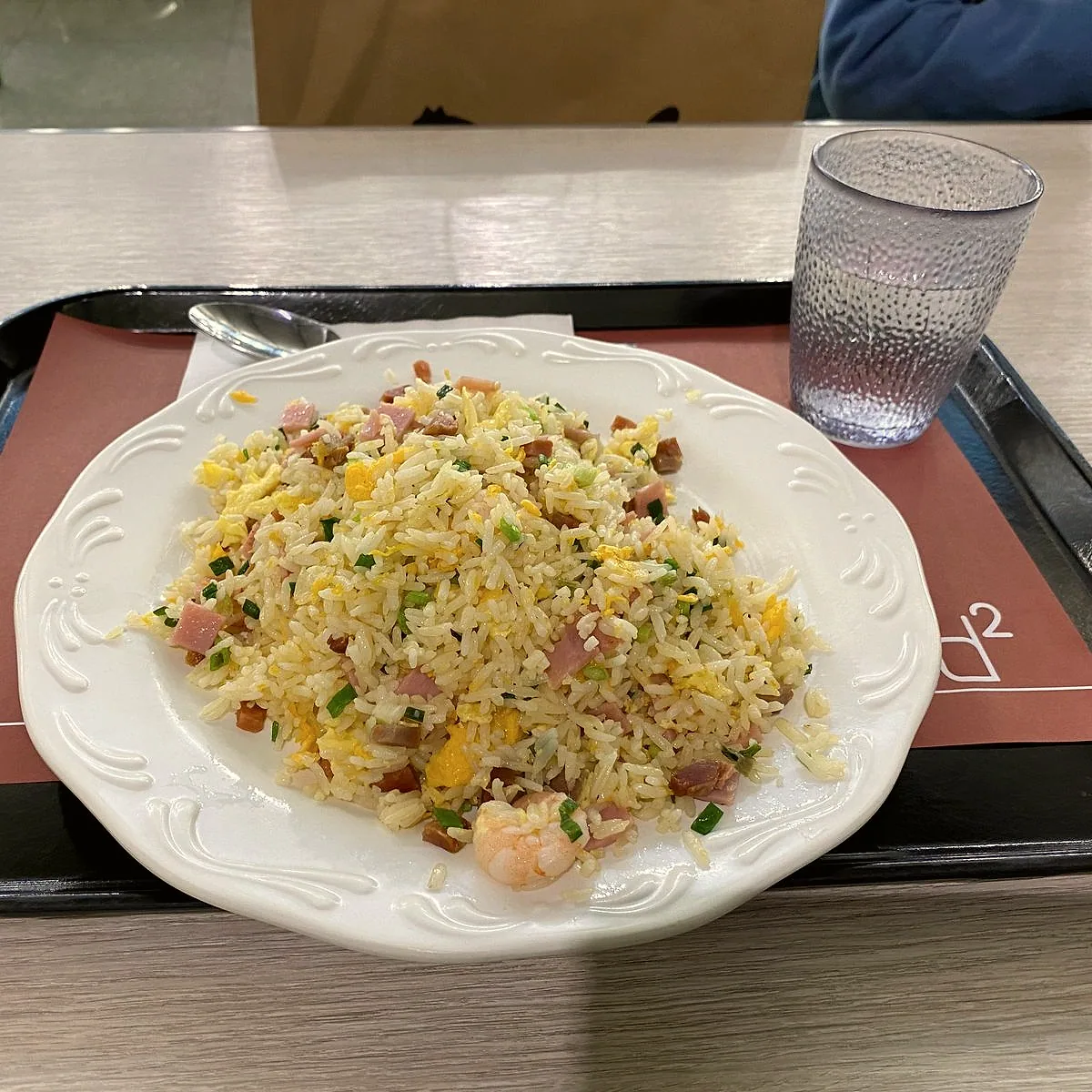

CC BY-SA 4.0. Cropped and colour-adjusted for this site.
Method
Heat a little of the 40 ml peanut oil in a wok over high heat and pour in the 3 eggs (150 g), stirring briefly for 2m to large, soft curds. Lift out and set aside.
Add a little more oil to the wok and stir-fry the 150 g shrimp for 3m, until just pink and cooked through. Lift out and set aside with the egg.
Heat the remaining oil in the wok and add the 400 g rice, breaking up any clumps with the back of a spatula. Add the 100 g pork shoulder, 60 g carrot and 60 g peas, and fry over high heat for 5m, tossing constantly, until every grain is hot and separate.
Rice fried straight after cooking clumps and turns gluey, since the grains are still soft and full of surface moisture. Cold, day-old rice has dried out and firmed up enough for the grains to separate and fry rather than steam.
Return the egg and shrimp to the wok with the 2 ½ spring onions (40 g), 15 ml light soy sauce, 3 g fine sea salt and 1 g ground white pepper. Toss over high heat for 3m, until evenly combined.
Yangzhou fried rice carries an unusually direct contradiction built into its own name: even the dish's own encyclopedic record states outright that it did not originate in the city it is named for [1] [2]. What actually happened instead is harder to pin down. Local legend in Yangzhou credits a visit from a Sui-dynasty emperor for the dish's association with the city; a separate, competing account argues the version of fried rice that became internationally famous really developed later and further south, in Guangzhou under the Qing, and simply carried the older city's name once it spread [2]. Writers who have gone looking for a documented answer tend to conclude the same thing: the dish's real history is genuinely vague, and neither claim rests on strong evidence [2] [1].
Whatever the truth of its birthplace, what distinguishes this fried rice from the plain egg version it grew out of is scale rather than technique: shrimp, char siu and a small dice of vegetable turn a way of using up rice into something substantial enough to be a dish in its own right, while the method (cold rice, a hot wok, constant tossing) stays exactly the same.
Sources
- Yangzhou fried rice, WikipediaStates plainly that the dish did not originate in Yangzhou despite its name.
- The Highs and Lows of China's Fried Rice Capital, ViceLays out the competing Sui-dynasty Yangzhou legend and the alternative Qing-era Guangzhou theory, and concludes the dish's real history is vague.