West African · Main Course
Suya
Thin-sliced beef coated in a dry, groundnut-based spice rub and grilled hard over charcoal, served with raw onion and tomato.
Also known asTsire · Northern Nigeria
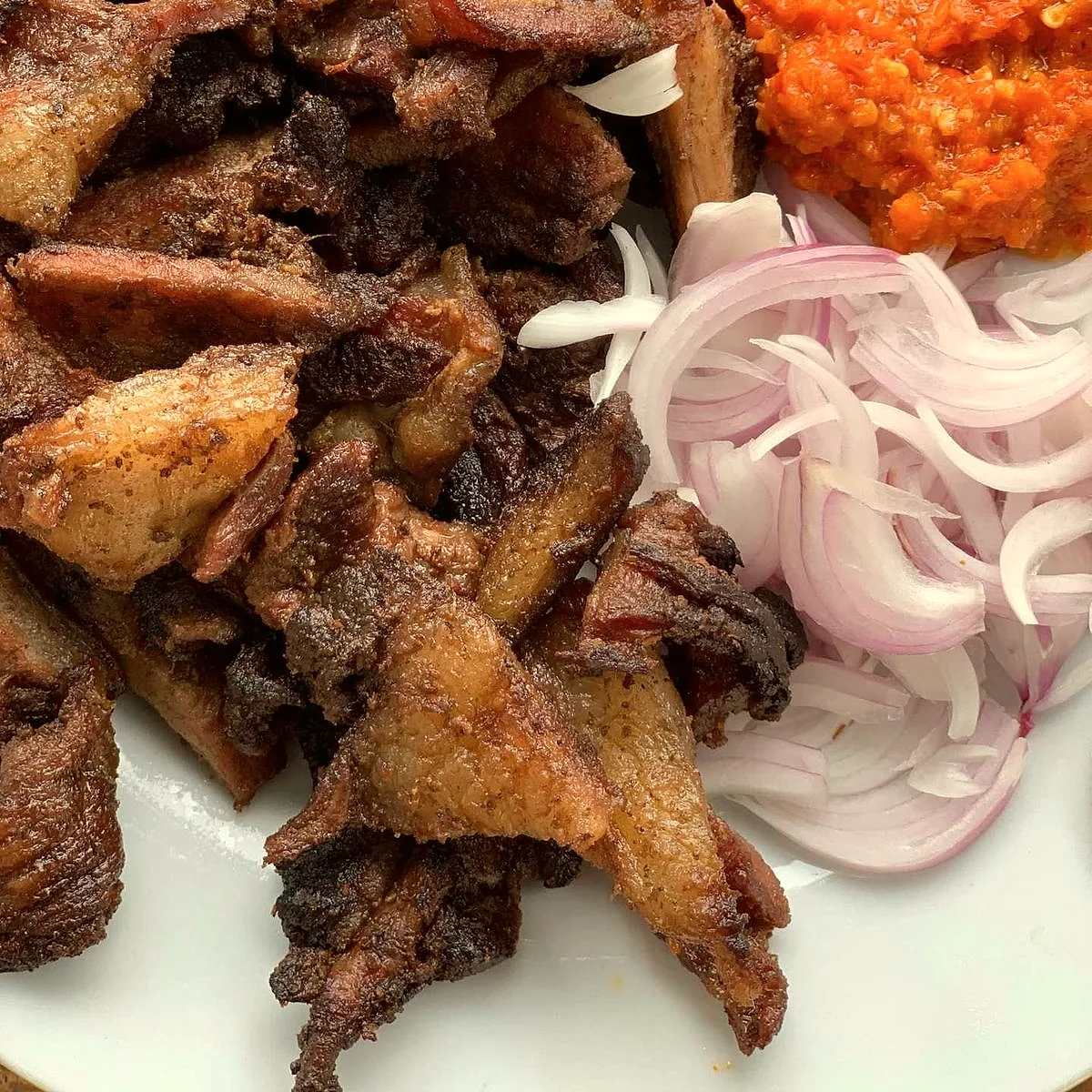

CC BY-SA 4.0. Cropped and colour-adjusted for this site.
Method
Combine the ground 60 g roasted peanuts, 5 g sweet paprika, 5 g chilli flakes, 1 ½ garlic cloves (8 g), 8 g fresh ginger, 5 g beef bouillon powder and 4 g fine sea salt in a bowl and mix into an even, dry spice rub. Work for 8m.
Ground roasted peanuts are what make yaji yaji rather than a plain chilli rub; they toast further on the grill and bind the spice into a dry, savoury crust.
Brush the sliced 500 g beef all over with the 15 ml peanut oil, then coat it thickly and evenly in the yaji, pressing the spice onto the meat. Thread the coated slices onto skewers, working for 10m in total.
Leave the skewers to rest for 20m so the rub sets against the oiled meat.
Grill the skewers over fierce, direct charcoal heat for 8m, turning often, until the crust is dry and lightly charred and the beef is cooked through. Serve with the sliced 80 g white onion and 100 g ripe tomatoes alongside.
Suya's roots are pastoral rather than urban. The dish is traced to the Hausa and Fulani herding communities of Northern Nigeria, Niger and Cameroon, whose nomadic way of life across the Sahel put a premium on preserving and cooking meat quickly over open fires while on the move [1][2]. Ground peanuts, dried and long-keeping, suit that context in a way a wet marinade does not, which is a plausible if not separately documented reason the spice rub took the form it did. Beyond crediting the Hausa, the record does not go much further: exactly when and how the dish was first put together is, by one account, still genuinely unclear [2].
The dish carries two names, and they track two different audiences. Among Hausa speakers, it is still generally called tsire, its original name; suya is the name that spread with the dish as it moved south and out of the Hausa-speaking region, and it is now the more widely recognised term across Nigeria as a whole [1]. That spread turned a specifically Hausa food into something closer to a national one: cheap, sold everywhere, and, by one telling, a genuine unifying thread across a country otherwise divided along regional and ethnic lines [1]. The suya sold today, from beef to chicken and ram, and the version of yaji that seasons it, vary from vendor to vendor, but the groundnut base and the format of thin-sliced meat rubbed dry and grilled fast remain constant across the country.
Sources
- Suya, WikipediaCovers the Hausa/Fulani pastoral origin, the tsire/suya naming split, and the dish's later status as a unifying national food.
- Suya: The Classic Nigerian Street Food You Should Know, Tasting TableIndependently credits the Hausa with creating the dish while noting that exactly when and how it originated is not established, and names kuli-kuli, ground roasted peanut cake, as the base of yaji.