Central African · Main Course
Ndolé
Beef and shrimp simmered with ground peanuts and bitterleaf, boiled through several changes of water until only its deep, savoury edge remains.
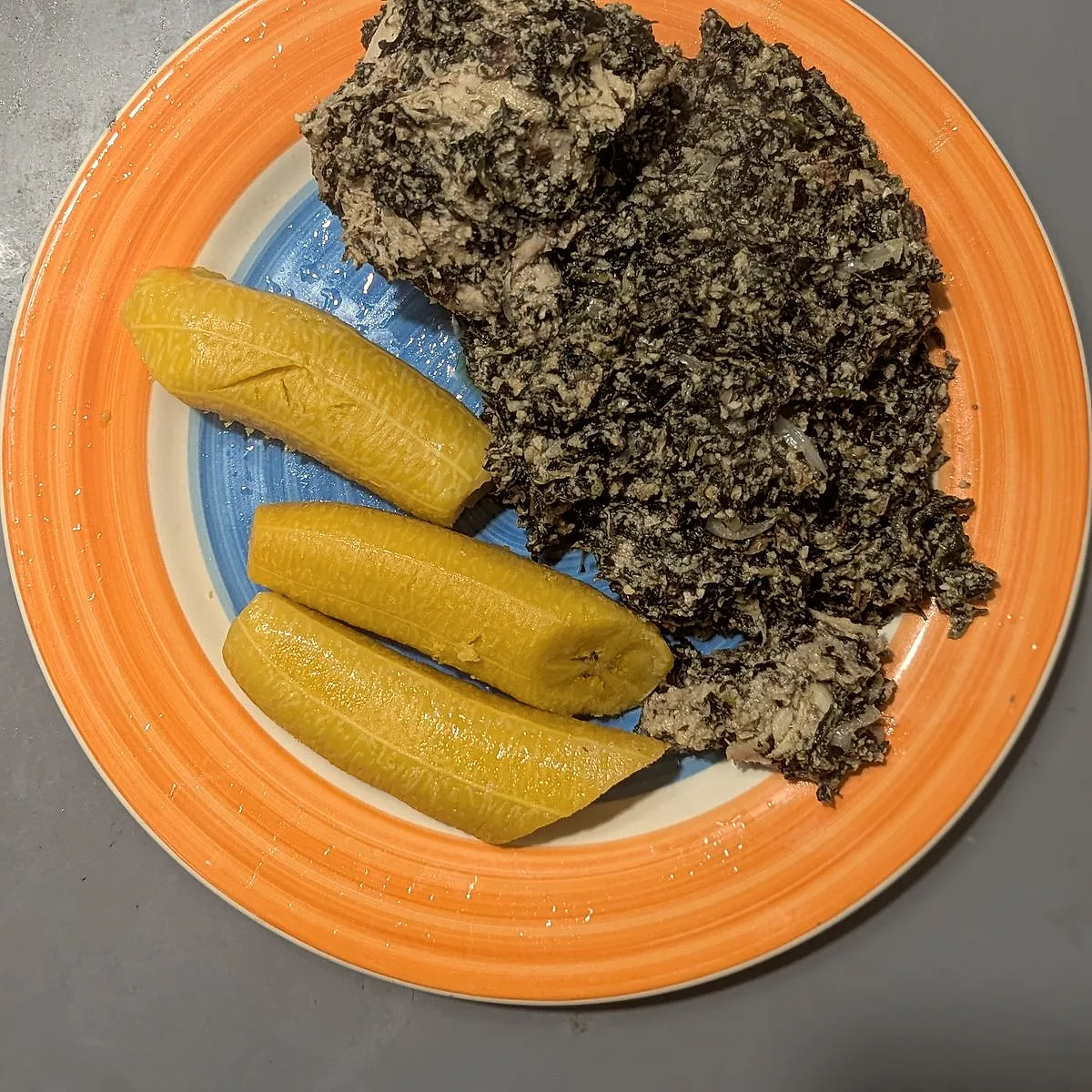

CC BY-SA 4.0. Cropped and colour-adjusted for this site.
Method
Boil the 200 g bitterleaf in plenty of water, draining and covering with fresh water two more times, for 25m in total, until much of its natural bitterness has gone. Drain well and set aside.
The leaves are boiled through several changes of water rather than once, which is what draws off enough of their natural bitterness to leave a rounded, savoury edge instead of a harsh one.
Brown the 400 g chuck in a dry, heavy pot over a high heat for 10m.
Add the 700 ml water and the 6 g fine sea salt to the pot, bring to a simmer, cover, and cook for 50m, until the beef is tender.
Stir the 150 g yellow onion, 3 garlic cloves (15 g), 15 g fresh ginger, 40 g palm oil, 6 g beef bouillon powder and 1 g ground nutmeg into the pot. Stir in the ground 250 g roasted peanuts and cook, stirring often, for 15m, until the sauce has thickened.
Common pitfallThe ground peanut paste scorches easily against the base of the pot. Stir it in over a moderate heat and keep it moving rather than leaving it to sit.
Add the blanched bitterleaf, the 200 g shrimp and the 30 g dried shrimp to the pot. Simmer for 10m, until the shrimp are cooked through and the stew has come together into a thick, dark sauce.
Ndolé takes its name from its defining ingredient: ndoleh, a bitterleaf native to West and Central Africa, cooked down into a peanut sauce with fish, beef, shrimp or some combination of the three [1][2]. Both its ingredient and its origin trace to the same coastal stretch of Cameroon: the dish is generally placed in Douala, in the Littoral Region, and credited to the Duala people and the wider Sawa coastal communities of that area [1][2]. Precisely how old the dish is, or when it moved beyond Duala kitchens, is not documented in detail; what is recorded is where it started and who is credited with it, rather than a fixed date.
The bitterleaf itself is the technical heart of the recipe. Left untreated it is unpleasantly bitter, and reporting on the dish notes that the Sawa people take particular pride in having mastered a leaf otherwise close to toxic [2]. It is boiled several times in salted water (the water changed each time) before it ever meets the peanut sauce, a step that separates a competently made ndolé from a harsh-tasting one [1][2]. That labour is part of why the dish carries a status above the everyday: it is traditionally cooked for guests considered worthy of particular esteem, prepared communally and passed down mostly between women across generations, each family guarding its own version of the recipe [2]. From that coastal starting point, ndolé has since spread across Cameroon's other regions and communities widely enough to be described, informally but consistently, as the country's national dish [1][2].
Sources
- Ndolé, WikipediaCovers the dish's origin in Douala, its status as Cameroon's widely recognised national dish, and the method of repeatedly boiling the bitterleaf before cooking.
- [Série] Le ndolé, l'emblématique plat royal camerounais (4/5), Jeune AfriqueReports ndolé as an ancestral dish of Cameroon's Littoral region credited to the Sawa people, who are noted for having tamed the toxic-if-untreated vernonia leaf, and describes its royal, generation-to-generation status.