Chinese · Main Course
Chow Mein
Wheat noodles boiled, then pan-fried until the strands catch and crisp at the edges, tossed with pork, cabbage and bean sprouts in a light soy sauce.
Also known asChao mian
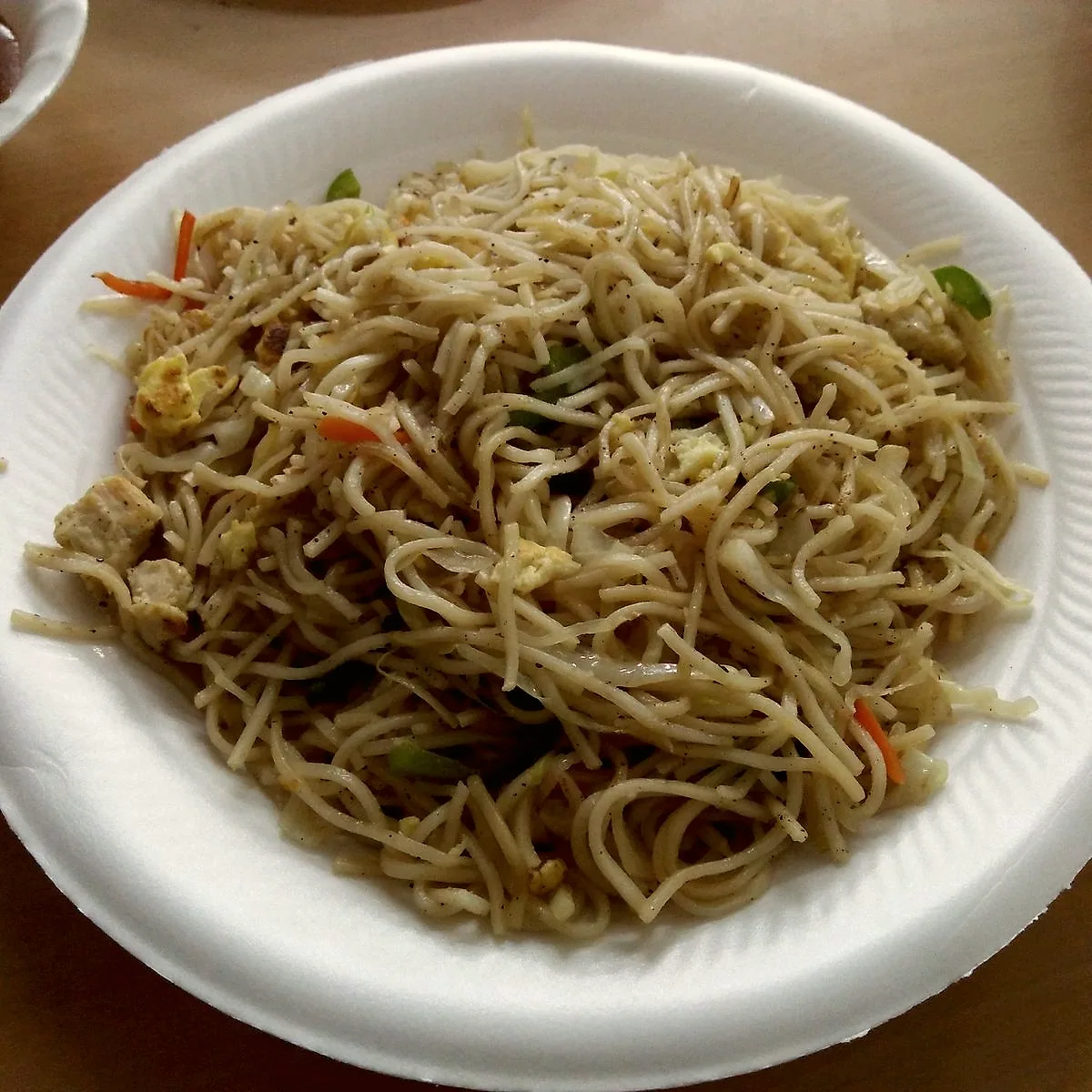

CC BY 3.0. Cropped and colour-adjusted for this site.
Method
Combine the 10 ml light soy sauce and 8 g cornflour in a bowl and turn the 200 g pork shoulder through it.
Leave the pork to marinate for 15m.
Meanwhile, boil the 250 g dried wheat noodles for 4m, until just tender, then drain well and toss with the 10 ml toasted sesame oil to stop them sticking together.
Heat half the 45 ml peanut oil in a wide pan over high heat and spread the noodles in an even layer. Fry undisturbed for most of 5m, then turn and crisp the other side, until browned in patches. Lift out and set aside.
Frying the boiled noodles undisturbed for a stretch before tossing them, rather than stirring constantly, is what lets a crisp, browned layer form against the pan; constant movement never gives any one part of the noodle mass long enough contact with the heat.
Heat the remaining oil in the pan and stir-fry the pork with the 1 ½ garlic cloves (8 g) for a minute, until coloured. Add the 150 g napa cabbage, 60 g carrot and 100 g bean sprouts and stir-fry for 6m, until just softened.
Return the noodles to the pan with the 2 spring onions (30 g), 30 ml light soy sauce, 10 ml dark soy sauce and 5 g caster sugar. Toss over high heat for 3m, until evenly coated.
Chow mein is simply "fried noodles" (chǎo, fried, and miàn, noodle), carried into English in the pronunciation of Taishanese-speaking immigrants from Guangdong, who arrived on America's West Coast in large numbers during the California Gold Rush [2] [1]. The English name is older than it might seem: it is first recorded in American English in 1890, in a source that oddly describes it as a Korean dish, a misattribution that says more about how unfamiliar Asian food still was to English-speaking writers of the period than about the dish itself [1].
The noodles those immigrants cooked with in California were not always the ones available to them, and the dish changed accordingly. Cooks built chow mein around cheap, available produce (onion and celery above all), turning a comparatively light stir-fry into something heavier and more filling, suited to the caloric needs of labourers on the railroads and in the mines rather than to any particular regional Chinese template. By the 1920s and 1930s, chow mein had become what etymologists now call the archetypal Chinese-American dish, distinct enough from anything cooked in China that a visitor to Guangdong at the time would not necessarily have recognised it [1].
Sources
- Chow mein (n.), Online Etymology DictionaryOn the 1890 first appearance of "chow mein" in English, its mistaken early description as a Korean dish, and its later institutionalisation as the archetypal Chinese-American dish.
- Chow mein, WikipediaOn the Taishanese origin of the name, the Gold Rush-era Cantonese immigration that brought the dish to the American West Coast.