Greek · Main Course
Spanakopita
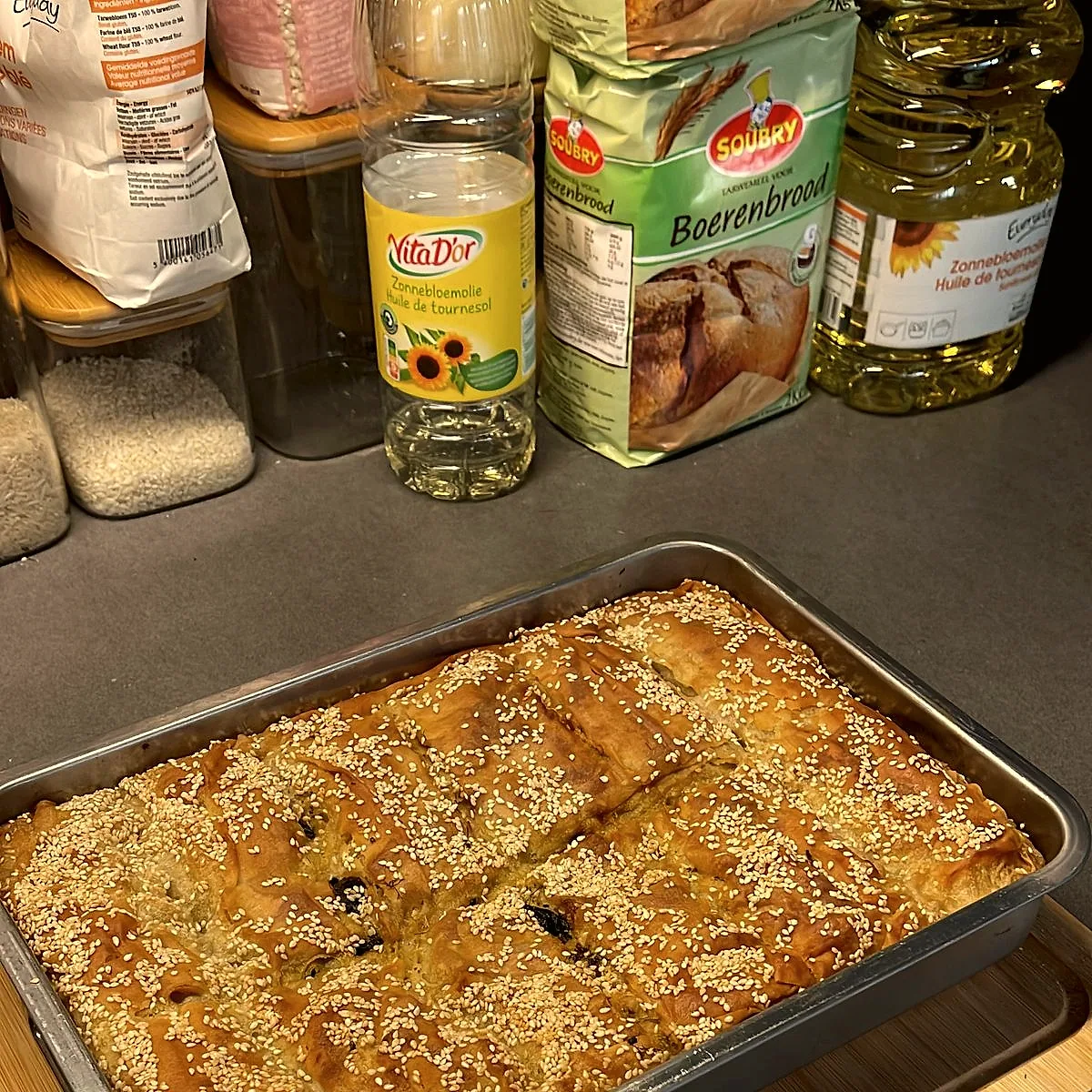
Wilted spinach, feta, dill and spring onion baked between buttered sheets of filo until the top shatters into flakes.
.jpg)
CC BY-SA 4.0. Cropped and colour-adjusted for this site.
Method
Heat the 20 ml extra-virgin olive oil in a wide pan and cook the 5 ½ spring onions (80 g) for a minute, then add the 700 g spinach in batches and wilt it down over 10m, until fully collapsed and no longer releasing liquid. Tip into a sieve and press out as much water as possible, then chop roughly once cool enough to handle.
Combine the wilted spinach mixture with the 300 g feta, 2 eggs (100 g), 15 g dill, 2 g fine sea salt and 2 g ground black pepper in a bowl and mix until evenly combined.
Common pitfallSpinach wilted and folded straight into the feta without draining floods the tray with water, which soaks through the base layer of filo before it has a chance to crisp. Press it dry first.
Brush a baking tray with a little of the 110 ml extra-virgin olive oil and layer in half the sheets of 400 g filo pastry, brushing each sheet with oil before adding the next and letting the edges overhang the sides of the tray.
Spread the spinach filling evenly over the base layer. Layer the remaining filo on top in the same way, brushing each sheet with oil, then fold the overhanging edges back over the top and brush again. Score the top layers into portions with a sharp knife, cutting through the pastry but not into the filling.
Scoring the top layers of filo into portions before baking, rather than cutting the finished pie, lets steam escape along clean lines instead of splitting the pastry raggedly once it is crisp and brittle.
Bake for 45m, until deeply golden and crisp all the way through. Cut along the scored lines to serve.
Greek cooks were making savoury pies of grain dough and vegetable filling long before the pastry now associated with spanakopita existed: flatbreads folded around cheese, herbs and legumes are attested from ancient Greece onward [2]. The paper-thin, many-layered filo that wraps a modern spanakopita is a separate and later development, and its own origin is contested rather than settled. One line of scholarship traces it to yufka, a thin flatbread developed by Turkic peoples of Central Asia and perfected into filo's extreme thinness by Ottoman pastry cooks by the fifteenth century [1]. A competing view points to evidence of layered pastry within the Byzantine and even earlier Greco-Roman tradition: the historian Speros Vryonis has described a Byzantine sweet, koptoplakous, as effectively the same dish as what is later called baklava, and the Roman writer Cato recorded a layered cheese pastry, placenta, that predates any Ottoman contact by well over a thousand years [1][2].
Spanakopita specifically is most often placed on the Ottoman side of that argument, with its filo layers understood as an adaptation of yufka that arrived during the centuries of Ottoman presence in Greece [2]. But given how unsettled filo's own history is between these two accounts, the honest position is that spanakopita sits downstream of a pastry technique whose deeper origin is still argued over by the people who study it, rather than downstream of one confidently dated event. What is not in question is the pairing the dish is built on: spinach, feta and dill, wrapped in a pastry engineered specifically to shatter into flakes rather than bend.
Sources
- Filo, WikipediaOn the paper-thin dough being perfected in the Ottoman Empire by the fifteenth century, its proposed descent from Central Asian yufka, and the counter-evidence of pre-Ottoman layered pastries in the Byzantine and Greek record.
- Spanakopita Recipe & History — Traditional Greek Spinach Pie, PhilosoKitchenOn savoury pies as an ancient Greek food category predating filo, the case for an Ottoman-era origin of spanakopita specifically, and the older counter-example of Cato's placenta recipe.