Andean · Soup
Encebollado
Tuna and cassava simmered in a cumin-and-achiote broth, topped with lime-pickled red onion. It is Ecuador's coastal fish soup, eaten at any hour as a cure for the night before.
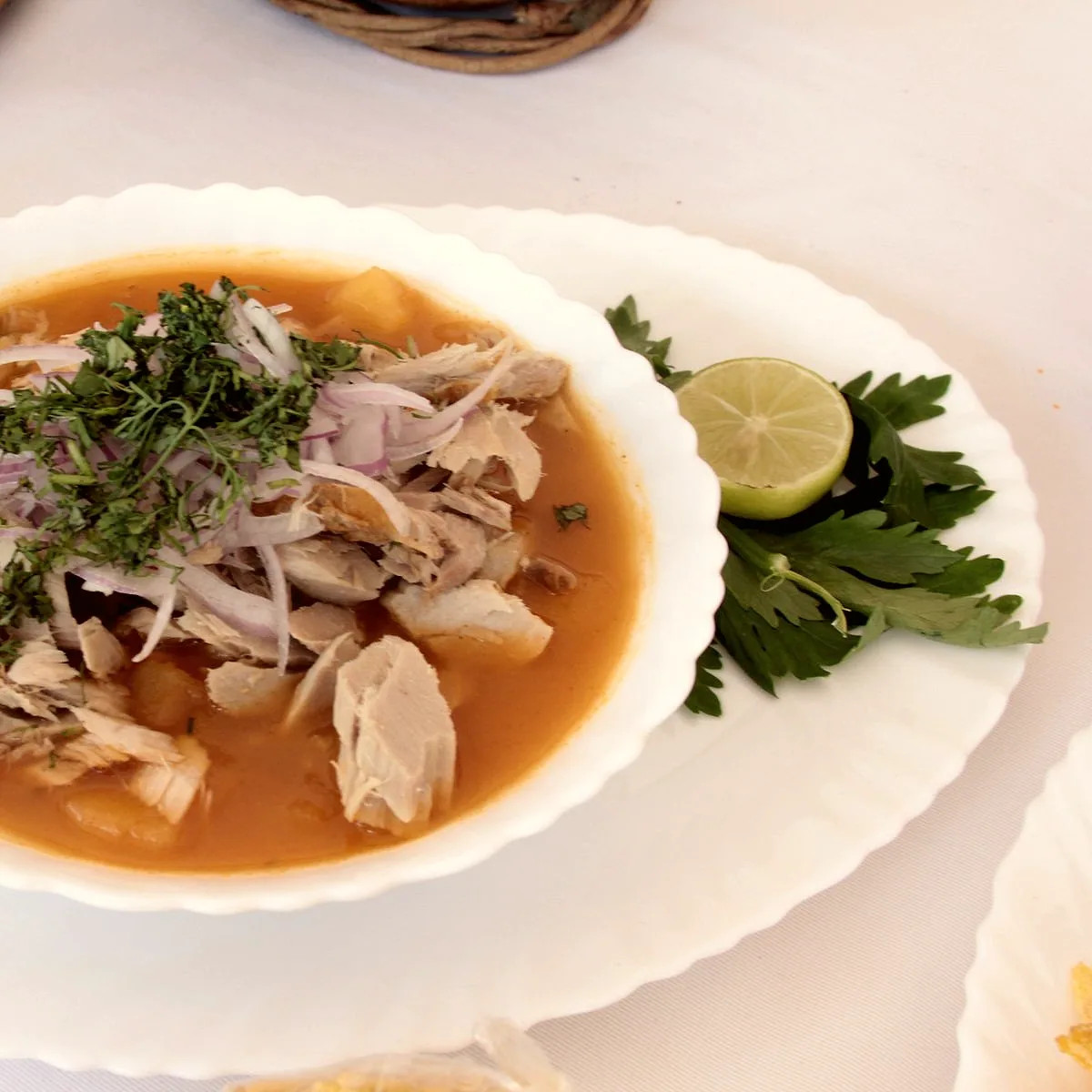
.jpg)
CC BY-SA 2.0. Cropped and colour-adjusted for this site.
Method
Toss the 150 g red onion with the 40 ml fresh lime juice and 2 g fine sea salt and leave to pickle for 15m.
Common pitfallSliced onion added raw and un-pickled is sharp and overpowering on top of the finished soup; the brief lime-and-salt pickle mellows it into the soft, acidic topping the dish is built around.
Meanwhile, simmer the 400 g raw cassava in the 1.5 L water for 25m, until tender. Do not drain.
Add the 2 garlic cloves (10 g), 150 g ripe tomatoes, 3 g ground cumin, 3 g achiote and 6 g fine sea salt to the cassava and its liquid and simmer for 10m.
Add the 500 g raw tuna and simmer for 8m, until just cooked through.
Adding the tuna only once the broth is already built and simmering, and cooking it briefly, keeps the fish tender rather than turning it dry and stringy over a long simmer.
Stir in the 15 g fresh coriander, ladle into bowls, and top with the pickled onion. This takes about 5m.
Guayaquil's own historian gives encebollado a specific birthplace: not a kitchen but a dock. Jenny Estrada traces the dish to the working riverside culture of the Guayas, where fish hauled in from the sea met cassava dug from the land, cooked together into a hot, substantial meal for men doing physically demanding dockside work [1]. On this account the soup was functional before it was beloved: food built to refuel a working body, not a delicacy designed for a table.
What began as dockworkers' food later became the city's own, and by one account it was only in the mid-1980s that encebollado moved decisively from riverside kitchens onto Guayaquil's streets, sold by vendors rather than cooked mainly at home [1]. That move from private kitchen to public street stall is common to a number of dishes on this site, and it marks the point at which a local, working-class food becomes a dish visitors are told to seek out.
The dish that resulted, and that Ecuador now treats as its national one [2] [1], is built from three simple elements (fish, cassava and a lime-pickled onion), a combination plain enough that its dockside, working-food origins are still legible in the finished bowl.
Today encebollado is eaten across Ecuador at any hour, though it keeps a reputation, only half joking, as the country's standard remedy for a heavy night before.
Sources
- Encebollado: from the river to the streets, Nan MagazineCites Guayaquil historian Jenny Estrada attributing encebollado's origin to the city's riverside culture, fish from the sea meeting yuca from the land in dockworkers' kitchens, and dates the dish's move from riverside cooking onto the city's streets to roughly the mid-1980s.
- Encebollado, WikipediaDescribes encebollado's core ingredients (tuna or another large fish, cassava and pickled red onion) and its standing as Ecuador's national dish.