Filipino · Breakfast
Tapsilog
Cured beef seared hot and fast, served with garlic fried rice and a fried egg. One plate holds all three words in its name.
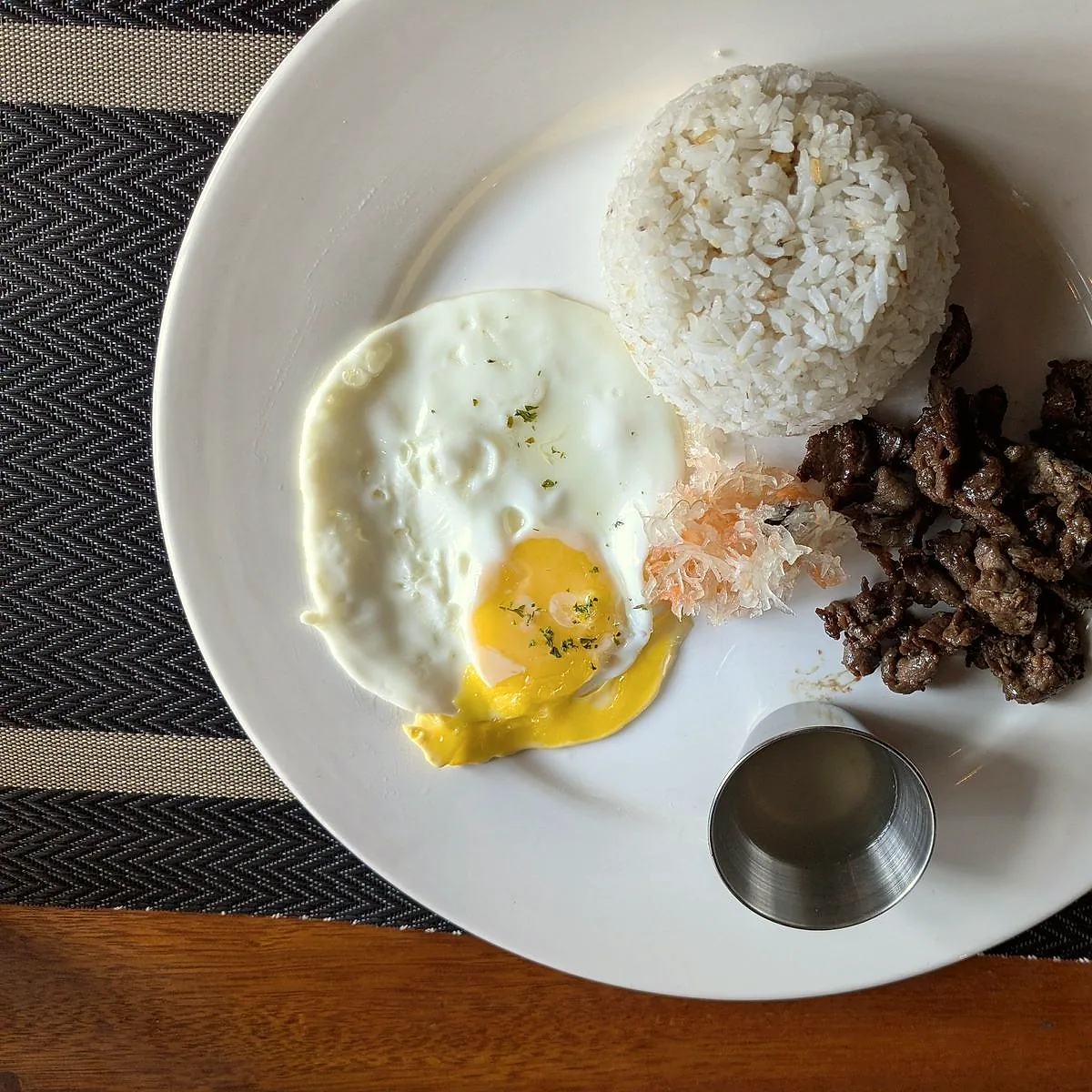

CC BY-SA 4.0. Cropped and colour-adjusted for this site.
Method
Combine the 45 ml light soy sauce, 20 ml cane vinegar, 4 garlic cloves (20 g), 15 g light brown sugar and 2 g ground black pepper in a bowl and turn the 500 g raw beef topside through it for 10m.
Cover and marinate in the refrigerator for 1h.
Meanwhile, rinse the 300 g rice, combine with the 480 ml water in a covered pot and cook for 20m, until tender. Spread out on a tray to cool and dry slightly.
Heat the 15 ml vegetable oil in a wide pan and fry the 3 garlic cloves (15 g) until golden. Add the cooled rice and fry for 8m, tossing, until every grain is coated and lightly crisp. Set aside and keep warm.
Common pitfallFreshly cooked rice is wet enough to turn gluey in the pan. Spreading it out to cool and dry slightly before frying is what gives sinangag its separate, faintly crisp grains.
Heat the 10 ml vegetable oil in a hot pan and sear the marinated beef, in batches if needed, for 8m, until browned at the edges and just cooked through.
The beef is seared over high, direct heat for a short time rather than simmered, which is what keeps tapa's edge, a firm, slightly chewy bite with a browned surface, distinct from a braise.
Heat the 15 ml vegetable oil and fry the 5 eggs (240 g) for 5m, until the whites are set and the yolks still soft. Serve each portion with the beef, garlic rice and a fried egg alongside.
The name is built the same way most silog dishes are: a shortened meat name, plus sinangag for garlic fried rice, plus itlog for egg, spliced into one word, tap-si-log from tapa, cured beef, being the original and still the most common of the family [1] [2].
Unusually for a dish this common, its coining is attached to one named person rather than lost to anonymous street food. Vivian del Rosario, who opened a small stall called Tapsi ni Vivian on a corner lot in Quezon City in 1986, says she was the first to shorten "tapa, sinangag, itlog" into tapsilog [2] [1]. Before that, the same combination (beef tapa served with garlic rice, without a fixed name for the egg) went by tapsi, and the stalls that served it were called tapsihan.
Whether or not del Rosario's stall was truly first, the name spread fast and the format faster: once "tapsilog" existed as a template, cooks began building the same three-part shorthand around other proteins, producing hotsilog with a hot dog, hamsilog with ham, and longsilog with sweet cured sausage, all sharing the same base of garlic rice and fried egg [1] [3]. What began as inexpensive, quick breakfast or late-night food is now sold everywhere from roadside carinderias to shopping-mall food courts.
Sources
- Silog, WikipediaExplains the silog portmanteau naming pattern and Vivian del Rosario's claim to having coined "tapsilog" at her stall, Tapsi ni Vivian.
- The History of Tapsilog and Where It All Began, Esquire PhilippinesDates the founding of Tapsi ni Vivian to 1986, at a stall on a Quezon City corner lot.
- All You Need to Know About Filipino Silog Meals, Will Fly for FoodExplains the silog portmanteau template and confirms longsilog (longganisa) and hotsilog (hot dog) as variants built on the same garlic-rice-and-egg base.