Brazilian · Side
Farofa
Cassava flour toasted with bacon, onion and butter until dry and golden. It is the standing side dish of the Brazilian table.
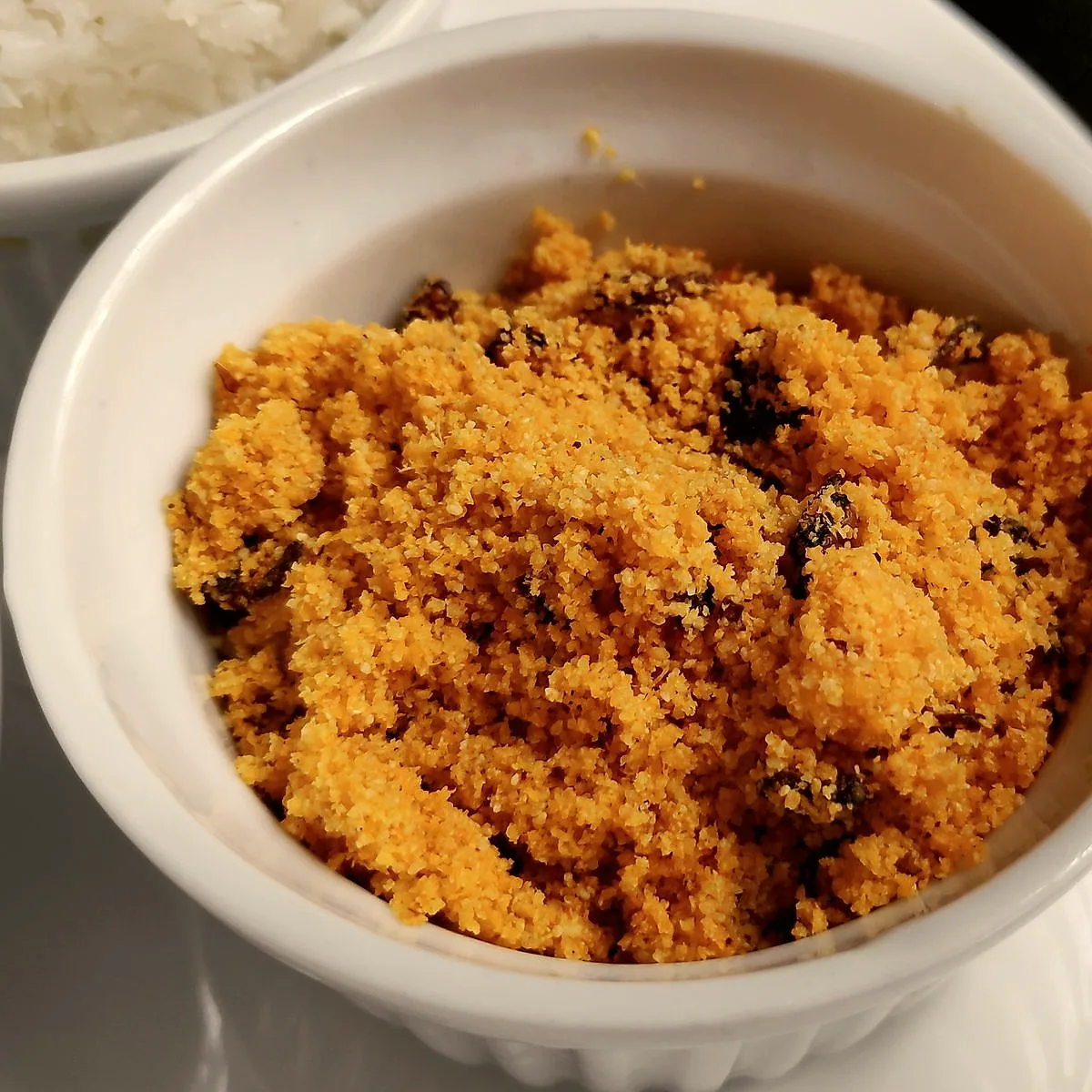

CC BY-SA 4.0. Cropped and colour-adjusted for this site.
Method
Cook the 100 g bacon in a wide, dry pan over a medium heat for 8m, until crisp, then lift out and set aside, leaving the fat in the pan.
Add the 30 g unsalted butter to the pan and cook the 100 g white onion and 2 garlic cloves (10 g) for 5m, until soft and golden.
Return the bacon to the pan and stir in the 250 g cassava flour, 3 g fine sea salt and 2 g ground black pepper. Toast, stirring constantly, for 10m, until the flour is evenly golden and smells toasted rather than raw.
The flour is already cooked when it is sold, so this step is toasting rather than cooking it through. Constant tossing over a moderate heat colours it evenly and keeps individual grains separate instead of a few catching and burning while the rest stays pale.
Cassava flour is Indigenous to Brazil, but farofa itself is not, and the distinction matters more than it first appears. The sociologist Carlos Alberto Dória points out that Indigenous cooking added seasoning to a finished dish rather than working spices and fat into a flour as it toasted (the technique that defines farofa), which places its invention later, with enslaved cooks rather than the people who first domesticated the plant [1]. The word itself supports an African route: researcher Maria Lecticia Monteiro Cavalcanti traces "farofa" to falofa, a term from Kimbundo, a Bantu language spoken in Angola, describing flour worked with fat or water [1].
That the flour itself was already central to Brazilian and Atlantic life by the time farofa emerged is well documented. Manioc flour had been a provisioning staple across the Portuguese Atlantic system since the late sixteenth century, packed as standard rations on slave ships alongside soldiers' and sailors' supplies, and by the eighteenth and nineteenth centuries it made up the great majority of food entering at least one major colonial storehouse in Salvador [2]. Farofa, in other words, was built from an ingredient that already sustained the ships and garrisons of an empire, adapted into a seasoned, fat-cooked side dish by the enslaved cooks who prepared food within that same system.
One of the earliest written descriptions of the dish comes from the American traveller Daniel Parish Kidder, who recorded manioc flour prepared with fat, pepper and vinegar under the name farofa in his account of travelling through Brazil's northern provinces [1]. From that base (flour, fat, seasoning) cooks have added bacon, egg, banana, olives and dried meat ever since, but the dry-toasted, richly fatted method itself has not changed.
Sources
- Farofa: uma grande companhia, Revista ContinenteCites the researcher Maria Lecticia Monteiro Cavalcanti and the sociologist Carlos Alberto Dória on farofa's enslaved-cook origins, the Kimbundo etymology of the word, and Daniel Parish Kidder's early written description of the dish.
- De farinha, bendito seja Deus, estamos por agora muito bem: uma história da mandioca em perspectiva atlântica, Revista Brasileira de HistóriaAcademic history of manioc flour's role provisioning enslaved people, soldiers and sailors across the Portuguese Atlantic system from the sixteenth century onward.