American · Side · Salad
Coleslaw
Shredded cabbage and carrot bound in a mayonnaise dressing. One serving is a generous side portion.
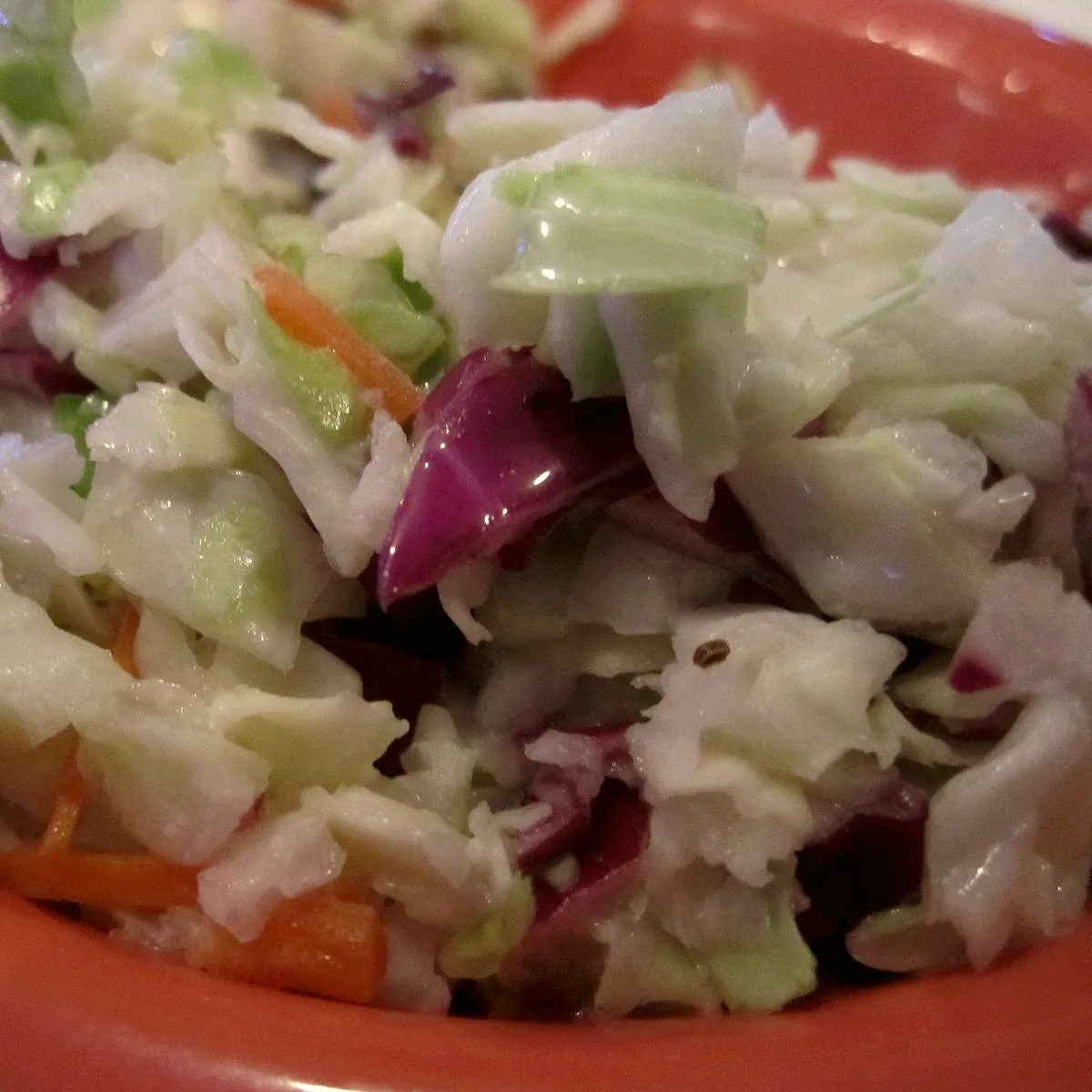

CC BY-SA 3.0. Cropped and colour-adjusted for this site.
The same dish, adapted. Every quantity, time and figure below changes with the version.
Method
Whisk the 150 g mayonnaise, the 15 ml cider vinegar, the 15 g caster sugar, the 3 g mustard powder, the 4 g fine sea salt and the 2 g ground black pepper together until smooth, over 3m.
Toss the 500 g white cabbage, the 100 g carrot and the 30 g white onion with the dressing until every strand is coated, over 4m.
Chill for 30m before serving.
Method
Warm the 60 ml cider vinegar, the 45 ml vegetable oil, the 40 g caster sugar and the 4 g mustard seeds together in a small pan just until the sugar dissolves, over 4m, then stir in the 5 g fine sea salt and the 2 g ground black pepper and let it cool.
Warming the vinegar, oil, sugar and mustard seed briefly dissolves the sugar fully and blooms the mustard seed, instead of leaving grains and an unmixed slick sitting on top of the cabbage.
Toss the 500 g white cabbage, the 100 g carrot and the 30 g white onion with the cooled dressing until evenly coated, over 4m.
Leave to rest, covered, for 1h before serving, so the cabbage begins to soften in the vinegar.
The name is Dutch before it is anything else. Koolsla, literally "cabbage salad," from kool (cabbage) and sla (salad), was brought to New Amsterdam, later New York, by Dutch settlers in the seventeenth century, in a region whose Hudson Valley farmland was well suited to growing cabbage [1]. English-speaking Americans anglicised koolsla into "coleslaw" by the late eighteenth century, though the spelling "cold slaw" also took hold early and persists in places today, on the reasonable but mistaken assumption that the name refers to the dish being served chilled rather than to the cabbage in it [2].
The idea behind the dish (cabbage cut fine and dressed while raw) is far older than the Dutch name for it. A recorded Greek recipe from the fourth century BC already calls for chopped cabbage dressed with coriander, rue, vinegar and honey, showing that dressed raw cabbage has been eaten in some form for well over two thousand years before it acquired the name coleslaw [1]. What is specifically American is the mayonnaise-based version now most common; vinegar-dressed slaw, closer to the cabbage salads that predate it, remained and remains the more traditional alternative in parts of the South.
Sources
- Coleslaw, Encyclopædia BritannicaOn coleslaw's Dutch origin and its introduction to New Amsterdam.
- Coleslaw vs. Cold Slaw: Which is right?, Merriam-WebsterOn the etymology of "coleslaw" from the Dutch koolsla and the later "cold slaw" mistranslation.