Argentine · Condiment
Chimichurri
An uncooked sauce of parsley, oregano, garlic and vinegar, spooned over grilled beef across Argentina and Uruguay.
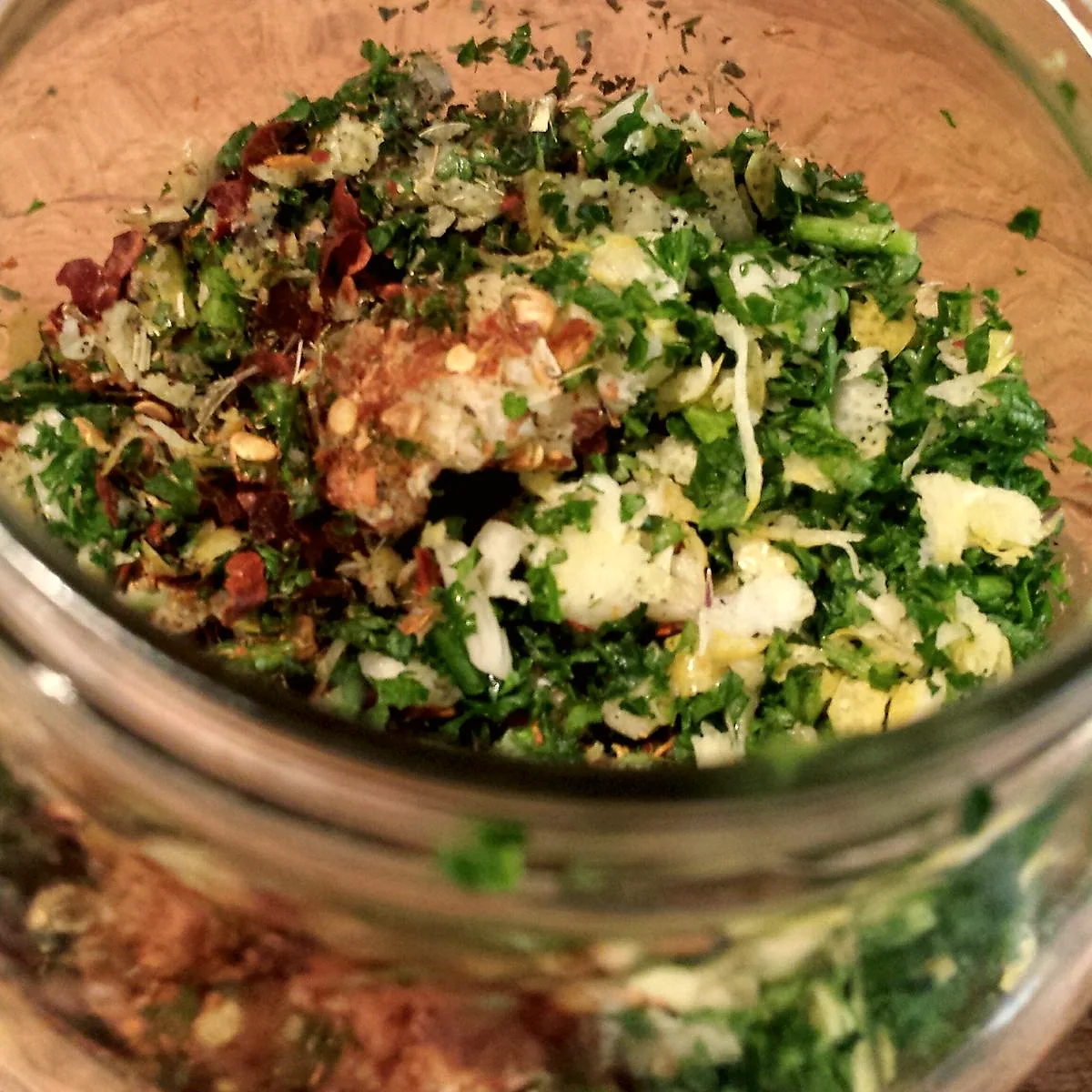
.jpg)
CC BY 2.0. Cropped and colour-adjusted for this site.
Method
Combine the 40 g flat-leaf parsley, 6 g oregano, 3 garlic cloves (15 g) and 2 g chilli flakes in a bowl. Stir in the 80 ml red wine vinegar and 30 ml water, then whisk in the 150 ml extra-virgin olive oil along with the 5 g fine sea salt and 2 g ground black pepper.
Let the sauce stand, covered, at room temperature for 30m before serving, so the garlic and herbs mellow into the vinegar and oil.
Chimichurri is not cooked, so the only way the garlic and dried oregano soften and the flavours combine is time steeped in the vinegar and oil; used immediately it tastes sharp and disjointed rather than rounded.
Chimichurri is closely bound up with the Argentine grill, and popular accounts trace it to the gauchos of the nineteenth-century Pampas, who are imagined seasoning open-fire beef with whatever herbs and vinegar were at hand. The documentary record does not support a history that old: the sauce does not appear in print cookbooks before the late 1950s, a gap of a century or more between the supposed gaucho origin and its first written trace [2].
The name is the more genuinely contested part of the story. The leading theory holds it a corruption of the Basque word tximitxurri, meaning roughly "a hodgepodge" or "a mixture of several things in no particular order", plausible given the substantial Basque immigration to Argentina and Uruguay, which brought roughly six million arrivals to Argentina alone between 1870 and 1930 and had already begun building organised communities there from the 1850s onward [1][3]. A rival family of stories credits English speakers instead: that the word garbles "Jimmy's curry" or the name of an Irish or English soldier, sometimes tied to the failed British invasions of the Río de la Plata in 1806–1807. Wikipedia, Britannica and Argentine food media covering the claim all treat these English-language stories the same way, as colourful and widely repeated legend rather than documented history, with no contemporary source behind any version of them [1][4].
What is not in dispute is the sauce itself: parsley, garlic, oregano, chilli and vinegar, built to cut through the richness of grilled beef rather than to cook alongside it. Its wide reach today, from Uruguay to southern Brazil, tracks the reach of the Argentine parrilla and the tradition it seasons, which is a steadier guide to how chimichurri actually spread than any of the stories told about where its name came from.
Sources
- Chimichurri, WikipediaSets out the competing Basque and English-language etymologies and notes that none of the anecdotal stories have contemporary documentation.
- Chimichurri, Encyclopædia BritannicaDates the sauce's appearance in print cookbooks to no earlier than the late 1950s, despite its association with nineteenth-century gaucho cooking.
- Argentina en lo cotidiano (1830–1930), Euskal Kultur Erakundea (Basque Cultural Institute)Basque heritage-institute account of the scale of Basque emigration to Argentina between 1870 and 1930, and its community institutions there from the 1850s onward.
- Chimichurri: ¿cuál es su verdadero origen?, elGourmetArgentine food-media account presenting the English-language name theories explicitly as undocumented legend rather than history.