American · Main Course
Chicago Deep Dish Pizza
A cornmeal-enriched dough pressed high up the sides of a deep pan, filled with mozzarella and toppings, and covered rather than topped with tomato sauce.
Not the same asPizza pie (A generic American term for a round flat pizza. Deep dish is a distinct, pan-baked construction rather than just a regional name for pizza.)
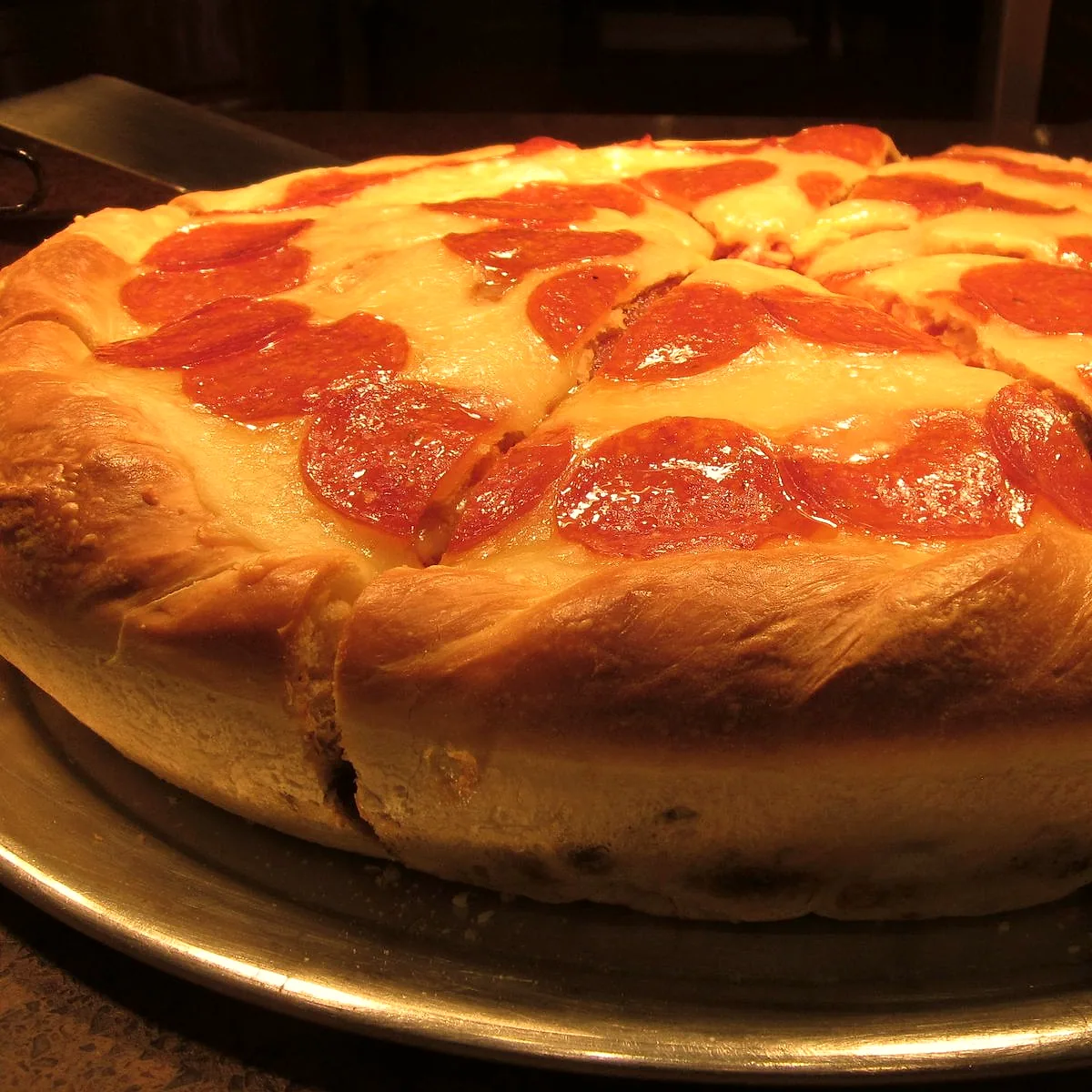

CC BY-SA 3.0. Cropped and colour-adjusted for this site.
Method
Dissolve the 3 g dried yeast in the 110 ml water. Combine the 280 g bread flour and 20 g white maize meal in a bowl, pour in the yeast mixture and the 35 ml extra-virgin olive oil, and mix until a shaggy dough forms. Add the 6 g fine sea salt and continue mixing.
Knead for 10m, until smooth and only slightly tacky.
Cover and leave at room temperature for 1h 30m, until roughly doubled.
While the dough ferments, crush the 400 g tinned San Marzano tomatoes and combine with the 1 garlic clove (6 g) and 2 g oregano. Leave uncooked; the sauce finishes in the oven.
Coat a deep, straight-sided pan with the 10 ml extra-virgin olive oil. Using the 20 g bread flour to keep the dough from sticking, press it out and up the sides of the pan so the rim stands proud of the filling to come.
Lay the 340 g fresh mozzarella directly over the base of the dough, right to the edges, then spoon the tomato sauce evenly over the cheese and finish with the 20 g Parmigiano-Reggiano.
Cheese goes directly against the dough and the sauce goes on last, unlike a thin-crust pizza. A long bake under a wet tomato layer would turn the crust soggy, but a wall of melted cheese underneath it protects the dough for the whole cook.
Bake at 230 °C for 35m, until the crust is deeply browned at the rim and the sauce has thickened and started to char in patches.
Common pitfallCutting into the pizza straight from the oven collapses the layers into a puddle. It has to rest so the cheese and sauce firm up enough to hold a slice together.
Rest the pizza in the pan for 15m before slicing, then scatter over the 4 g fresh basil.
Deep dish pizza is dated with unusual precision: Pizzeria Uno opened on Chicago's Near North Side in 1943, founded by Ike Sewell and Ric Riccardo, and is universally agreed to be where the style began [1]. What is not agreed on is who actually built the dish. Ownership records suggest Sewell had no stake in the restaurant until after it opened, which weakens his usual billing as the inventor, and some accounts instead credit Riccardo, who is said to have brought the idea of pizza to the venture in the first place [1]. A kitchen employee, Rudy Malnati Sr., separately claimed credit for the crust recipe itself, and the version most repeated today was simplified only after Sewell sold the business in the 1970s, at which point he received sole credit in the retelling [2].
Whoever built it, the construction is the genuinely unusual part. A high-sided crust, often enriched with cornmeal or oil for a texture closer to pastry than bread, is pressed up the sides of a deep, round pan. Cheese goes against the dough rather than the sauce, and the tomato goes on top, uncooked before it bakes, rather than being simmered beforehand. This is the reverse of nearly every other pizza style. That inverted order exists for a practical reason: a layer of melted cheese between the dough and a long bake under wet tomato is what keeps the crust from turning soggy over the pizza's much longer time in the oven.
Sources
- Pizzeria Uno and the Mysterious Origins of Deep-Dish Pizza, Culinary Historians of ChicagoExamines the ownership records and staff accounts behind the competing invention claims.
- The Secret History of the Original Deep-Dish Crust, Chicago MagazineOn the crust recipe's development and the staff members credited with it.