
.22 Hornet
Introduced 1930Townsend Whelen and G. L. WotkynsCIP standard
Also known as 22 Hornet, 5.6x36mmR Hornet: the same cartridge under different names, all of which find this page.
Dimensions and pressure
Generated from the schema, like every specification table on this site, so a figure recorded on this entry cannot be missing from the table.
Identity
- Designed by
- Townsend Whelen and G. L. Wotkyns
- Introduced
- 1930
- Production
- not recorded
- Standards body
- C.I.P.
- Case type
- Rimmed
- Case shape
- Bottleneck
Dimensions
- Bullet diameter
- 5.7 mm0.2244 insource
Cartridge maximum, dimension G1. Some rifles made before the standard settled are bored for a 0.223 in bullet rather than 0.224 in.
- Bore diameter
- not recorded
- Case length
- 35.64 mm1.403 insource
Cartridge maximum, dimension L3.
- Overall length
- 43.76 mm1.723 insource
Cartridge maximum, dimension L6.
- Rim diameter
- 8.89 mm0.3500 insource
Dimension R1.
- Neck diameter
- 6.16 mm0.2425 insource
Dimension H2.
- Base diameter
- 7.59 mm0.2988 insource
Dimension P1. The case tapers 1.43 mm over its length, which is the black-powder .22 WCF profile it inherited.
Pressure
- Maximum pressure
- 300 MPa43,511 psisource
Pmax 3000 bar. SAAMI rates the same chambering at 43,000 psi by its own method, and the two figures are not interchangeable.
- Pressure standard
- C.I.P.
SAAMI and C.I.P. measure pressure differently and their figures are not interchangeable, which is why the body is always named beside the figure.
Loads
Velocity is recorded per barrel length as published. A gun page interpolates between these points and never projects beyond them.
35 gr V-Max
- Bullet mass
- 2.268 g35.00 grsource
35 gr as published in the article's ballistics table, converted to grams.
- Cartridge mass
- not recorded
- Bullet type
- V-Max
- G1 BC
- not recorded
- G7 BC
- not recorded
40 gr soft point
- Bullet mass
- 2.592 g40.00 grsource
40 gr as published in the article's ballistics table, converted to grams.
- Cartridge mass
- not recorded
- Bullet type
- soft point
- G1 BC
- not recorded
- G7 BC
- not recorded
45 gr soft point
- Bullet mass
- 2.916 g45.00 grsource
45 gr as published in the article's ballistics table, converted to grams.
- Cartridge mass
- not recorded
- Bullet type
- soft point
- G1 BC
- not recorded
- G7 BC
- not recorded
55 gr soft point
- Bullet mass
- 3.564 g55.00 grsource
55 gr as published in the article's ballistics table, converted to grams. It is the heaviest bullet the table lists.
- Cartridge mass
- not recorded
- Bullet type
- soft point
- G1 BC
- not recorded
- G7 BC
- not recorded
Chambered in
Computed from every entry that lists this cartridge. Nothing here is hand-maintained.
- M6 aircrew survival weapon
Ithaca Gun Company
- Taurus Raging Bull
Taurus Armas
Gallery
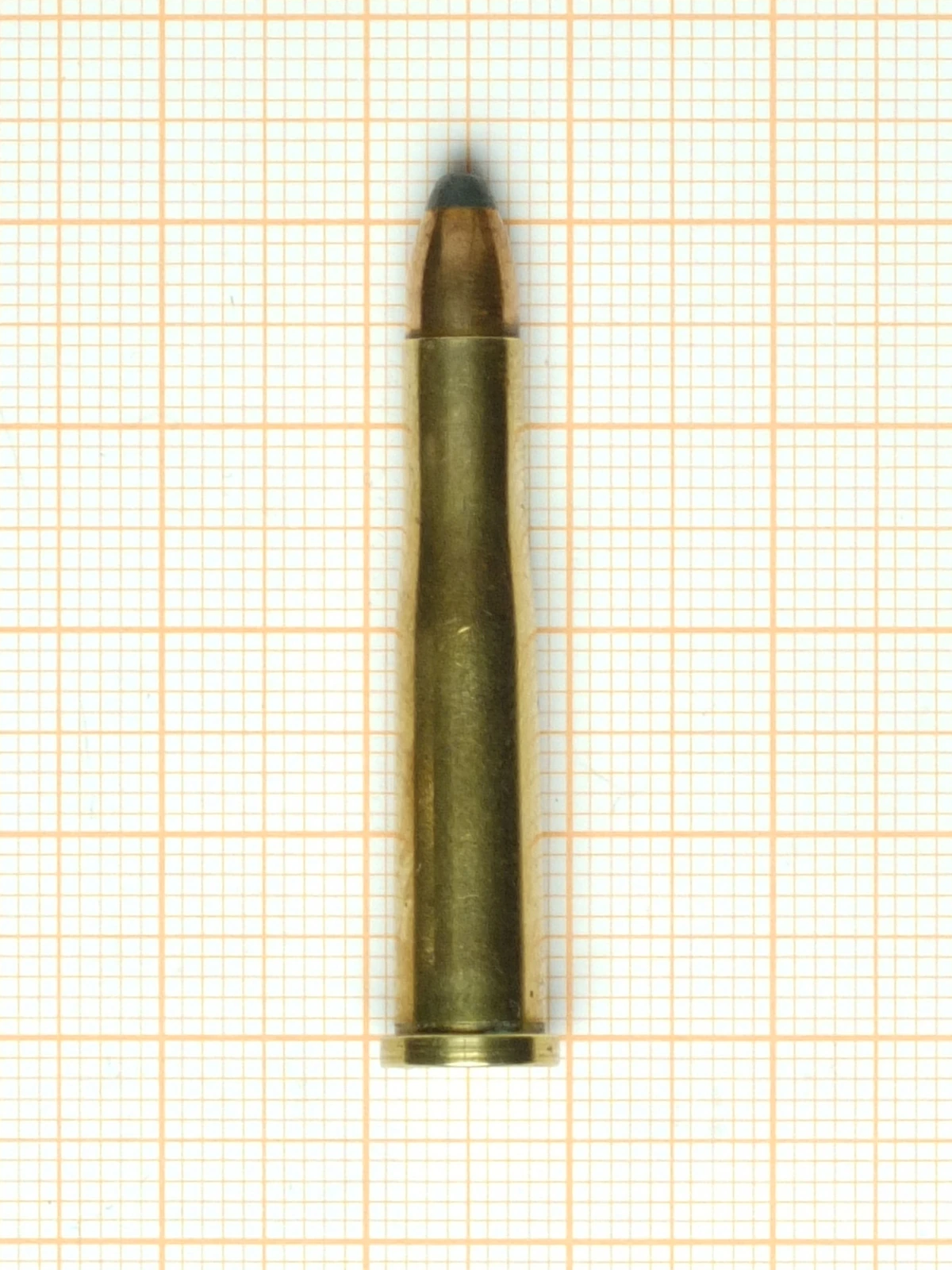
Image credit
- Title
- File:Cartridge .22 Hornet.jpg
- Author
- Grasyl(attribution required)
- Licence
- CC BY-SA 4.0
- Source
- https://commons.wikimedia.org/wiki/File:Cartridge_.22_Hornet.jpg

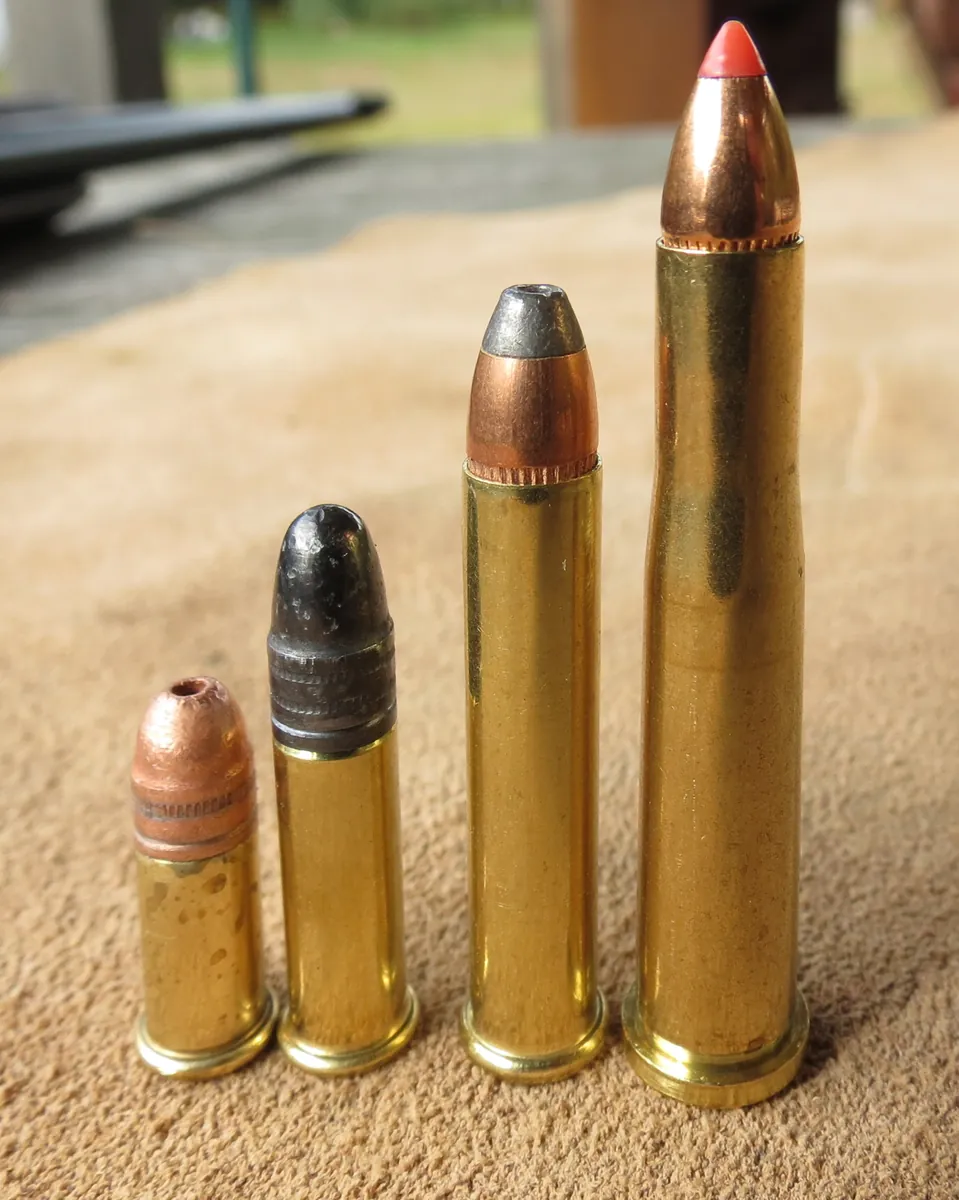
Image credit
- Title
- File:22 short 22 long rifle 22 magnum 22 hornet.JPG
- Author
- Noahsachs(attribution required)
- Licence
- CC BY-SA 3.0
- Source
- https://commons.wikimedia.org/wiki/File:22_short_22_long_rifle_22_magnum_22_hornet.JPG

Detail
The .22 Hornet is a black-powder cartridge that was quietly modernised into a smokeless one. Townsend Whelen and G. L. Wotkyns worked it up at Springfield Armory in the 1920s out of the obsolete .22 WCF, and Winchester put it on sale in 1930, two years before anybody sold a rifle chambered for it, which is an unusual order of events for a commercial cartridge.
Its shape is the giveaway. The case tapers 1.43 mm from a base of 7.59 mm down to a neck of 6.16 mm and meets a shoulder so shallow that it barely reads as one, because that is what a case designed to be filled with black powder and extracted from a single-shot rifle looks like. The rim projects, so the round headspaces on the rim rather than the shoulder and works in break-action, falling-block and single-shot rifles that would need a controlled-feed bolt to handle a rimless case. What Winchester changed was the loading and the bullet: a jacketed 0.224-inch bullet at smokeless pressures, taking a case originally rated in the hundreds of feet per second up to around 900 m/s with a 35-grain bullet.
That combination gives it a peculiar niche. It is the smallest centrefire round with which the American industry ever bothered (nothing smaller existed commercially until the 5.7x28mm), and it sits between the .22 WMR and the .223 Remington in every respect including report, which is why it persisted for pest control near buildings after faster .22 centrefires had displaced it everywhere else. It also went to war in a small way, in USAAF aircrew survival rifles. Both of the two well-known wildcats on the case, the .22 K-Hornet and the Ackley Improved version, work by blowing the taper out and steepening that shallow shoulder.
Gaps on this page: the four bullet weights recorded here come from the encyclopedia’s ballistics table, which names Hodgdon Powder Company as its source. That is reloading data rather than a factory datasheet, so its velocities describe particular handloads rather than the cartridge, and none is recorded. No ballistic coefficient is published beside any of them. The bullet diameter is the C.I.P. cartridge maximum; rifles built before the standard settled may be bored 0.001 in smaller, and no source gives a date at which that stopped.
References
- C.I.P. TDCC datasheet, 22 Hornet · Tab. II, adopted 1984-06-14, revised 2002-05-15 · read 2026-09-01
- .22 Hornet · 1332690682 · read 2026-09-01
Last verified 2026-09-01 · review status: agent-populated