Caribbean · Main Course
Pernil
Bone-in pork shoulder cut deep and packed with a garlic-and-oregano adobo, then roasted slow until the skin cracks and the meat falls from the bone.
Not the same asLechón Asado (Cuba's roast pork shoulder, bathed and basted throughout in a wet, sour-orange-heavy mojo rather than packed with the drier garlic-and-oregano adobo pressed into deep cuts here.)
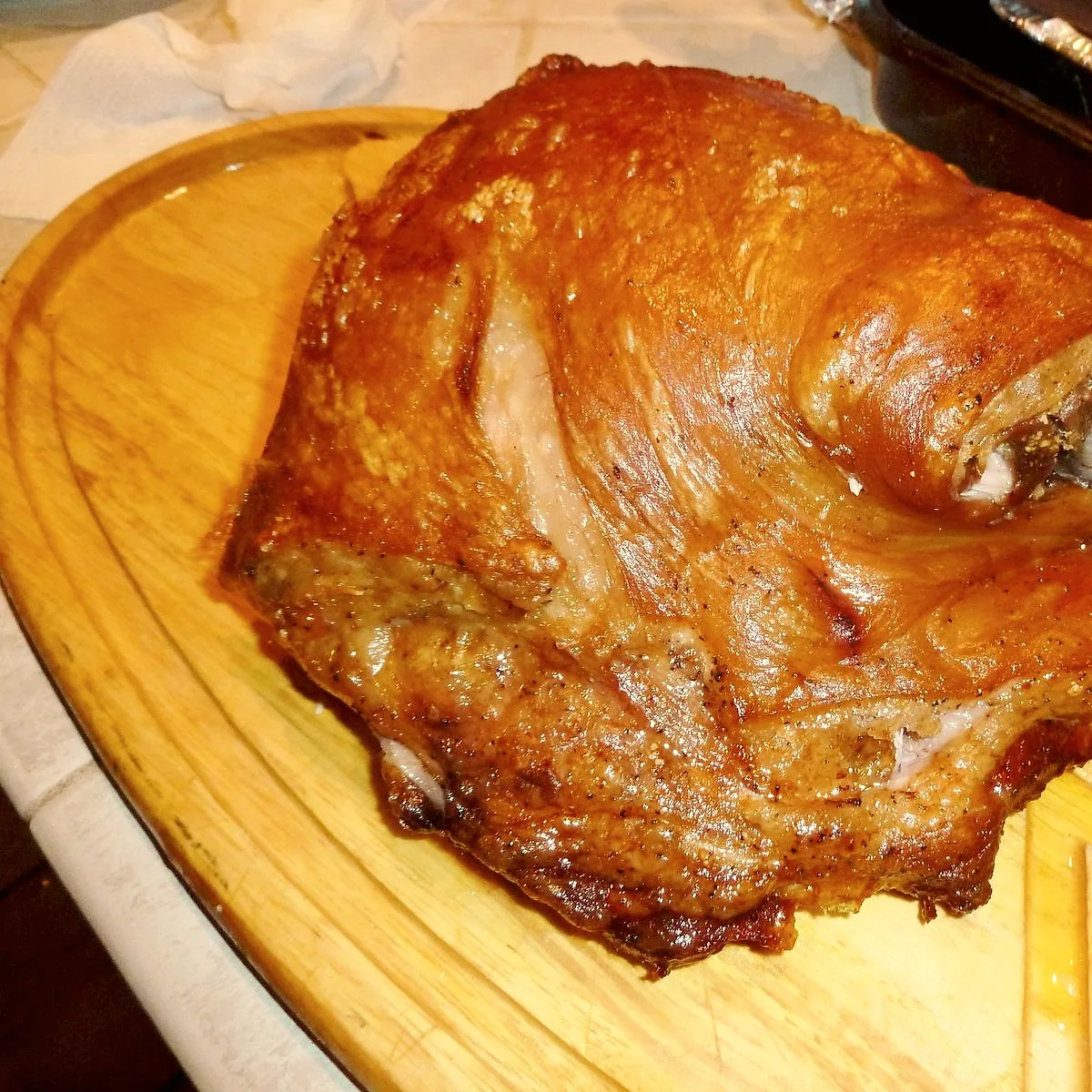

CC BY-SA 4.0. Cropped and colour-adjusted for this site.
Method
Mash the 10 garlic cloves (50 g) with the 6 g oregano, 20 ml cider vinegar, 30 ml extra-virgin olive oil, 22 g fine sea salt and 5 g ground black pepper into a coarse paste.
Cut deep pockets all over the 2.5 kg pork shoulder, avoiding the skin, and pack the adobo into each one, then rub any remaining paste over the surface.
Cutting deep pockets into the meat and packing the adobo directly inside them seasons the pork through its thickest parts rather than only at the surface, which a shoulder this size needs given how little marinade actually penetrates skin and fat by soaking alone.
Cover and refrigerate for 12h.
Set the pork skin-side up in a roasting tray and roast at 150 °C for 4h 30m, until the meat is fully tender.
Common pitfallRoasting hot from the start renders the skin before the meat underneath has had time to tenderise; the long, low roast is what breaks down the connective tissue, and only the final blast of heat is for the skin.
Raise the oven to 220 °C and roast for a further 25m, until the skin is deeply browned and crackling.
Rest the pork loosely covered for 20m before carving or pulling it apart.
Pernil's name states its cut before anything else: it comes from the Spanish pierna, leg, and the dish traces to Spain's Extremadura region, where a whole pork leg was traditionally spit-roasted over an open fire as a prized, rather than everyday, piece of the animal [1]. The technique that seasons it travelled the same route. Adobo began on the Iberian Peninsula as a way of preserving meat rather than simply flavouring it, and only over time, as refrigeration made preservation unnecessary, did it settle into its present role as a wet or dry seasoning paste rubbed into the meat before cooking [2].
In Puerto Rico that paste became adobo mojado: garlic, oregano, salt and oil worked into deep cuts across the surface of a bone-in shoulder or leg, left to penetrate overnight, and then roasted slowly until the skin cracks and the meat pulls apart with a fork [1]. Pork itself reached the island with Spanish colonisation, and a whole leg fed a gathering more efficiently than almost any other cut available, which is part of why pernil became fixed to the island's largest family occasion rather than staying an everyday dish [1].
Pernil is now the dish most closely associated with Puerto Rican Nochebuena, and the same wet-adobo roast pork tradition, under the same name, extends across much of Latin America, appearing at Christmas, New Year and other family celebrations well beyond the island [2].
Sources
- Pernil, San Juan Puerto RicoTraces pernil's origins to Spain's Extremadura region, where the whole leg was traditionally spit-roasted, and its adoption as a Puerto Rican Christmas dish.
- Pernil Asado - Traditional Puerto Rican Recipe, 196 FlavorsCorroborates the Iberian origins of adobo as a meat-preservation technique that became a seasoning method, and pernil's role at Puerto Rican and Latin American holiday tables.