Chinese · Main Course
Char Siu
Pork shoulder marinated in hoisin, soy and five-spice, then roasted and repeatedly basted with maltose until deeply glazed and faintly charred at the edges.
Also known asCha siuChinese barbecued pork
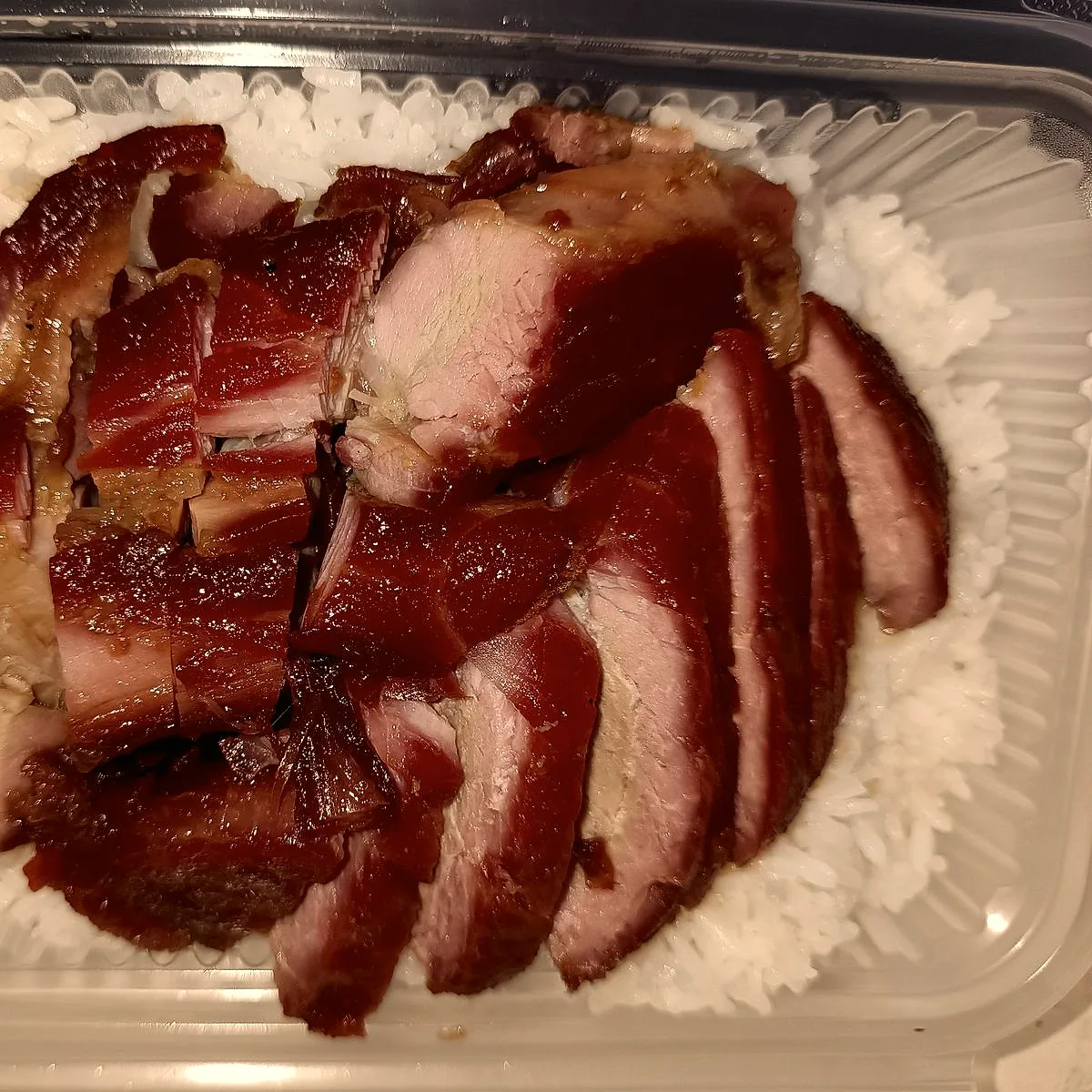

CC0. Cropped and colour-adjusted for this site.
Method
Combine the 60 g hoisin sauce, 30 ml light soy sauce, 15 ml dark soy sauce, 30 ml Shaoxing wine, 30 g caster sugar, 3 garlic cloves (15 g), 3 g five-spice powder and 10 ml toasted sesame oil in a bowl and turn the 800 g pork shoulder through it, coating every side.
Cover and marinate in the refrigerator for 4h, turning the strips over once partway through.
Lift the pork from the marinade, letting the excess drip off, and set the strips on a rack over a lined tray. Roast at 200 °C for 25m, turning once, until the edges begin to char and the surface sets.
Common pitfallStrips laid flat rather than hung or turned develop a pale underside where they sit in their own juices. Turning partway through roasting keeps every face of the meat exposed to the heat.
Brush the strips with the reserved marinade and the 25 g maltose syrup, return to the oven and continue roasting for 10m, turning and basting again halfway through, until the pork is cooked through and deeply coloured.
Warm the 15 g maltose syrup with the 15 ml water until loose enough to brush, and paint it over the hot pork. Rest for 5m before slicing.
Maltose is thinned with a little water and brushed on only after roasting, off the direct heat, because on its own it scorches well before the pork's centre is cooked through.
The name is a description of method rather than flavour: char siu is Cantonese for "fork roasted," after the long metal forks once used to hold strips of pork over an open flame [2] [1]. The technique is old (roast meats appear in Chinese court cooking as far back as the Zhou dynasty), but the char siu eaten today, sweet, red-tinted and glazed to a shine, is a much more recent dish than that lineage suggests [1].
Into the mid-twentieth century, Hong Kong's char siu was usually cut from fatty pork belly and marinated with fermented black beans and soy, a savoury, inexpensive cut favoured by working households and known locally as tor dei, built from alternating layers of lean meat and fat [1]. The sweeter style familiar now developed alongside it, as cooks began brushing honey or maltose onto the roasted strips for a second pass in the oven, caramelising the surface and softening the dish's flavour for a wider audience, children included [1]. Maltose is still what gives the finished pork its glassy sheen and its faint char at the edges, rather than a Western-style barbecue sauce.
Char siu has been an everyday fixture of Hong Kong eating since the 1950s, sold hanging in the windows of siu mei roast-meat shops alongside soy sauce chicken and roast goose [1]. As Hong Kong grew wealthier and more health-conscious from the 1990s onward, the fattier belly-based tor dei gave ground to leaner cuts such as pork collar, cooked with the same maltose glaze but less fat to render [1]. The modern marinade (hoisin sauce, soy sauce, Shaoxing wine and five-spice) reflects that later, sweeter tradition rather than the black-bean marinades that came before it [2] [1].
Sources
- The Evolution of Char Siu — A Timeless Delicacy Across Generations, MICHELIN GuideTraces the shift from fatty, black-bean-marinated "tor dei" char siu to the leaner, maltose-glazed style that dominates today.
- Char siu, WikipediaGives the Cantonese etymology and the modern marinade of hoisin, soy, wine and five-spice.