Tunisian · Starter
Brik à l'Œuf
A whole egg dropped onto tuna and mashed potato, folded into thin malsouka pastry and deep-fried until the pastry shatters and the yolk stays soft.
Also known asBrik
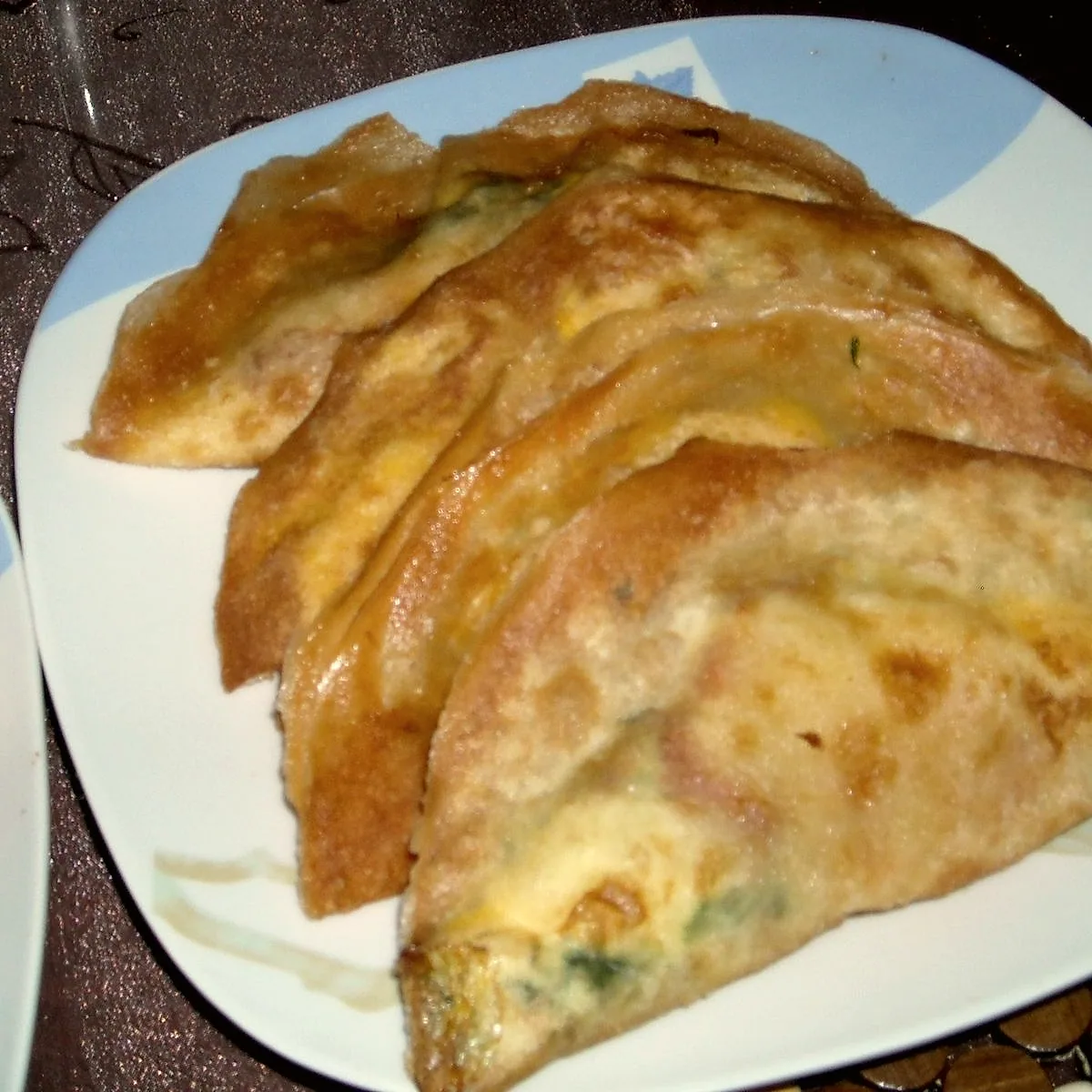

CC BY-SA 3.0. Cropped and colour-adjusted for this site.
Method
Boil the 240 g potato in salted water for 12m, until tender all the way through, then drain and mash roughly.
Combine the mashed potato with the 240 g tinned tuna, 15 g flat-leaf parsley, 2 spring onions (30 g), 4 g fine sea salt and 2 g ground white pepper, breaking the tuna up as you mix so the filling holds together without clumping.
Pour the 1 L peanut oil into a wide pan to a depth that will cover a folded brik and heat it for 10m, until a corner of pastry dropped in sizzles and colours within a few seconds.
Lay a sheet of 120 g malsouka flat and spoon a portion of the filling onto one half, leaving a border clear. Make a small well in the filling and crack one 4 eggs (200 g) into it whole, keeping the yolk intact. Fold the pastry over into a half-moon or a triangle, pressing the border to seal, and slide it straight into the hot oil. Fry for 12m in total across the batch, turning once, until the pastry is blistered and deep gold and the egg white has just set. Lift each one out the moment it is coloured, so the yolk inside is still soft and runs when the brik is cut. Drain briefly and serve at once.
Common pitfallThe egg is what separates brik from a plain fried pasty. Fry it too long and the yolk sets solid; the whole dish is timed around lowering it into hot oil and lifting it out again while the yolk is still soft.
Brik is eaten across Tunisia in a form specific enough to be recognisable at a glance: a thin sheet of pastry folded around a filling and a whole raw egg, then dropped into hot oil for just long enough to set the white and leave the yolk soft. Its exact age is hard to pin down: the dish is old enough that its origins are, in its own Wikipedia entry's words, difficult to trace directly, though it is thought to reach back several centuries [1]. What is better documented is its family: brik descends from Ottoman börek, the layered pastry that spread through the empire's North African provinces from the sixteenth century onward, arriving alongside relatives such as Algerian bourek and Moroccan briouat [2].
Tunisian cooks took that inheritance somewhere the rest of the family did not follow. The pastry itself got thinner, taking on the semolina-and-flour malsouka sheet used nowhere else in quite the same way, and the fold tightened from börek's roll into a flat triangle or half-moon that fries crisp rather than layered [2]. Tunisian Jewish cooks call the same sheet a warqa rather than a malsouka. The two names for one pastry are used interchangeably depending on who is speaking [1].
The detail that defines the dish, the whole egg fried until the white sets and the yolk does not, has no securely documented inventor or date attached to it in either source consulted here; it is generally treated as a Tunisian addition rather than an Ottoman one. Djerba's Sephardic Jewish community, in particular, is credited with developing its own brik traditions over generations, though the details of that development are not closely dated [2]. What both sources agree on is that the egg is not a garnish; it is the reason a diner eats brik immediately, before the yolk inside has time to finish cooking on its own residual heat.
Sources
- Brik, WikipediaOn the age of the dish, the interchangeable malsouka/warqa naming, and its place among the wider Maghrebi börek family.
- Brik: Tunisia's Crispy, Yolk-Filled Pastry — and the Right Way to Eat It, Carthage MagazineOn the Ottoman börek lineage, the Tunisian divergence into a thinner sheet and triangular fold, and Djerba's Sephardic Jewish brik tradition.