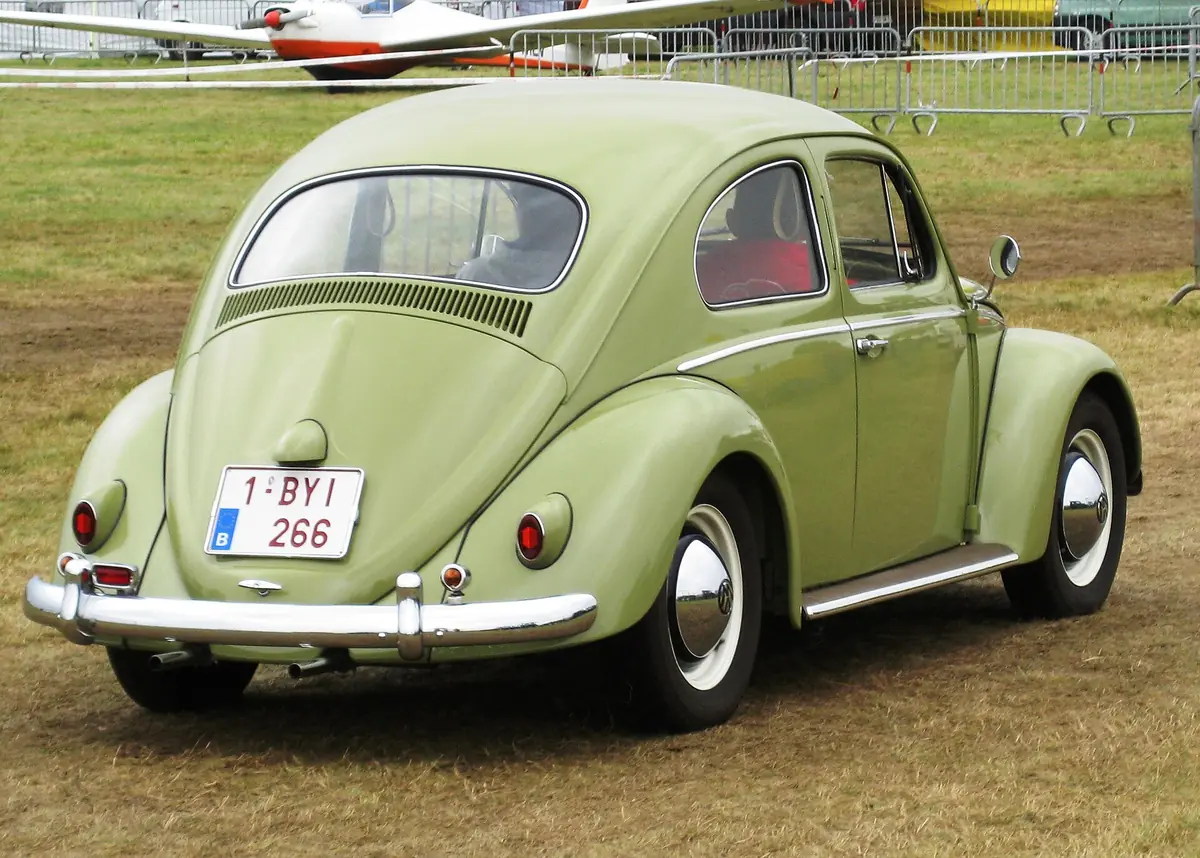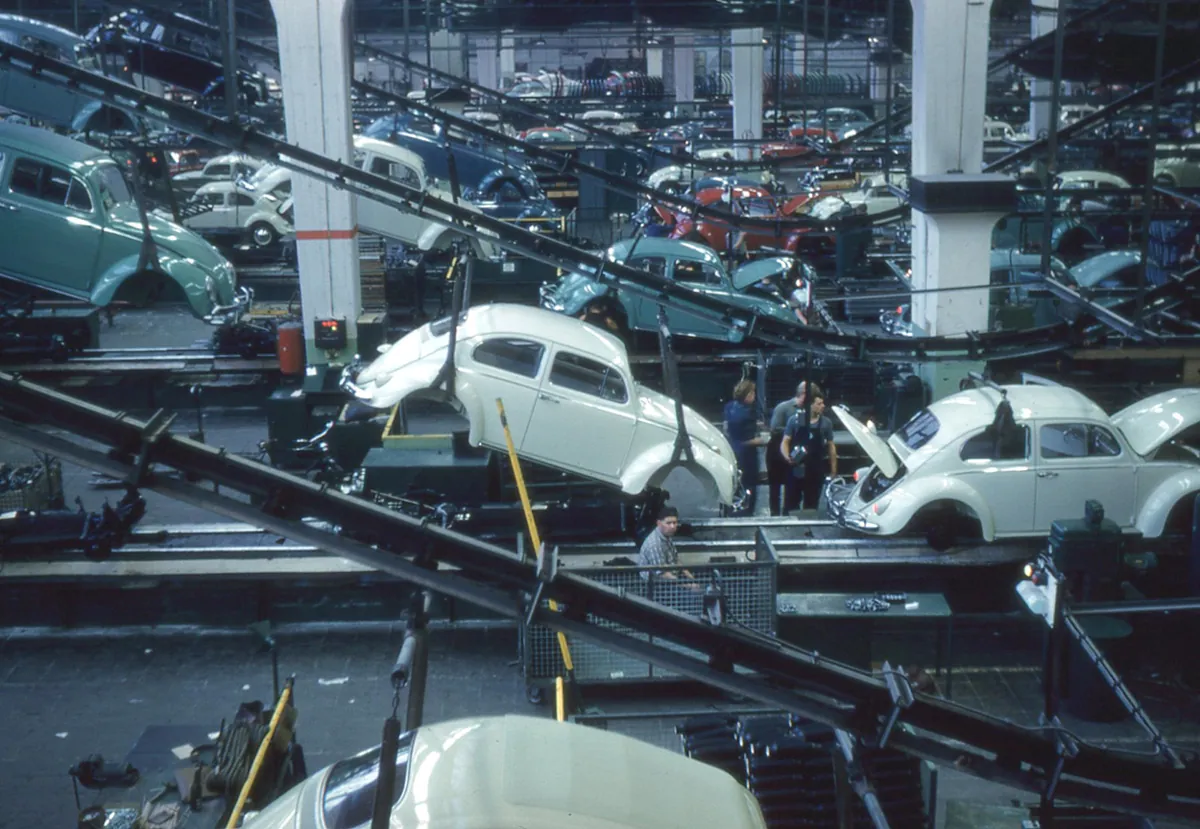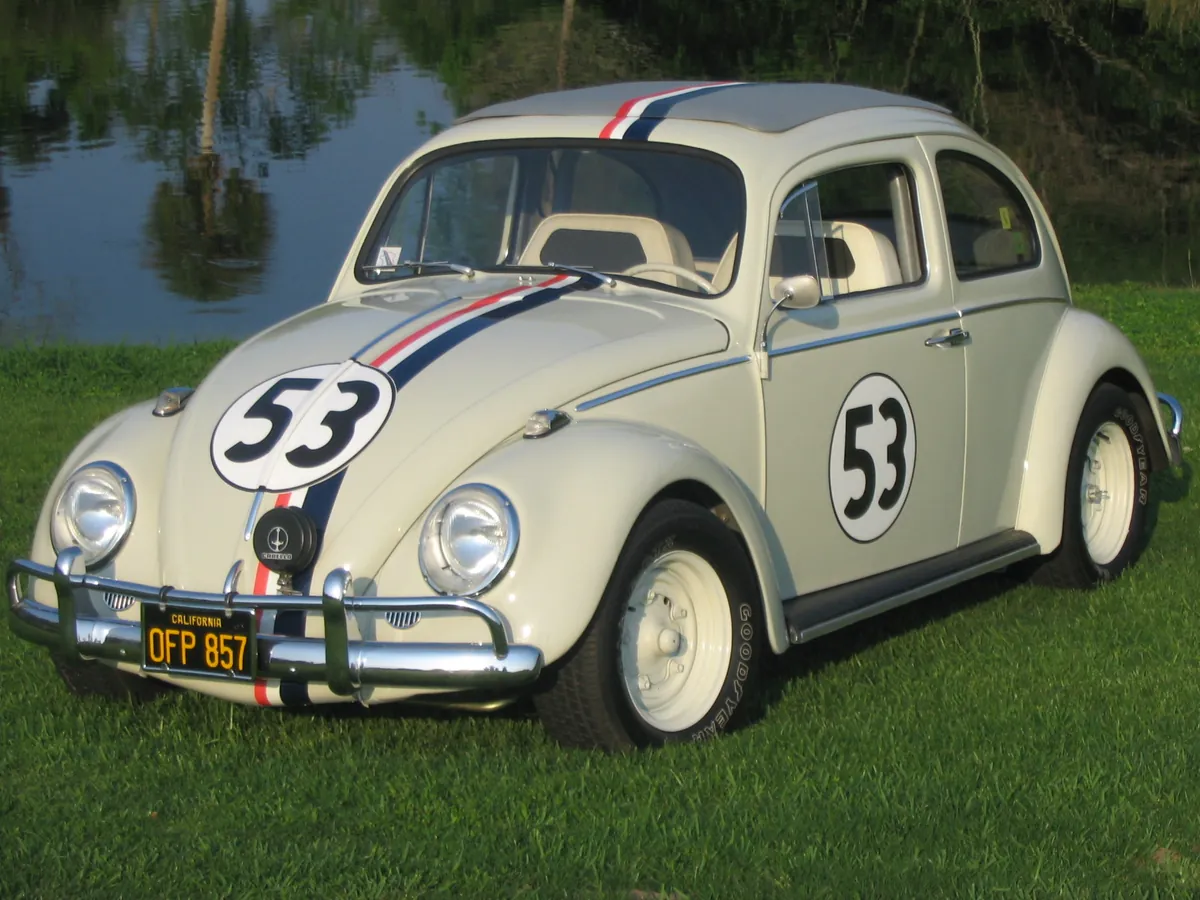
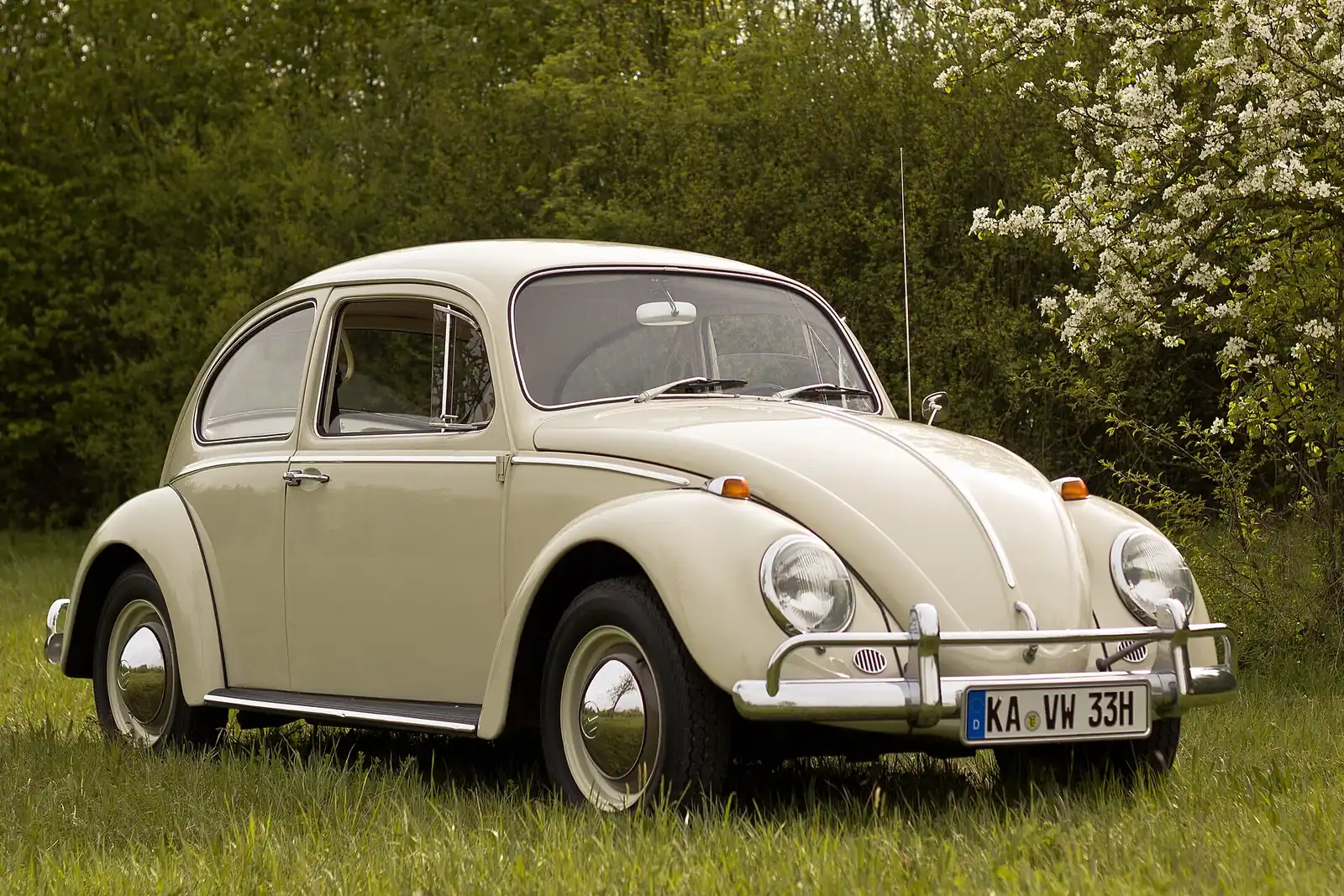
The Beetle never had a second generation, in the sense every modern car in this catalogue does. Like the Ford Model T and the Citroën 2CV, it is one article on Wikipedia and one continuous design: a rear-mounted, air-cooled flat-four in a two-door body on a nearly flat platform chassis, built with only incremental changes from 1938 to 2003.[1] This entry spans the whole run for the same reason those two do (the evolution belongs in the trims, not in a second hub entry), and it is the longest single production run of any car ever built.
The five trims recorded here trace that evolution through the one dimension Volkswagen changed often: displacement and power. The 1200 introduced in 1954 (1,192 cc, 22 kW) was the entry car for three decades; the 1300 (1965) and 1500 (1967, with a semi-automatic transmission) sat above it; the 1302S “Super Beetle” (1970) brought a MacPherson-strut front end, a 20 mm longer wheelbase and the largest engine yet fitted, 1,584 cc at 36.8 kW; and the final 1600i (1993–2003) kept that same 1,584 cc unit but added fuel injection, a catalytic converter and electric ignition, built only in Puebla, Mexico, by then the sole surviving plant. No power figure survives in the article for that last, cleanest state of tune.
Some figures could not be sourced at all and are left out rather than guessed. No top speed or torque figure is published for any state of tune. No boot volume is given, and no EPA record exists for any period because US import of the classic Beetle ended around 1979, five years before EPA’s public API coverage begins in 1984. That is a real gap, not a missed search. Where Wikipedia’s own dimension and weight figures are unattributed ranges, NHTSA’s Canadian Vehicle Specifications supplied dated, per-variant figures instead: 860 kg for a 1974 “Beetle” and 920 kg for the 1974 “Super Beetle”, both inside Wikipedia’s 730–930 kg range and the second confirming the Super Beetle’s longer wheelbase to the millimetre.[2] Dutch RDW registration data for several individual “Kever” cars agreed on a lighter 770–790 kg but disagreed with itself on seat count between two otherwise-identical records, which is why it appears only in this paragraph and not as a structured figure: registration data describes the car in front of the clerk, not the factory specification.[3]
The drag coefficient, 0.48, is dated by Wikipedia’s own aerodynamics list to “original design, 1938” rather than to any of the trims above; it is recorded on the 1200 as the earliest trim in this batch, on the reasoning that the shape changed only incrementally until the Super Beetle’s reworked nose.[4] The car’s authorship is also more contested than the infobox implies: Hungarian engineer Béla Barényi successfully asserted, in a 1953 court ruling, that he had described a similar car to Porsche in the 1920s, and Josef Ganz’s earlier compact-car work is credited with real, if disputed, influence, which is why this entry follows Wikipedia’s infobox in crediting Porsche as designer while noting the dispute exists at all.