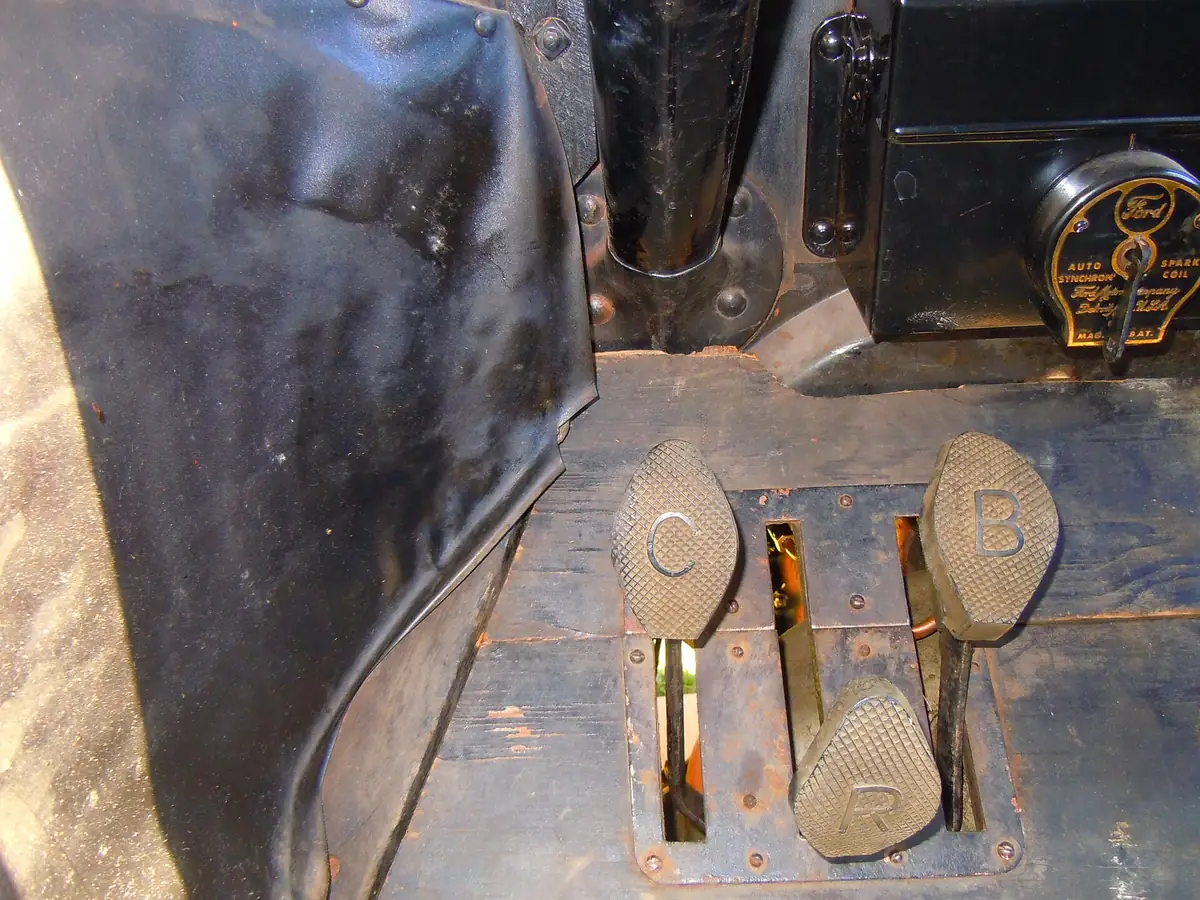
The Model T never had a second generation, in the sense every later car in this catalogue does. Ford’s stated philosophy was to get the design right once and then hold it still: the same 20 hp, 2.9-litre engine and the same planetary transmission were fitted from the first car in October 1908 to the last in May 1927.[1] What changed underneath the constant mechanicals was the body (a dozen-plus styles across nineteen years) and, above all, the price. This entry spans the whole run for the same reason the Citroën 2CV’s does: Wikipedia treats it as one article, and the evolution belongs in the trims rather than in a second hub entry.
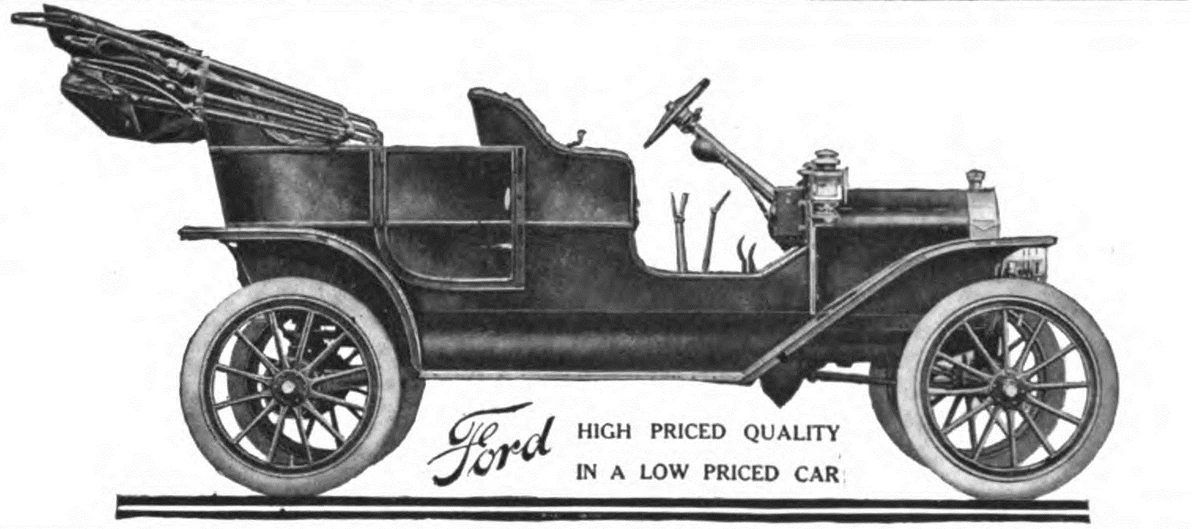
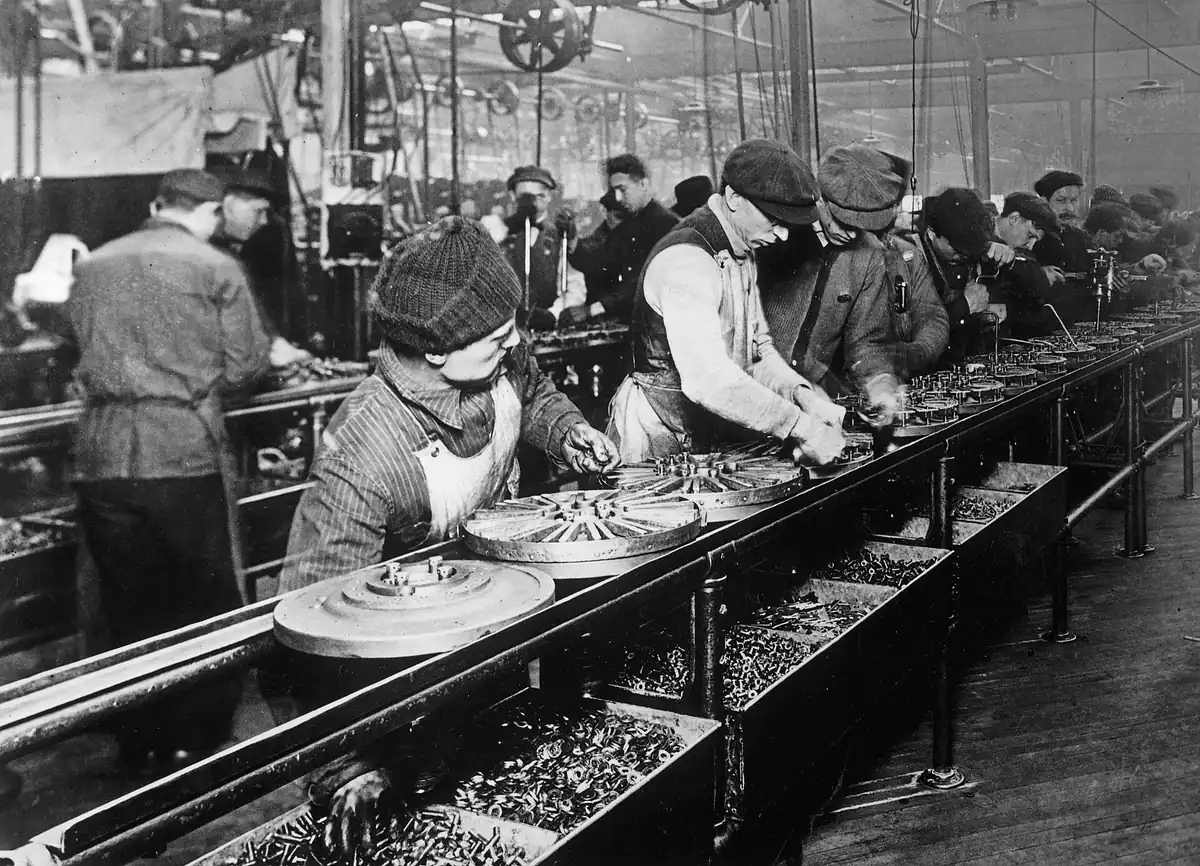
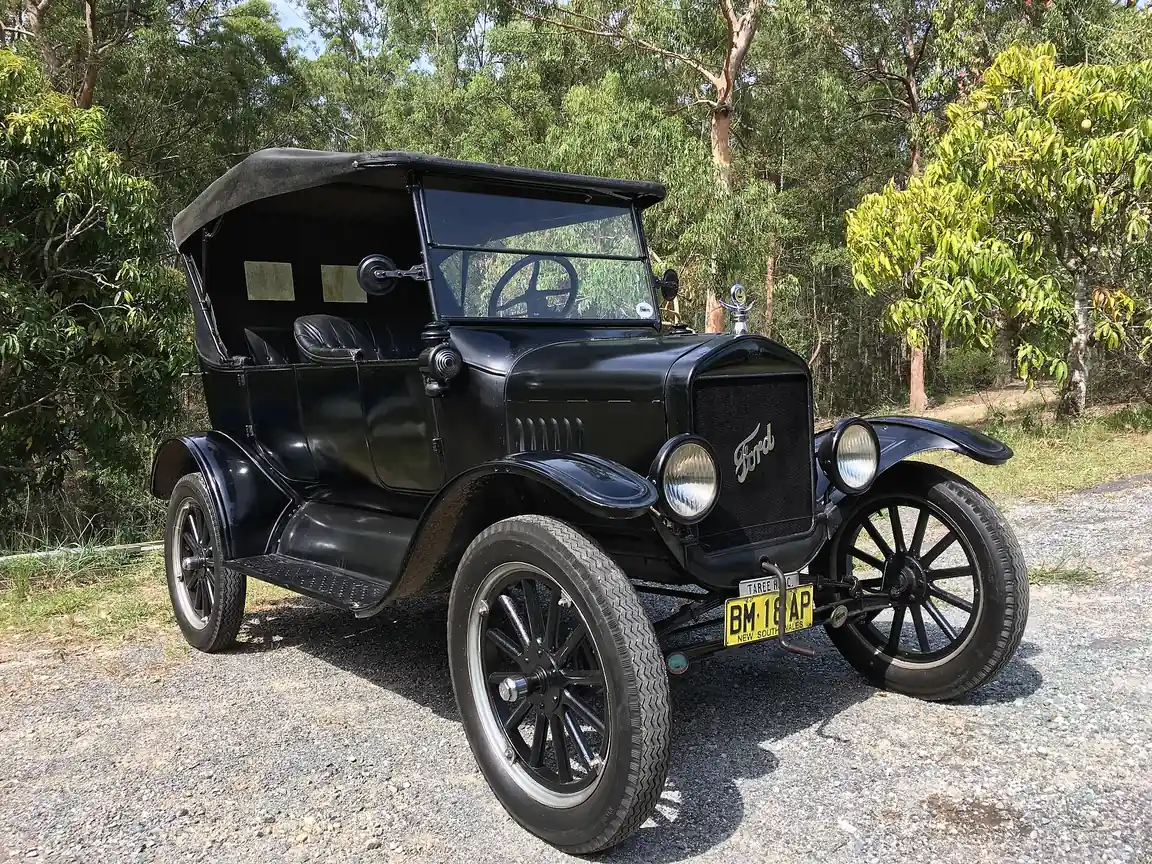
The two trims recorded here, the open Runabout and the touring-bodied Touring, are the cheapest and the best-known of the dozen-plus body styles respectively, and together they carry the Model T’s real story, which is a price collapse. The Runabout fell from $825 in 1909 to $260 in 1925, a 68% nominal drop while the car itself barely changed; the Touring fell from $850 to $290 over the same years. The 1913 moving assembly line at Highland Park is what made that possible, and it is arguably a bigger part of this car’s history than any of its body styles. The assembly list above is a sample of the roughly seventy plants the infobox names on five continents, not the whole list.
A few figures could not be sourced and are left out rather than guessed. No seat count is given for either body style in the article, so none is recorded here: “Runabout” and “Touring” conventionally imply two and five seats, but that is a naming convention, not a cited figure. No drag coefficient exists for a car built before aerodynamics was a design discipline. And because the Model T’s 42 mph top speed never reaches 100 km/h, a 0–100 km/h figure would not mean anything and is not recorded. This is the same reasoning the 2CV’s earliest trim uses.
The taxonomy has no “phaeton” or “tourer” body-style tag, so the open,
folding-top Touring is filed here as convertible, a reasonable but
imperfect fit; a period Touring car had side curtains, not wind-up glass.