
9x23mm Steyr
Introduced 1911Osterreichische WaffenfabriksgesellschaftCIP standard
Also known as 9 mm Steyr, 9mm Steyr-Hahn: the same cartridge under different names, all of which find this page.
Dimensions and pressure
Generated from the schema, like every specification table on this site, so a figure recorded on this entry cannot be missing from the table.
Identity
- Designed by
- Osterreichische Waffenfabriksgesellschaft
- Introduced
- 1911
- Production
- not recorded
- Standards body
- C.I.P.
- Case type
- Rimless
- Case shape
- Straight
Dimensions
- Bullet diameter
- 9.03 mm0.3555 insource
Cartridge maximum, dimension G1. The same bullet diameter as 9x19mm Parabellum.
- Bore diameter
- not recorded
- Case length
- 23.2 mm0.9134 insource
Cartridge maximum, dimension L3.
- Overall length
- 33.1 mm1.303 insource
Cartridge maximum, dimension L6. The encyclopedia infobox gives 32.99 mm, which is a nominal round rather than the standard's maximum.
- Rim diameter
- 9.7 mm0.3819 insource
Dimension R1, equal to the base because the case is rimless.
- Neck diameter
- 9.62 mm0.3787 insource
Dimension H2. Within 0.08 mm of the base, because the case is straight-walled and headspaces on its mouth.
- Base diameter
- 9.7 mm0.3819 insource
Dimension P1.
Pressure
- Maximum pressure
- 135 MPa19,580 psisource
Pmax 1350 bar. This is a low ceiling for a service pistol round, and it is a modern one set for surviving pre-1918 pistols.
- Pressure standard
- C.I.P.
SAAMI and C.I.P. measure pressure differently and their figures are not interchangeable, which is why the body is always named beside the figure.
Loads
Velocity is recorded per barrel length as published. A gun page interpolates between these points and never projects beyond them.
115 gr FMJ
Hornady
- Bullet mass
- 7.452 g115.0 grsource
115 gr as published in the article's ballistics table, converted to grams.
- Cartridge mass
- not recorded
- Bullet type
- FMJ
- G1 BC
- not recorded
- G7 BC
- not recorded
| Barrel | Velocity |
|---|---|
| 128 mm5.039 in | 312.4 m/s1,025 fps |
115 gr FMJ
Fiocchi
- Bullet mass
- 7.452 g115.0 grsource
115 gr as published in the article's ballistics table, converted to grams.
- Cartridge mass
- not recorded
- Bullet type
- FMJ
- G1 BC
- not recorded
- G7 BC
- not recorded
| Barrel | Velocity |
|---|---|
| 128 mm5.039 in | 329.2 m/s1,080 fps |
115 gr FMJ
Hirtenberger
- Bullet mass
- 7.452 g115.0 grsource
115 gr as published in the article's ballistics table, converted to grams.
- Cartridge mass
- not recorded
- Bullet type
- FMJ
- G1 BC
- not recorded
- G7 BC
- not recorded
| Barrel | Velocity |
|---|---|
| 128 mm5.039 in | 374.9 m/s1,230 fps |
Chambered in
Computed from every entry that lists this cartridge. Nothing here is hand-maintained.
- Steyr M1912
Steyr Arms
Gallery
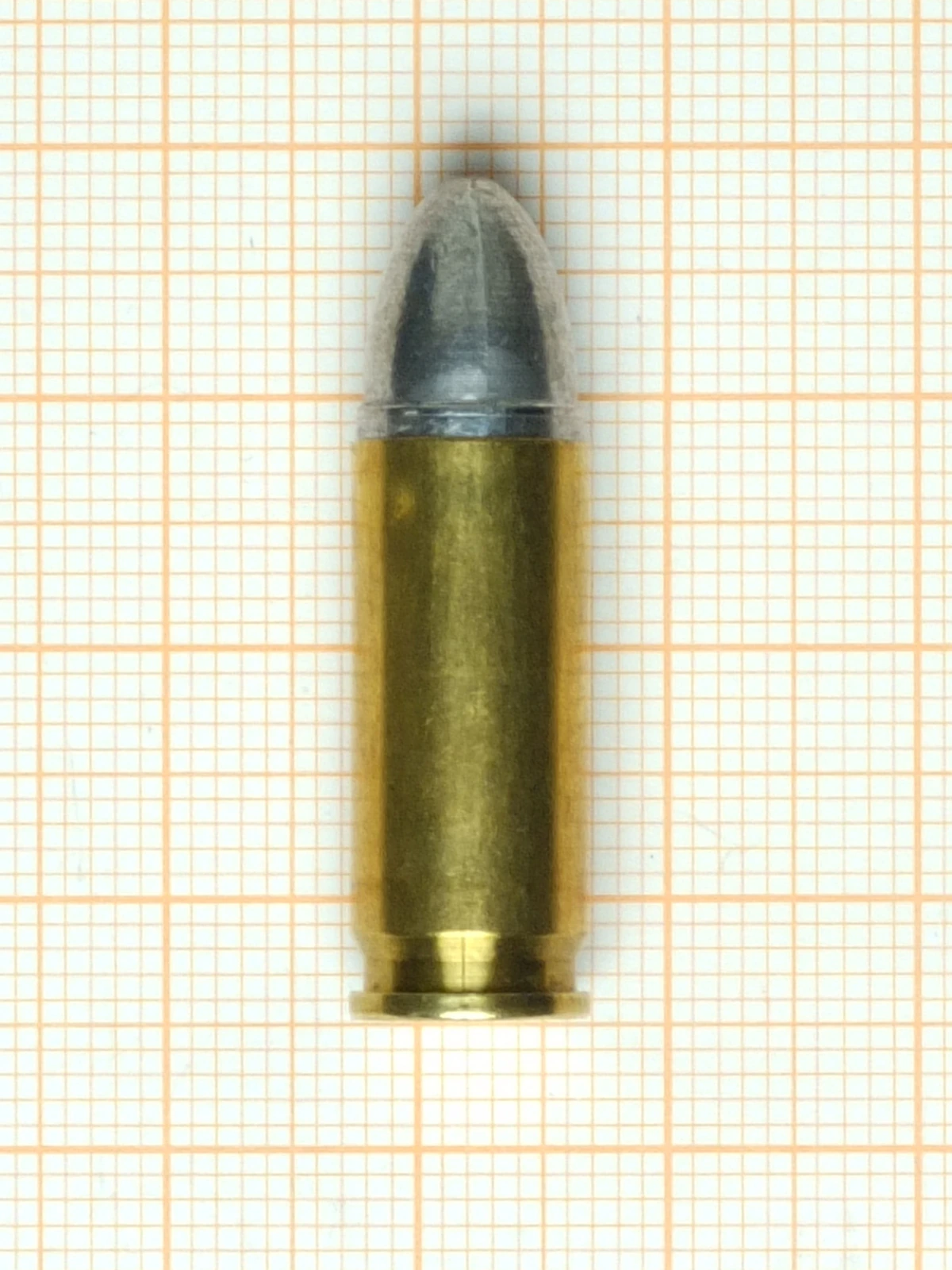
Image credit
- Title
- File:Cartridges 9mm Steyr.jpg
- Author
- Grasyl(attribution required)
- Licence
- CC BY-SA 4.0
- Source
- https://commons.wikimedia.org/wiki/File:Cartridges_9mm_Steyr.jpg

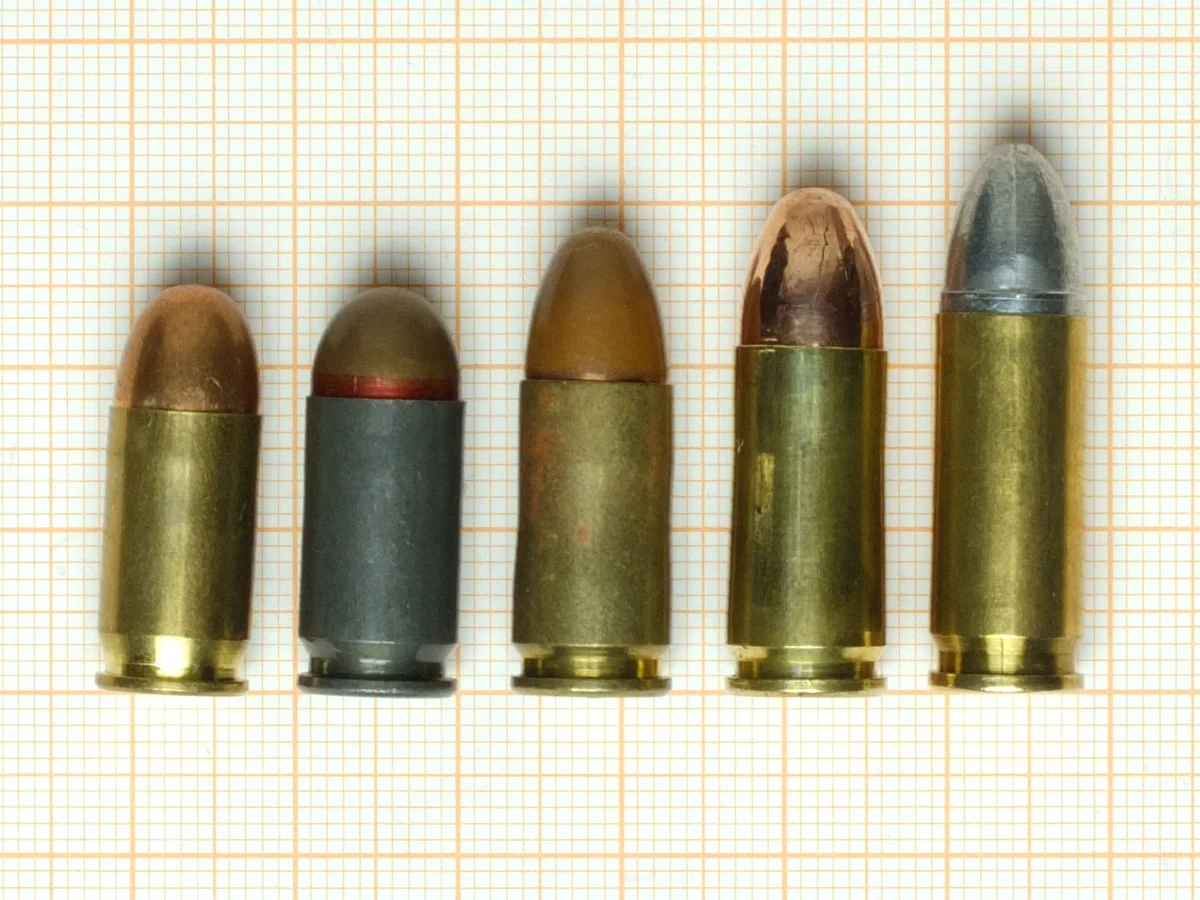
Image credit
- Title
- File:Cartridges 9x17mm, 9x18mm, 9x19mm, 9x21mm, 9x23mm.jpg
- Author
- Grasyl(attribution required)
- Licence
- CC BY-SA 4.0
- Source
- https://commons.wikimedia.org/wiki/File:Cartridges_9x17mm,_9x18mm,_9x19mm,_9x21mm,_9x23mm.jpg

Detail
The 9x23mm Steyr was made in 1911 by Osterreichische Waffenfabriksgesellschaft for one pistol, the Steyr M1912, and it stayed with that pistol for its whole life. It is one of the small family of straight-walled 9 mm service rounds that appeared in the decade before the First World War, all sharing a 9.03 mm bullet and differing chiefly in how much case they put behind it.
The case is the round’s whole argument. At 23.2 mm it is 4.05 mm longer than a 9x19mm Parabellum, straight-sided, and only 0.08 mm narrower at the mouth than at the base, so it headspaces on the case mouth and the extractor has nothing but the groove to hold. Rim and base are both 9.7 mm. That extra length is what let the Austro-Hungarian round run a 115-grain bullet noticeably faster than a contemporary Parabellum out of a comparable barrel, and it is also why the two are not interchangeable in either direction despite the identical bullet.
The C.I.P. ceiling of 1350 bar is the number that dates the entry. It is low for a service pistol round (barely more than half what the same body allows for 9x19mm), and it is set that way because every gun still chambered for the cartridge is a century old. Modern commercial loadings sit well inside it, and the three that appear in the published record, from Hornady, Fiocchi and Hirtenberger, differ from each other by more than 60 m/s at the same bullet weight.
Gaps on this page: the three loads are the encyclopedia’s own ballistics table, which states a 128 mm test barrel for all of them and lists its ballistics sources as a numbered set that has to be read against the rows to know which maker produced which figure; that mapping is recorded in each note. No ballistic coefficient is published for any of them, and no wartime Austro-Hungarian service figure is available at all: everything here is either the modern C.I.P. standard or modern commercial ammunition.
References
- C.I.P. TDCC datasheet, 9 mm Steyr · Tab. IV, adopted 1984-06-14, revised 2000-06-07 · read 2026-09-01
- 9x23mm Steyr · 1356444708 · read 2026-09-01
Last verified 2026-09-01 · review status: agent-populated