
7.65×21mm Parabellum
Introduced 1898Georg Luger and Hugo BorchardtCIP standard
Also known as .30 Luger, 7.65 Para, 7.65mm Luger: the same cartridge under different names, all of which find this page.
Dimensions and pressure
Generated from the schema, like every specification table on this site, so a figure recorded on this entry cannot be missing from the table.
Identity
- Designed by
- Georg Luger and Hugo Borchardt
- Introduced
- 1898
- Production
- not recorded
- Standards body
- C.I.P.
- Case type
- Rimless
- Case shape
- Bottleneck
Dimensions
Pressure
- Maximum pressure
- 235 MPa34,084 psisource
- Pressure standard
- C.I.P.
SAAMI and C.I.P. measure pressure differently and their figures are not interchangeable, which is why the body is always named beside the figure.
Loads
Velocity is recorded per barrel length as published. A gun page interpolates between these points and never projects beyond them.
93 gr FMJ (Fiocchi Heritage)
Fiocchi
- Bullet mass
- 6.03 g93.06 grsource
93 gr, per Fiocchi's own Heritage product page.
- Cartridge mass
- not recorded
- Bullet type
- FMJ
- G1 BC
- not recorded
- G7 BC
- not recorded
Chambered in
Computed from every entry that lists this cartridge. Nothing here is hand-maintained.
- Mauser C96
Mauser
Gallery
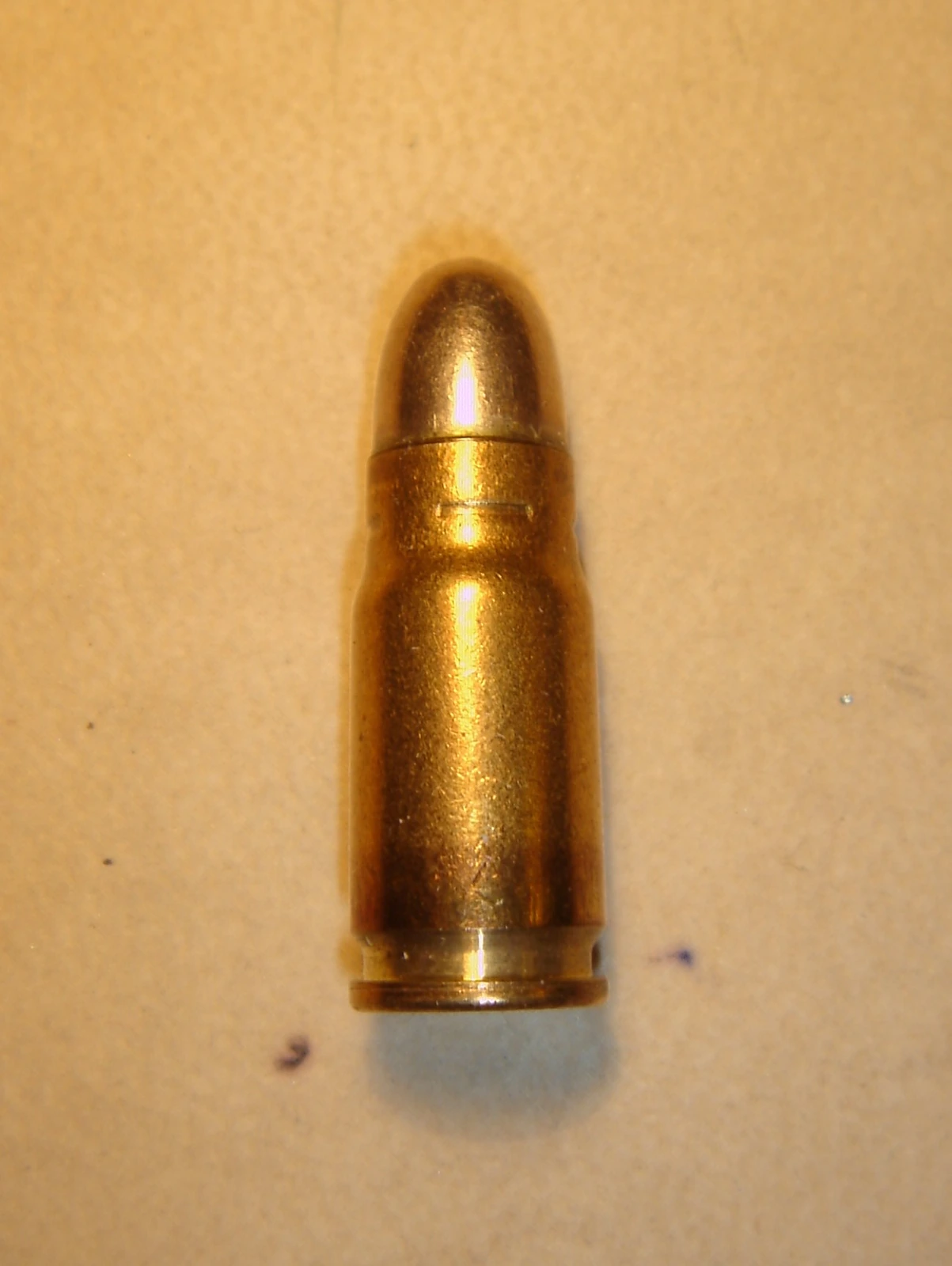
Image credit
- Title
- File:T 73.JPG
- Author
- Original uploader was Quickload at en.wikipedia(attribution required)
- Licence
- CC BY-SA 3.0
- Source
- https://commons.wikimedia.org/wiki/File:T_73.JPG

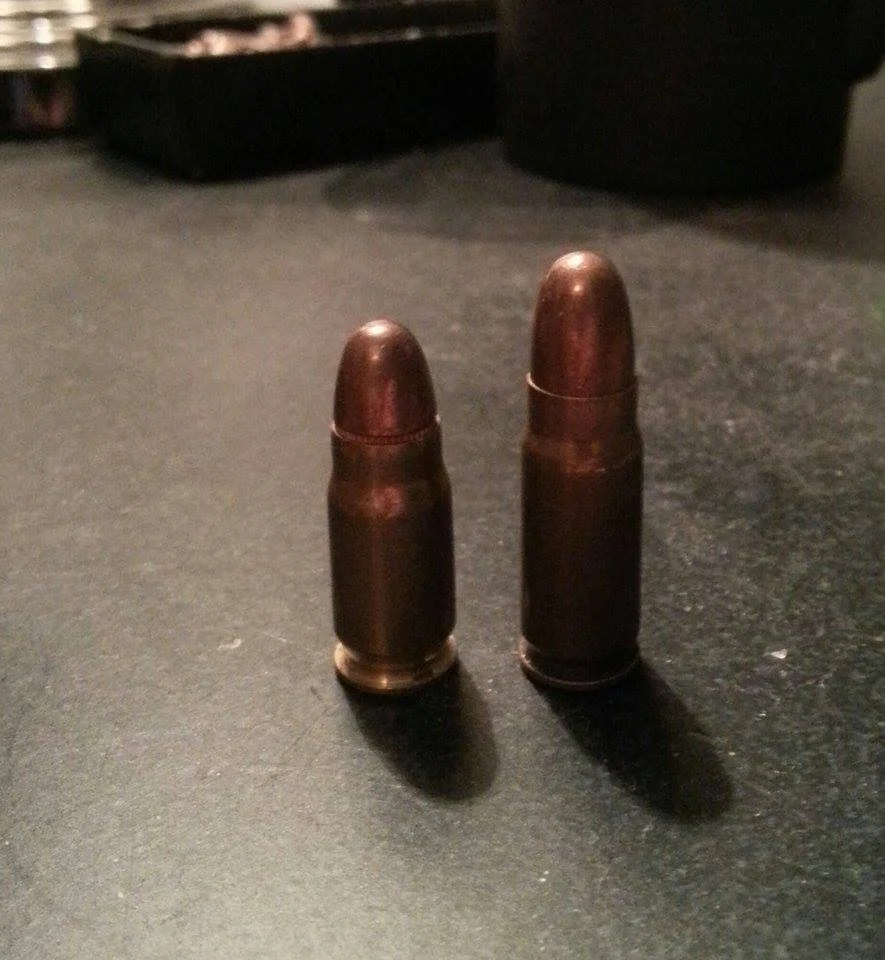
Image credit
- Title
- File:30LugerandTokarev.jpg
- Author
- Votesmall(attribution required)
- Licence
- CC BY-SA 4.0
- Source
- https://commons.wikimedia.org/wiki/File:30LugerandTokarev.jpg

Detail
The 7.65×21mm Parabellum is Georg Luger’s 1898 reduction of Hugo Borchardt’s earlier 7.65×25mm round to fit the toggle-lock pistol Luger was developing for DWM, the direct ancestor of what later became the 9×19mm Parabellum. It was the original chambering of the Luger pistol and, under its American name .30 Luger, remained available alongside the larger 9mm round throughout the Luger’s production life. Switzerland adopted it for a domestic Luger variant and kept it in service into the mid-20th century, and it also saw issue or trial use in Germany, Portugal, Brazil, Finland and, in small numbers, the United States.
Bottlenecked and rimless, it was among the first successful smokeless pistol cartridges of its kind and shares its case head dimensions closely with the later 7.62×25mm Tokarev, though the two are not interchangeable. Its light, fast bullet gives it a flatter trajectory than most contemporary pistol cartridges of similar bore, and a lower bullet mass and muzzle energy than the 9×19mm that was developed from it by opening the case mouth out to take a wider bullet. It fell out of military and police use after the Second World War as the 9×19mm and other cartridges took over Luger-pattern and successor pistols, and today it survives mainly as a collector’s and vintage-firearm round.
Every dimension in this entry comes from the C.I.P. datasheet for “7,65 Parabellum”, which matches Wikipedia’s own infobox figures exactly. Fiocchi still loads a modern factory round for collectors under its Heritage line, and its product page states a bullet mass of 93 grains but no test barrel length for its stated velocity, so only the bullet mass is recorded here; no velocity or ballistic coefficient is recorded for this cartridge.
References
- 7.65×21mm Parabellum · 1363156061 · read 2026-09-02
- C.I.P. TDCC datasheet — 7,65 Parabellum · 2008-09-23 · read 2026-09-02
- Heritage 30 Luger/7.65PAR 93 Grain FMJ · read 2026-09-02
Last verified 2026-09-02 · review status: agent-populated