
7.62×25mm Tokarev
Introduced 1930CIP standard
Also known as 7.62 mm Type P: the same cartridge under different names, all of which find this page.
Dimensions and pressure
Generated from the schema, like every specification table on this site, so a figure recorded on this entry cannot be missing from the table.
Identity
- Designed by
- not recorded
- Introduced
- 1930
- Production
- not recorded
- Standards body
- C.I.P.
- Case type
- Rimless
- Case shape
- Bottleneck
Dimensions
- Bullet diameter
- 7.9 mm0.3110 insource
C.I.P. G1, maximum bullet diameter.
- Bore diameter
- not recorded
- Case length
- 25 mm0.9843 insource
C.I.P. L3, maximum case length.
- Overall length
- 35.2 mm1.386 insource
C.I.P. L6, maximum cartridge overall length.
- Rim diameter
- 9.95 mm0.3917 insource
C.I.P. R1.
- Neck diameter
- 8.49 mm0.3343 insource
C.I.P. H2.
- Base diameter
- 9.83 mm0.3870 insource
C.I.P. P1.
Pressure
- Maximum pressure
- 250 MPa36,259 psisource
C.I.P. Pmax 2500 bar; 1 bar = 0.1 MPa exactly.
- Pressure standard
- C.I.P.
SAAMI and C.I.P. measure pressure differently and their figures are not interchangeable, which is why the body is always named beside the figure.
Loads
Velocity is recorded per barrel length as published. A gun page interpolates between these points and never projects beyond them.
5.5 g full metal jacket
- Bullet mass
- 5.5 g84.88 grsource
Ballistics table of the cited article, which publishes bullet mass in grams.
- Cartridge mass
- not recorded
- Bullet type
- FMJ
- G1 BC
- not recorded
- G7 BC
- not recorded
| Barrel | Velocity |
|---|---|
| 120 mm4.724 in | 469 m/s1,539 fps |
Chambered in
Computed from every entry that lists this cartridge. Nothing here is hand-maintained.
Gallery
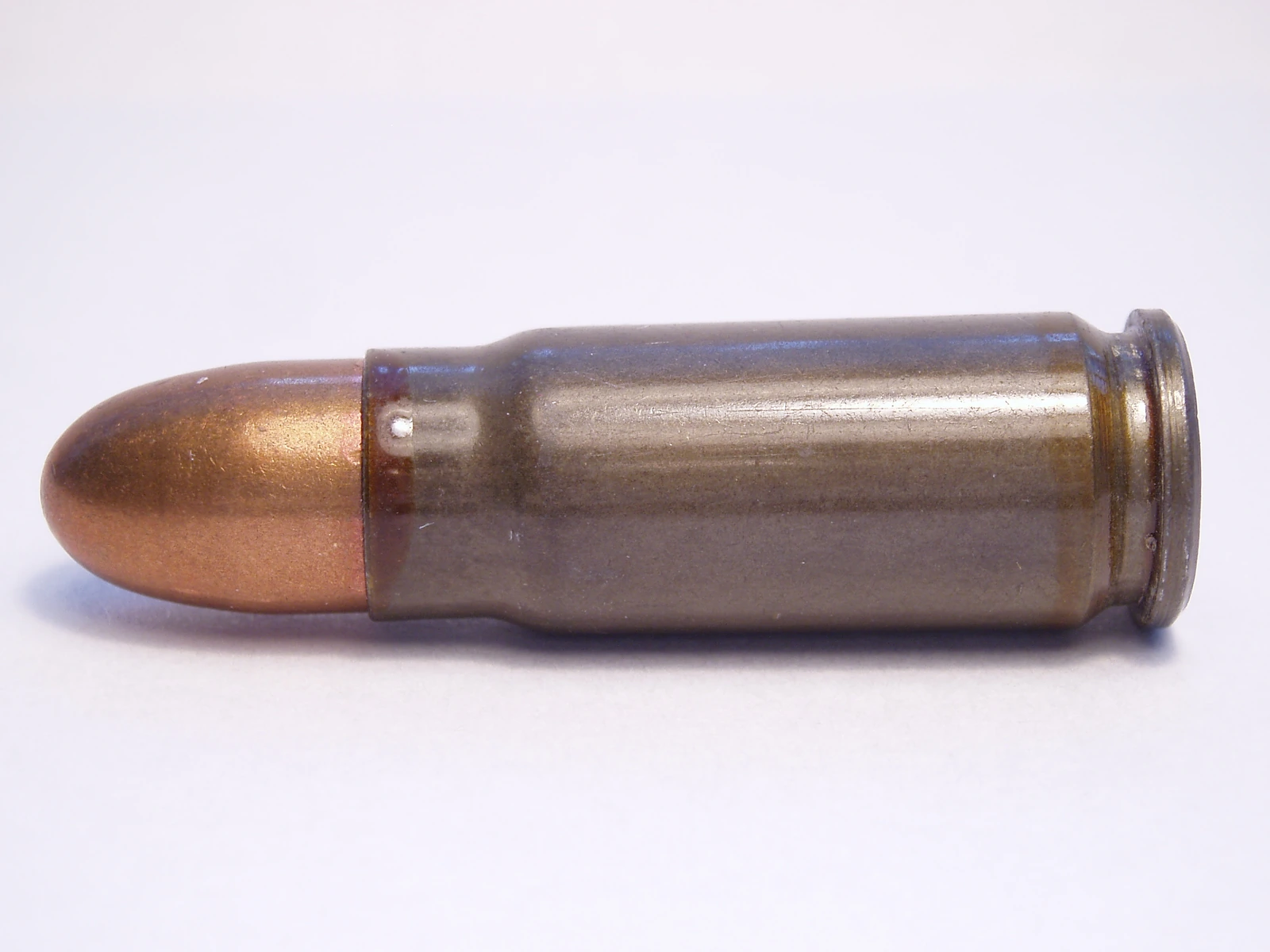
Image credit
- Title
- File:7.62x25 - FMJ - SB - 5.jpg
- Author
- Malis
- Licence
- Public domain
- Source
- https://commons.wikimedia.org/wiki/File:7.62x25_-_FMJ_-_SB_-_5.jpg

Detail
A copy of the 7.63×25mm Mauser, adopted by the Soviet Union in 1930 because the Mauser C96 was already in Russian hands in quantity and the tooling question answered itself. What the Soviets changed was the pressure: at 250 MPa it is among the highest-pressure pistol cartridges in common use, nearly double the .45 ACP.
The bottleneck case is the reason it feeds so reliably in submachine guns and the reason it wears barrels. A small, fast, hard bullet at close to 500 m/s penetrates far better than its energy suggests and expands not at all, which is exactly what a 1930s military wanted and exactly why nobody designs pistol cartridges this way now.
Chambering is a genuine hazard: the 7.63 Mauser will chamber in a Tokarev and the Tokarev round will chamber in a C96, at pressures the older gun was never proofed for.
References
- C.I.P. TDCC datasheet — 7,62 x 25 Tokarev · 2006-09-19 · read 2026-08-31
- 7.62×25mm Tokarev · 1368766875 · read 2026-08-31
Last verified 2026-08-31 · review status: agent-populated