
6.5x50mmSR Arisaka
Introduced 1897CIP standard
Also known as 6.5x50mm Arisaka, 6,5 x 51 R (Arisaka), Type 30 cartridge, Type 38 cartridge, 6.5mm Japanese: the same cartridge under different names, all of which find this page.
Dimensions and pressure
Generated from the schema, like every specification table on this site, so a figure recorded on this entry cannot be missing from the table.
Identity
- Designed by
- not recorded
- Introduced
- 1897
- Production
- not recorded
- Standards body
- C.I.P.
- Case type
- Semi rimmed
- Case shape
- Bottleneck
Dimensions
- Bullet diameter
- 6.63 mm0.2610 insource
Cartridge maximum, dimension G1, and the same figure the encyclopedia infobox gives. The lead sentence of that article instead states 6.705 mm, which the datasheet contradicts.
- Bore diameter
- not recorded
- Case length
- 51 mm2.008 insource
Cartridge maximum, dimension L3. C.I.P. names the round after this figure; the common name rounds it down to 50 mm.
- Overall length
- 76 mm2.992 insource
Cartridge maximum, dimension L6.
- Rim diameter
- 12.08 mm0.4756 insource
Dimension R1. It stands 0.63 mm proud of the base, which is what makes the case semi-rimmed rather than rimmed or rimless.
- Neck diameter
- 7.37 mm0.2902 insource
Dimension H2.
- Base diameter
- 11.45 mm0.4508 insource
Dimension P1.
Pressure
- Maximum pressure
- 295 MPa42,786 psisource
Pmax 2950 bar. This is the modern commercial ceiling, not an Imperial Japanese Army specification.
- Pressure standard
- C.I.P.
SAAMI and C.I.P. measure pressure differently and their figures are not interchangeable, which is why the body is always named beside the figure.
Loads
Velocity is recorded per barrel length as published. A gun page interpolates between these points and never projects beyond them.
Type 38 ball
- Bullet mass
- 9.001 g138.9 grsource
138.9 gr as published in the article's ballistics table, converted to grams; the article's running text gives the same bullet as 9.0 g.
- Cartridge mass
- not recorded
- Bullet type
- FMJ spitzer
- G1 BC
- not recorded
- G7 BC
- not recorded
| Barrel | Velocity |
|---|---|
| 800 mm31.50 in | 770 m/s2,526 fps |
Chambered in
Computed from every entry that lists this cartridge. Nothing here is hand-maintained.
- Arisaka
Koishikawa Arsenal
Gallery
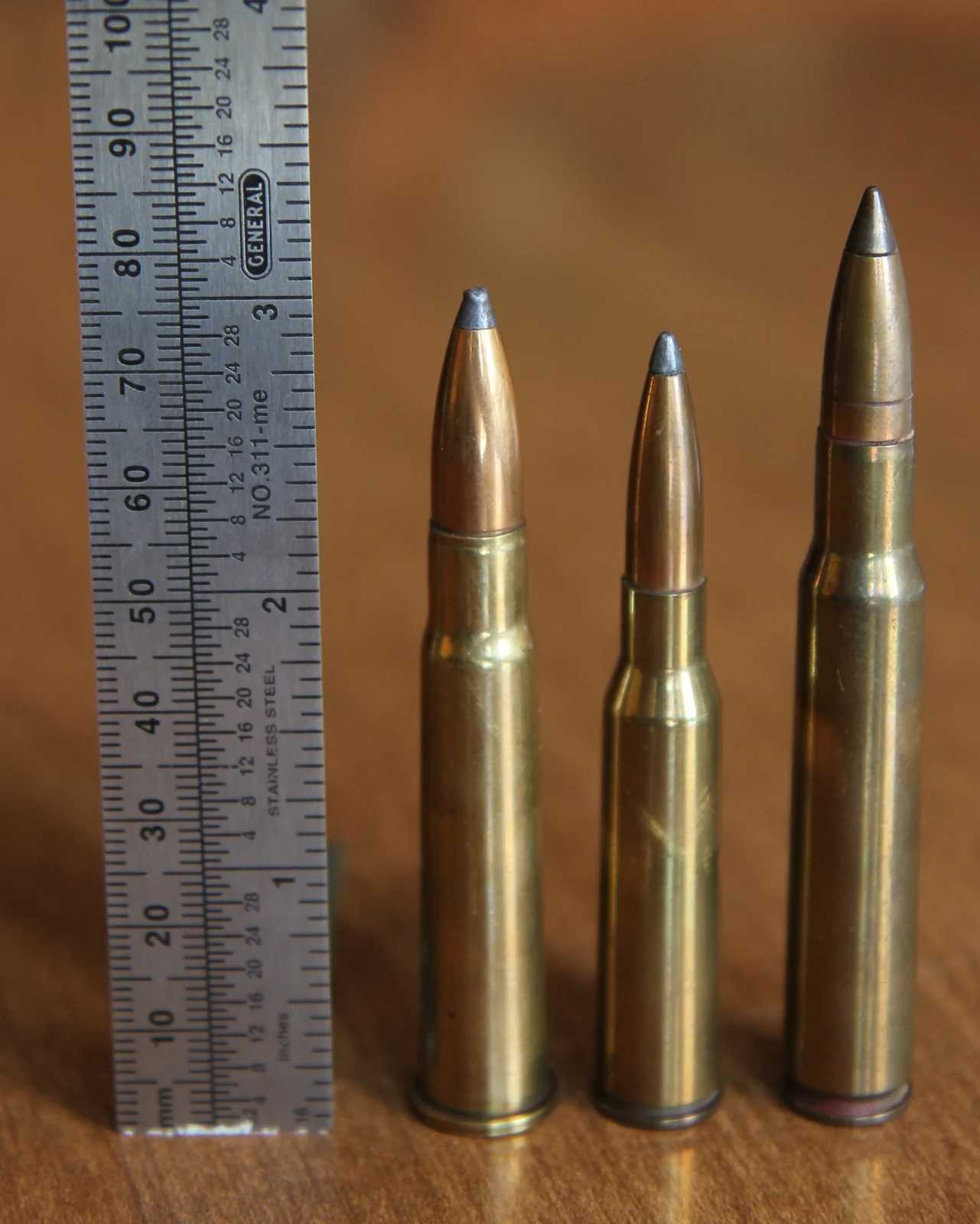
Image credit
- Title
- File:6.5x50mm Japanese with .303 British & .30-06.JPG
- Author
- Ultratone85(attribution required)
- Licence
- CC BY-SA 4.0
- Source
- https://commons.wikimedia.org/wiki/File:6.5x50mm_Japanese_with_.303_British_&_.30-06.JPG

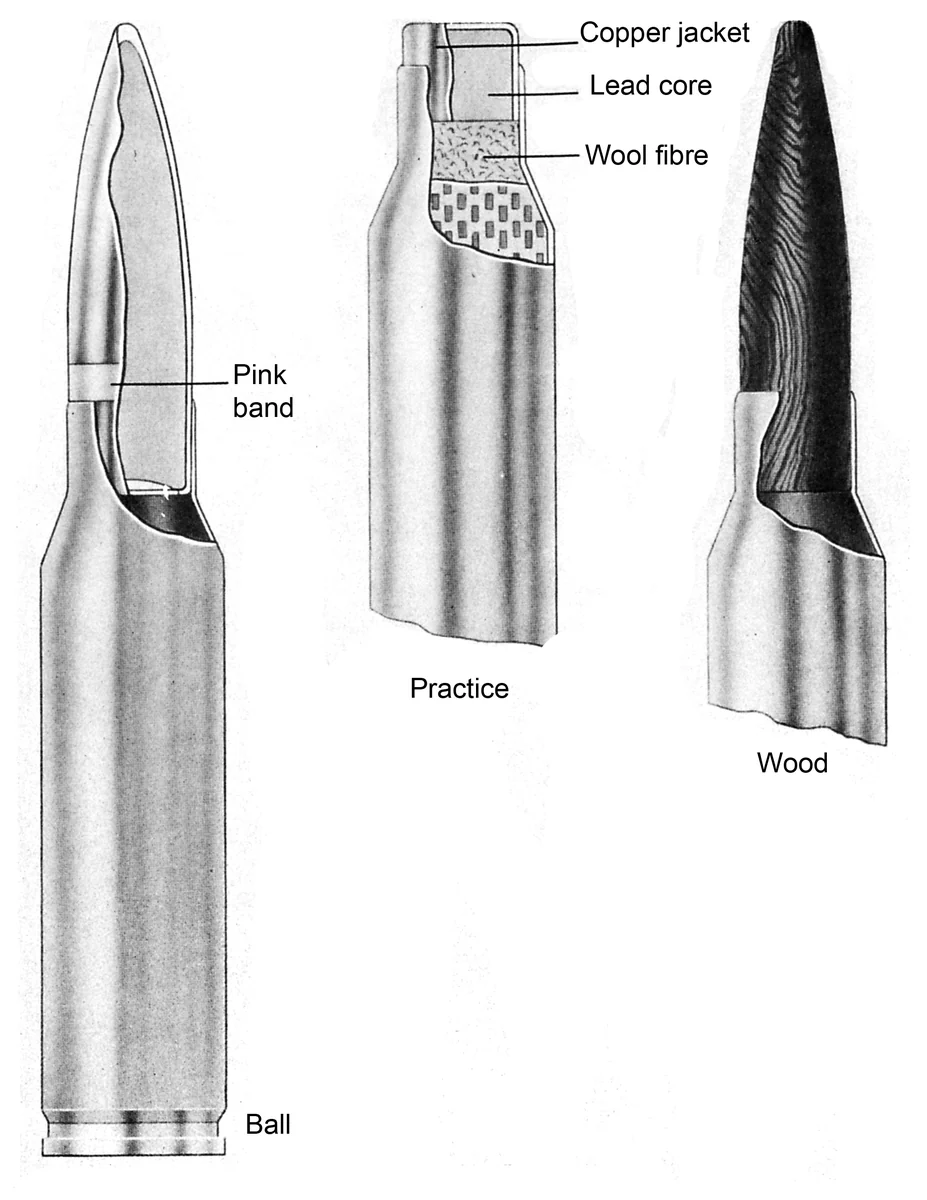
Image credit
- Title
- File:Type 38 6.5mm ammunition.jpg
- Author
- Departments of the Army and the Air Force
- Licence
- Public domain
- Source
- https://commons.wikimedia.org/wiki/File:Type_38_6.5mm_ammunition.jpg

Detail
The 6.5x50mmSR was the Imperial Japanese Army’s service cartridge from 1897, adopted as the Type 30 round together with the Type 30 rifle it is named after, and it replaced the 8x52mm Murata. Japan went to a small bore earlier and more completely than any other great power, and spent the next forty years arguing about whether that had been a mistake.
Its head is the interesting part. The rim is 12.08 mm against a base of 11.45 mm, so it stands 0.63 mm proud, enough to headspace and extract on, not enough to make the round awkward to stack. That semi-rimmed compromise is why the case feeds from the Type 38 rifle’s box magazine and from the Type 11 light machine gun’s hopper, and it is a very different answer from the fully rimmed 7.62x54mmR or .303 British of the same generation. The case is 51 mm by the C.I.P. drawing, which is why the European standards body files the round as 6,5 x 51 R while everyone else rounds it down.
The load changed once, decisively. The 1897 Type 30 round carried a round-nosed cupronickel bullet of about 10.4 g; in 1907 Japan followed the rest of the world to a pointed bullet, and the Type 38 cartridge recorded here fires a 9.0 g spitzer at about 770 m/s from an 800 mm barrel. A third variation was made for the Type 11 light machine gun in the 1920s, whose 17.5-inch barrel produced a flash the rifle load did not; the answer was a reformulated propellant rather than a new case, and the resulting round was marked with a coloured ring.
Its reputation was made twice over by other people’s rifles. Russian designers who had been shot at with it in 1904-05 chambered the Fedorov Avtomat for it, on the grounds that 7.62x54mmR recoiled too hard for an automatic; Britain bought about 150,000 Arisakas in 1914 and had Kynoch make the ammunition. Japan itself began replacing it with the 7.7x58mm from 1938 and never finished, which left its forces supplying two rifle cartridges through the whole of the Pacific war.
Gaps on this page: only the Type 38 ball load is recorded, because it is the only one for which a velocity and a barrel length are published together; the Type 30 round-nosed load, the reduced-flash machine-gun round and the 1932 armour-piercing round have masses or descriptions but no matched pair. No ballistic coefficient is published for any of them. The C.I.P. dimensions transcribed here are the modern commercial standard rather than an Imperial Japanese Army drawing, and its 6.63 mm bullet maximum contradicts the 6.705 mm given in the encyclopedia’s own opening sentence; the datasheet figure, which the same article’s infobox repeats, is the one recorded.
References
- C.I.P. TDCC datasheet, 6,5 x 51 R (Arisaka) · Tab. II, adopted 1984-06-14, revised 2013-05-22 · read 2026-09-01
- 6.5×50mmSR Arisaka · 1368569657 · read 2026-09-01
Last verified 2026-09-01 · review status: agent-populated