
Mulled Wine
Red wine warmed with cinnamon, nutmeg and both citrus fruits, the loosely standardised British version served warm.
The same British spicing built on white wine and fresh ginger instead of red wine and nutmeg, for a lighter, sharper cup.
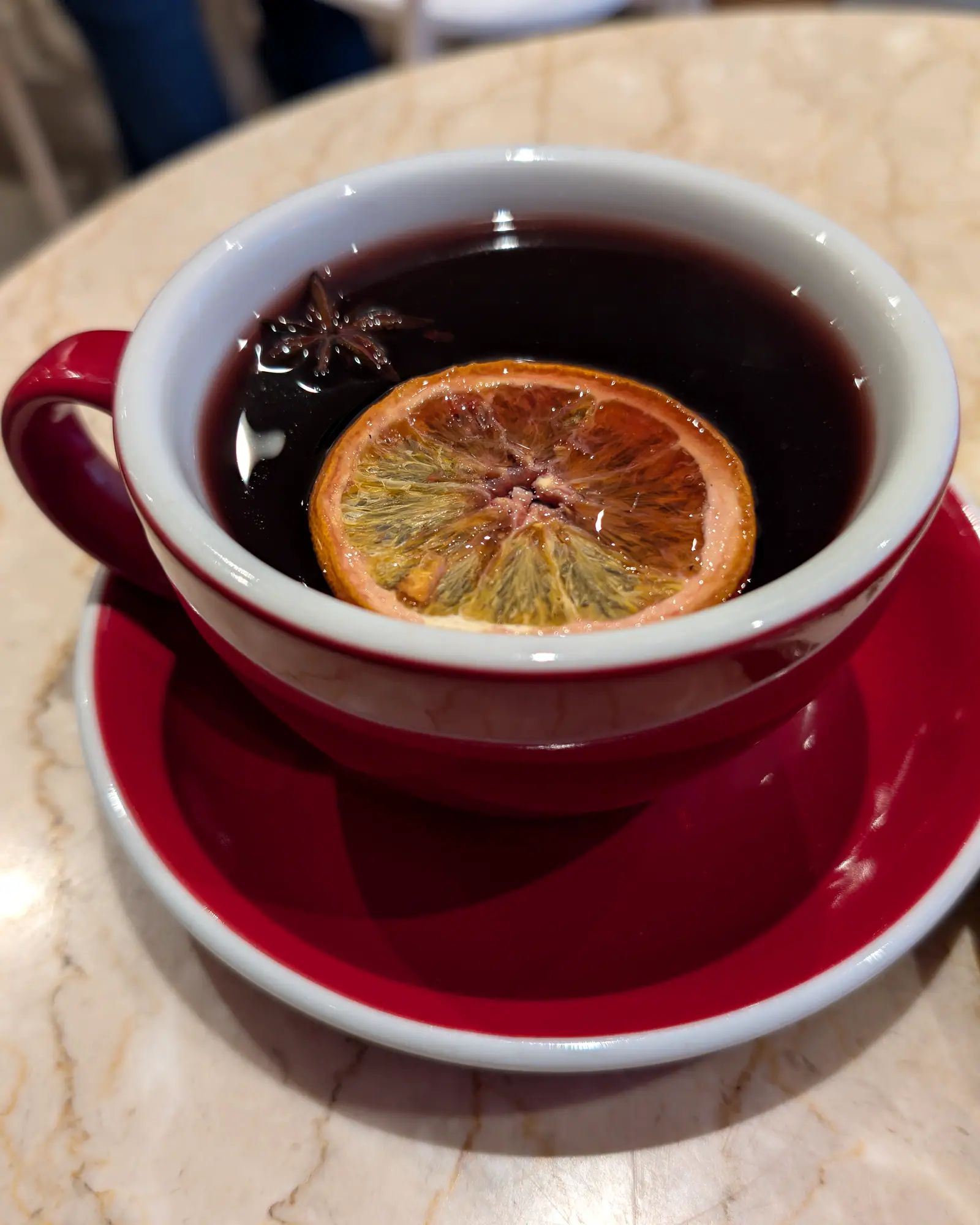

CC0 · Cropped, white-balanced, graded and re-encoded to WebP by eXir.
A mug of dark red mulled wine garnished with an orange slice and star anise
Serving
Drink spec, per drink
Every figure above is per drink and does not move with the count, which is what makes the two service modes comparable. Sugar per litre, strength and standard drinks stay in the units their own authorities publish, because they are figures for comparing rather than for pouring.
Many red wines are fined with isinglass, gelatine or egg white or casein; unfiltered or vegan-labelled bottles are not. The finished wine contains at most a trace of the fining agent, but the label is the only way to know which was used for a given bottle.
Diet and allergen labels are computed from the ingredients listed on this page and nothing else. They cannot account for cross-contamination or for the particular product you buy, and they are not medical or safety guidance.
Ingredients
 300 ml red wine
 25 g granulated sugar
 4 g cinnamon bark
 1 g cloves
 0.3 g freshly grated nutmeg
 ½ orange (50 g)
 ½ lemon (15 g)
- 300 ml red wine
- 25 g granulated sugar
- 4 g cinnamon bark
- 1 g cloves
- 0.3 g freshly grated nutmeg
- ½ orange (50 g)
- ½ lemon (15 g)
Glass
Vessel
158 ml of liquid, served without ice, inside the 350 ml the glass holds. The build fails if a recipe ever exceeds its stated vessel.
A batch needs a vessel that closes and fits a fridge shelf.
Drink spec, per drink
Every figure above is per drink and does not move with the count, which is what makes the two service modes comparable. Sugar per litre, strength and standard drinks stay in the units their own authorities publish, because they are figures for comparing rather than for pouring.
White wine is routinely fined with isinglass, gelatine or casein, and a producer rarely states whether a given bottle was.
Diet and allergen labels are computed from the ingredients listed on this page and nothing else. They cannot account for cross-contamination or for the particular product you buy, and they are not medical or safety guidance.
Ingredients
 300 ml dry white wine
- 25 g granulated sugar
- 4 g cinnamon bark
 10 g fresh ginger
- 0.5 g cloves
- ½ orange (30 g)
- ½ lemon (15 g)
- 300 ml dry white wine
- 25 g granulated sugar
- 4 g cinnamon bark
- 10 g fresh ginger
- 0.5 g cloves
- ½ orange (30 g)
- ½ lemon (15 g)
Glass
Vessel
158 ml of liquid, served without ice, inside the 350 ml the glass holds. The build fails if a recipe ever exceeds its stated vessel.
A batch needs a vessel that closes and fits a fridge shelf.
Method
3 steps · 15mCombine the 300 ml red wine, the 25 g granulated sugar, the 4 g cinnamon bark, the 1 g cloves, the 0.3 g freshly grated nutmeg, the ½ orange (30 g) and the ½ lemon (15 g) in a pot and warm gently until the sugar dissolves and the wine steams.
Take off the heat, cover and let the spices steep for 10m.
Warm through again briefly and strain hot into small cups, floating a clove-studded slice of the ½ orange (20 g) on top of each.
Common pitfallUnlike Gluhwein's fixed cinnamon-star-anise-orange mix, this version has no single settled recipe; grating too much 0.3 g freshly grated nutmeg in is the easiest way to push it toward tasting like mulled cider instead of wine.
Keeping and make-ahead
Batched ahead, this keeps sealed and cold. The water line the engine adds is the dilution figure from the spec panel, not a rule of thumb.
Method
3 steps · 15mCombine the 300 ml dry white wine, the 25 g granulated sugar, the 4 g cinnamon bark, the 10 g fresh ginger, the 0.5 g cloves, the ½ orange (30 g) and the ½ lemon (15 g) in a pot and warm gently until the sugar dissolves and the wine steams.
White wine carries far less tannin than red, so the drink is built around 10 g fresh ginger for warmth rather than the nutmeg and cloves the red version leans on, which would sit heavily on a lighter base.
Take off the heat, cover and let the spices steep for 10m.
Warm through again briefly and strain hot into small cups.
Keeping and make-ahead
Batched ahead, this keeps sealed and cold. The water line the engine adds is the dilution figure from the spec panel, not a rule of thumb.
About
Spiced warm wine in its British form, descended from the same Roman and medieval hot-wine tradition as German Gluhwein but never settled into one fixed recipe or a single named spice mix.
Heated spiced wine reached Britain by the same Roman route it reached Germany and Scandinavia by: legions carried both wine and the practice of warming it north as far as the Scottish borders 1. An English cookbook of 1390, The Forme of Cury, already gives a recipe combining red wine and sugar with cinnamon, ginger, galangal, cloves and nutmeg, a spice list close to what a British mulled wine still uses six centuries later 1.
Unlike Germany's Gluhwein, which settled into a comparatively fixed formula tied to Christmas markets, British mulled wine never fixed on one recipe. Modern versions are commonly built from some combination of orange, lemon, cinnamon, nutmeg, cloves, cardamom, ginger and either fennel seed or star anise, without any single combination treated as the standard one 1. It is conventionally served in small cups, around two hundred millilitres, often porcelain or glass, and frequently finished with a clove-studded orange slice floated on top 1.
Its older English name, hippocras, points at how the drink was originally understood: not as a festive treat but as a health tonic, taken hot or cold 2. Chaucer has a character in The Canterbury Tales drink "ypocras, clarre, and vernage" of hot spices specifically for its restorative effect, and the word "mulled" itself is traced to the Old English mulse, rooted in the Latin for honey, from a period before sugar was the sweetener of choice 2. The drink's tie to Christmas specifically is a later, and comparatively recent, association: one account credits Charles Dickens's 1843 A Christmas Carol, which features a mulled-wine variant called Smoking Bishop made with port and dried oranges, with fixing the drink in the popular idea of an English Christmas 2. Modern British variants extend the same idea of an unfixed recipe furthest of the three drinks in this group, including versions built on mulled cider or on apple juice with no alcohol in it at all 1.
- 1Mulled wineen.wikipedia.org
- 2A Brief History of Mulled Wine — From Health Tonic to Festive Treattheconversation.com