British · Main Course
Roast Beef and Yorkshire Pudding
A bone-in rib roast, its resting time used to bake puddings from the same batter of flour, egg and milk in the meat's own hot fat.
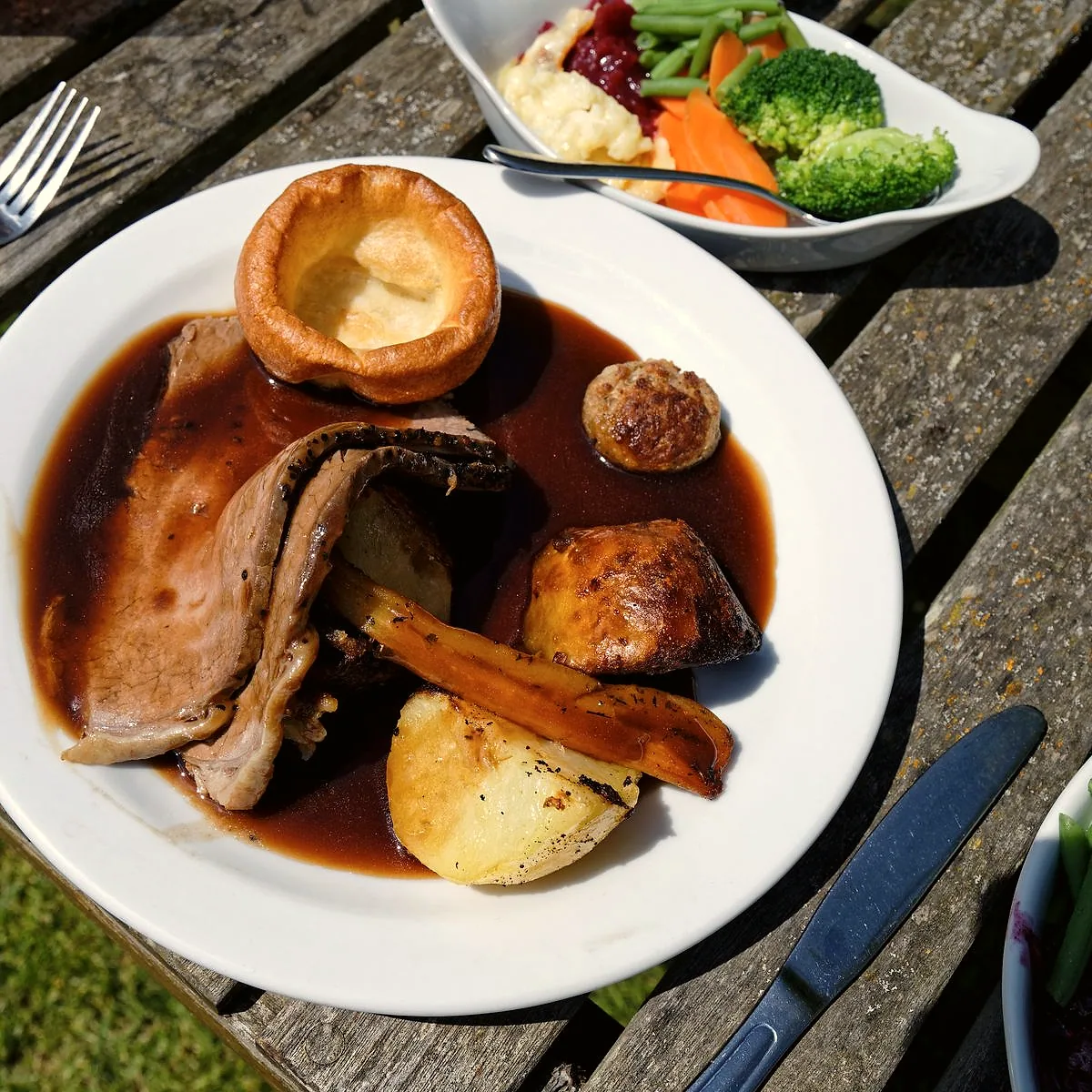

CC BY-SA 4.0. Cropped and colour-adjusted for this site.
Method
Season the 2 kg beef rib roast all over with the 6 g fine sea salt and the 4 g ground black pepper, and rub with the 15 g beef dripping.
Roast at 230 °C for 20m, to sear the outside and start the crust.
Reduce the heat to 160 °C and continue roasting for 1h 15m, until a thermometer in the thickest part of the meat reads 54 °C for medium-rare.
Whisk the 140 g plain flour and the 2 g fine sea salt with the 3 eggs (150 g) and the 200 g milk until completely smooth.
Leave the batter to stand at room temperature for 30m.
Transfer the beef to a board, tent loosely with foil, and rest for 25m, reserving the pan and its juices.
Divide the 30 g beef dripping between the cups of a pudding tin and heat in the oven at 230 °C until smoking hot. Pour in the batter and bake for 25m, without opening the door, until well risen, deeply golden and crisp.
The fat has to be smoking hot before the batter goes in: that first violent contact is what sets the outside instantly and traps the steam that pushes the puddings up. A cool tin gives flat, dense puddings instead.
Set the roasting pan over a medium heat, stir the 20 g plain flour into the juices left behind, and cook briefly before whisking in the 400 g beef stock and the 2 g fine sea salt. Simmer for 10m, until thickened, scraping up any browned bits from the base of the pan.
Carve the beef against the grain and serve with the puddings and the gravy.
Common pitfallCarving straight from the oven pushes out the juices that resting redistributes through the meat. The rest is not optional time to fill with the puddings; it is what keeps the beef from bleeding out onto the board.
Roast beef's status as a marker of English identity is old enough to have become a joke at England's expense: the French nickname for the English, les rosbifs, is taken directly from the dish, a mark of the Englishman in French eyes memorably captured in satirist James Gillray's imagery of John Bull tucking into his beef [1]. Long before Yorkshire pudding entered the picture, a joint of roast beef was already doing cultural work well beyond the dinner table.
The pudding's origin is more practical than patriotic. The earliest named recipe appears in 1747, when Hannah Glasse's The Art of Cookery Made Plain and Easy gave the Yorkshire name to a batter previously cooked simply as "dripping pudding", set beneath a joint turning on a spit so the fat and juices falling from the meat would flavour and cook it as it roasted [2]. Its original place at the table was not beside the beef but before it: served first, with thick gravy, specifically to blunt appetites and make an expensive cut of meat go further, a purpose recorded in the regional saying "them 'at eats t'most pudding gets t'most meat" [2].
The two dishes only became a single, simultaneous course later, as Yorkshire pudding moved from a starter that stretched the meat to a side dish that shares the plate with it. What survives from the original arrangement is the method rather than the order of service: a pudding still made from nothing more than flour, egg and milk, and still raised by nothing but the shock of meeting fat hot enough to have come straight from underneath a roasting joint.
Sources
- Le Rosbif, Rachel Hope Cleves (historian)A professional historian's account of the French nickname "les rosbifs" for the English, tracing it to the English association with beef and James Gillray's satirical imagery of John Bull.
- The History and Origins of the Yorkshire Pudding, Historic UKOn the 1747 Hannah Glasse recipe that named the dish, its original role as a filling starter course, and the Yorkshire saying about pudding and meat.