East African · Main Course
Nyama Choma
Goat, salted plainly and grilled slowly over charcoal until the outside is charred and the inside still juicy.
Also known asChoma · Kenya
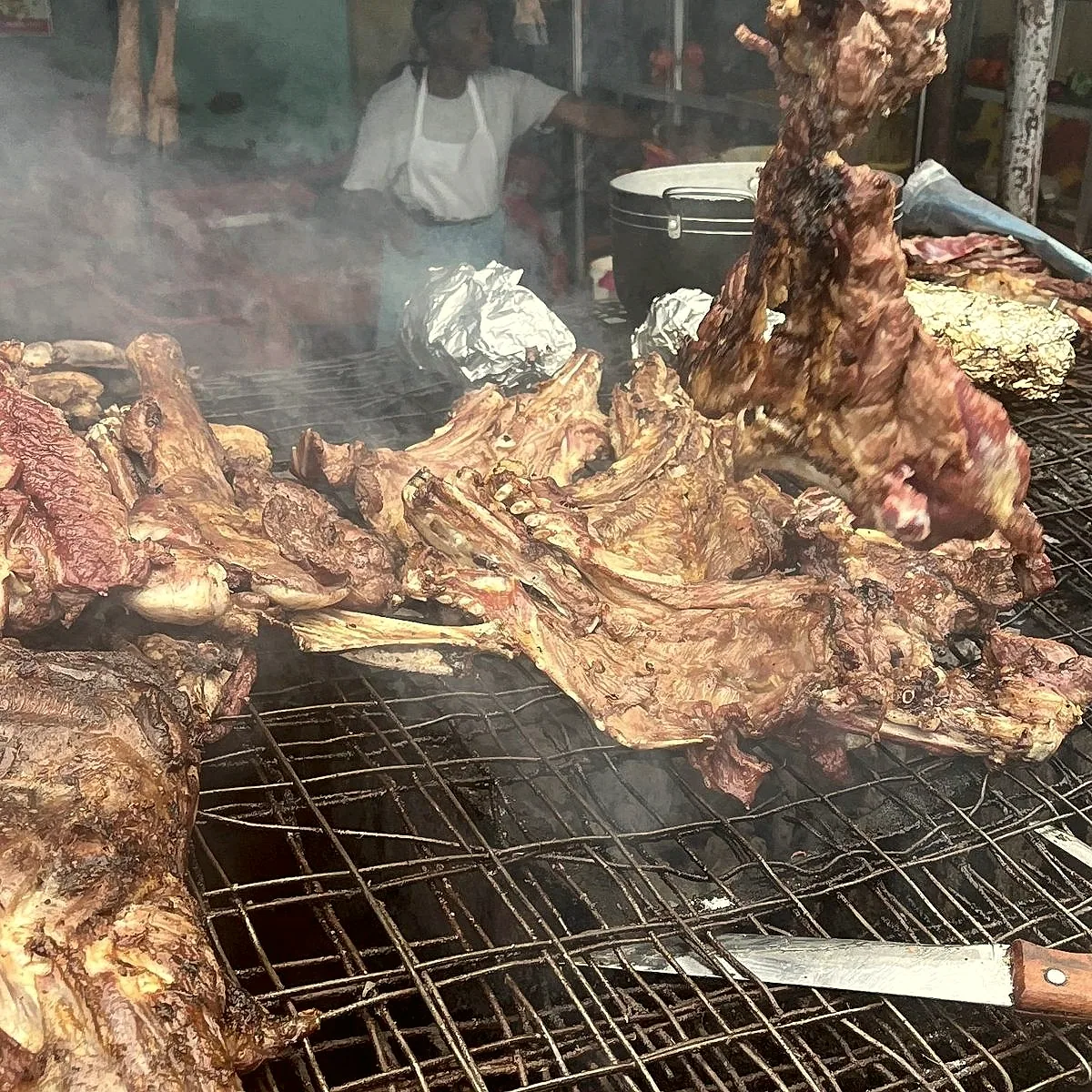

CC0. Cropped and colour-adjusted for this site.
Method
Rub the 900 g goat all over with the 3 garlic cloves (15 g), 20 ml freshly squeezed lemon juice, 20 g vegetable oil, 10 g fine sea salt and 3 g ground black pepper, working the seasoning into the meat and between the joints. This takes 8m.
Common pitfallThe seasoning here is only salt, pepper, garlic and a little citrus. A heavier marinade masks the char and smoke that the dish is built around.
Leave the goat to sit at room temperature for 30m, so the seasoning reaches the meat before it hits the fire.
Build a charcoal fire and let it burn down to a steady, even bed of hot coals. Grill the goat over indirect heat, turning regularly, for 40m, until the outside is well charred and a skewer pushed into the thickest piece meets no resistance.
Grilling over a low, indirect charcoal heat for a long stretch rather than searing hard is what renders the goat's connective tissue without drying the meat out before the bone pieces cook through.
Rest the goat off the heat for 8m, then chop it into smaller pieces directly on the board it is served from.
The name is a plain description rather than a recipe: nyama is meat, choma is to roast or burn, and together they simply mean grilled meat. What that description covers is the closest thing Kenya has to a national dish: most often goat, sometimes beef, salted and grilled slowly over charcoal or wood until the outside is charred and the inside still juicy [2][1].
Accounts of how it began do not agree on much beyond an open fire. One tradition traces it to hunters who grilled game over the fire on hunting expeditions before the practice moved into everyday and celebratory cooking [1]; a separate and more commonly repeated account attributes it to pastoralist communities grilling livestock while herding. Neither is documented with the kind of written record that would settle the question, and the honest position is that outdoor grilling of meat over a wood or charcoal fire has deep and probably multiple roots across East Africa's herding and hunting communities rather than one traceable origin.
What is better documented is nyama choma's modern social role. It is traditionally a men's occasion, grilled and tended outdoors by men even in households where cooking is otherwise women's work [1], and it is built around gathering rather than a sit-down meal: eaten standing or seated around the fire, with the hands, alongside ugali and kachumbari, and washed down with beer, Tusker lager by long-standing custom [1]. Roadside "choma joints" and dedicated grill restaurants across Kenya and Tanzania have formalised what began as an informal, communal way of cooking, but the fire and the gathering around it remain the point as much as the meat itself.
Sources
- Foodways: Western Uplands, Kenya, Smithsonian Folklife FestivalDescribes nyama choma's roots in outdoor grilling by hunters and its role as a social, male-coded cooking occasion, paired with ugali and kachumbari.
- Nyama choma, WikipediaSets out the name's Kiswahili meaning, its status as a national dish of Kenya and Tanzania, and standard accompaniments.