Filipino · Main Course
Lechon
A whole pig, stuffed with lemongrass, garlic and bay, spit-roasted for hours over live coals until the skin shatters.
Also known asLechon baboy
Not the same asLechón asado (A Cuban roast pork shoulder or leg, boned and marinated in a citrus-and-garlic mojo, cooked in a domestic oven rather than spit-roasted whole. It is a different dish descended from the same Spanish word.)
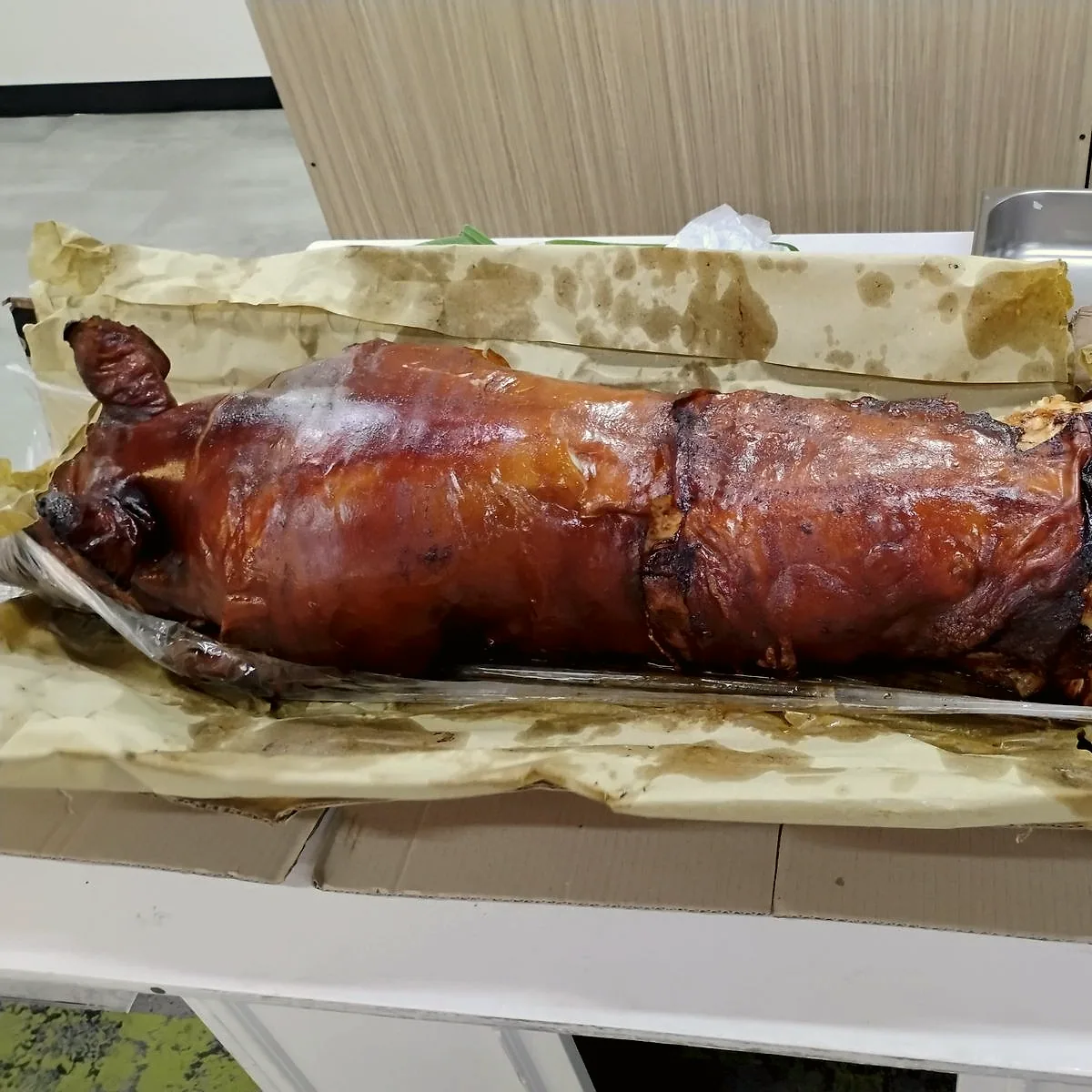
.jpg)
CC BY-SA 4.0. Cropped and colour-adjusted for this site.
Method
Rub the inside of the cavity with the 60 g fine sea salt and 10 g ground black pepper, then pack in the 150 g lemongrass, 12 garlic cloves (60 g), 300 g yellow onion and 10 bay leaves (2 g) for 20m.
Close the cavity by sewing or skewering it shut, then mount the 20 kg pig on a spit, securing it firmly along its length so it turns evenly, for 15m.
Rub the skin all over with the 140 g fine sea salt and leave the pig uncovered and refrigerated for 12h, letting the surface dry out completely.
Skin roasted wet steams before it crisps. An uncovered rest in the refrigerator draws moisture out of the surface so the skin blisters and shatters rather than turning leathery.
Roast over a steady bed of live coals, turning constantly, for 4h, keeping the pig a consistent distance from the heat so it colours gradually and cooks through to the bone without the skin scorching.
Common pitfallA fire hot enough to colour the skin quickly will burn it long before the meat near the bone is cooked through. Constant turning over a moderate, steady heat, rather than a hot, uneven one, is what gets both right together.
Lift off the heat and rest for 20m before carving.
Carve for 15m, separating the crackled skin from the meat in sheets and chopping both into serving pieces.
The word is Spanish before it is Filipino. Lechón is built from leche, "milk," and named a milk-fed suckling pig before it named anything Philippine; Spanish colonisation carried the word wherever the empire went, which is why lechón also names roast-pig dishes in Cuba, Puerto Rico and across the former Spanish Caribbean and South America [1] [4].
What the word was attached to in the Philippines was not a Spanish invention. Archaeological evidence gathered by the National Museum shows Filipinos eating pork as far back as seven thousand years ago, and the Italian chronicler Antonio Pigafetta recorded a ritual pig roasting, led by a babaylan priestess, during his 1521 voyage with Magellan's expedition, years before sustained Spanish colonisation began [2]. The Filipino version also diverged in its seasoning: Philippine lechón is typically stuffed with native aromatics such as lemongrass, garlic and citrus, rather than the salt-and-water seasoning of the Iberian dish it takes its name from [1] [5]. The label arrived from Spain; the roasting tradition and its seasoning did not.
The best-documented chapter of that history is comparatively recent and regional. Cebu's particular style of lechon, now internationally the most famous [1] [3], is traced to lechoneros working in Talisay City from the 1920s onward, who at the time called their pork inasal (from asal, to cook over live coal) rather than lechon [3]. Multi-generation family operations from that period, including the Garces family's recipe, are still trading in Talisay today, alongside rival lechon towns such as Carcar that built their own reputations on the same technique [3].
Sources
- Lechón, WikipediaGives the Spanish etymology, the dish's spread through the former Spanish and Portuguese empires, and the distinct native ingredients used in Philippine lechon.
- The Ancient Origins of Filipino Lechon: A Ritualistic Journey, Daily TribuneBy Nick V. Quijano Jr.; cites National Museum archaeological evidence of pork consumption 7,000 years ago and Antonio Pigafetta's 1521 account of a babaylan pig-roasting rite.
- A brief history of the yummy Cebu lechon, GMA News OnlineCovers the 1920s Talisay City lechoneros who commercialised Cebu-style lechon under the earlier name inasal.
- Lechon: The Iconic Roasted Pork From Puerto Rico, Cuba, and Spain, Latin PostBy Rick Martin; describes Spanish colonisation carrying roast-pig traditions to the Caribbean and South America, naming Colombia, the Dominican Republic and other Spanish-speaking nations among the destinations.
- Cebu lechon and beyond, Philippine StarDescribes the Cebu-style stuffing of lemongrass, garlic, leek, peppercorns and salt, with citrus (lemon) added by some cooks.