American · Main Course
Fettuccine Alfredo
Fettuccine tossed in a sauce of butter, cream and Parmigiano-Reggiano until it clings to every strand.
Not the same asFettuccine al burro (The Roman original is butter and Parmigiano-Reggiano melted by the heat of the pasta alone, with no cream anywhere in it.)
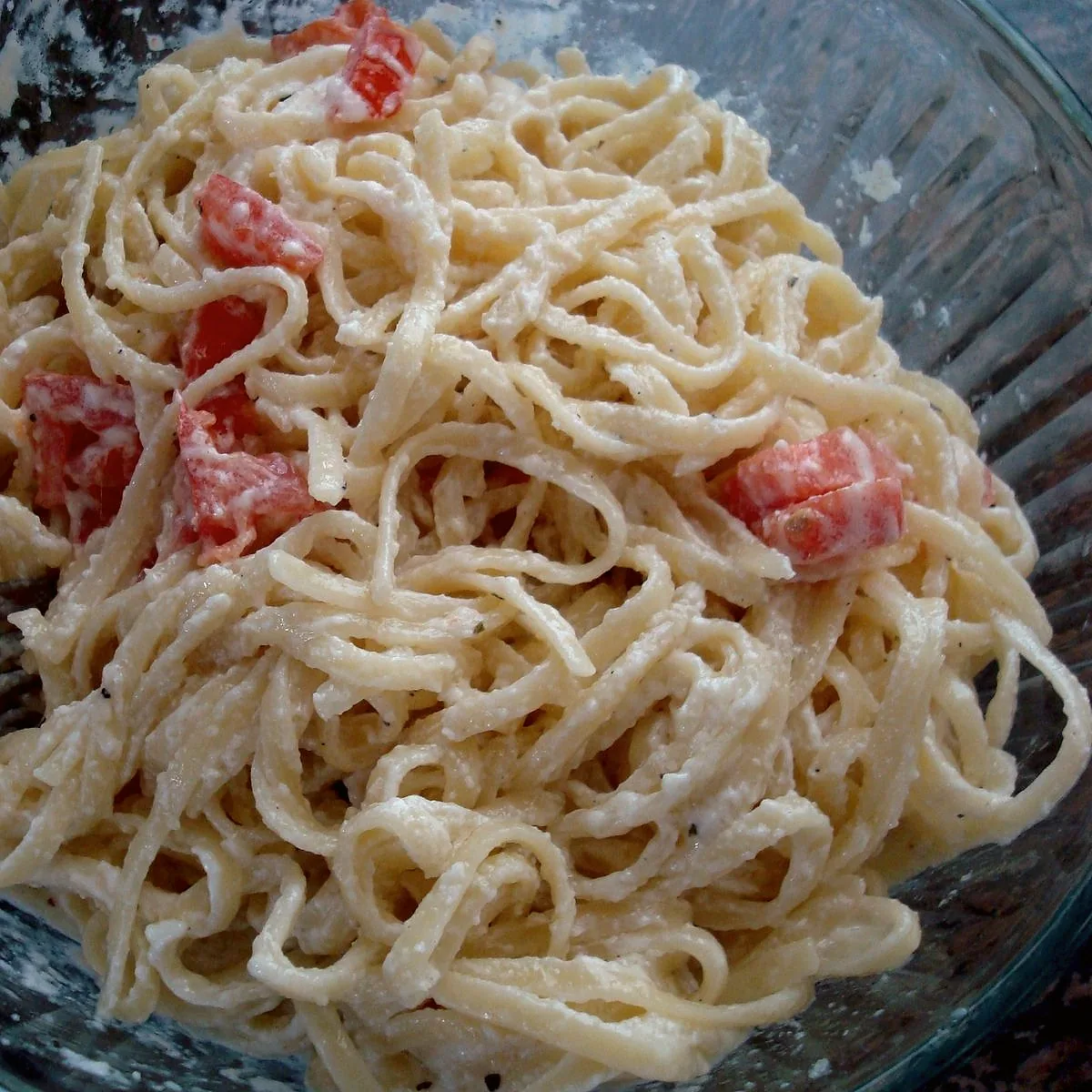

CC BY 2.0. Cropped and colour-adjusted for this site.
Method
Bring the 2.5 L water to a rolling boil in a wide pan, then add the 20 g fine sea salt.
Meanwhile melt the 30 g unsalted butter in a wide pan over a low heat and stir in the 120 ml double cream. Keep it warm without letting it boil.
Add the 200 g dried fettuccine to the boiling water and cook for 9m, or two minutes short of whatever the packet claims. Before draining, lift out a mugful of the cooking water, then drain the pasta while the centre still resists a bite.
Add the pasta to the butter and cream, take the pan off the heat, and toss in the 60 g Parmigiano-Reggiano a little at a time, loosening with splashes of the reserved pasta water until the sauce coats every strand. Finish with the 2 g ground black pepper and the 4 g flat-leaf parsley.
A splash of the reserved starchy pasta water lets the butter and cream bind into a smooth sauce that coats the noodles, instead of pooling loose at the bottom of the bowl.
Common pitfallAdding all the parmesan at once over high heat can make the sauce seize into strings. Off the heat, tossed in gradually, it melts smoothly instead.
The dish is Roman and, in its original form, austere. Alfredo di Lelio is credited with creating it at his restaurant in Rome in the early twentieth century, built from nothing more than fresh fettuccine, butter and Parmigiano-Reggiano: no cream anywhere in it, the sauce formed entirely by tossing the hot pasta hard enough to emulsify the butter and cheese into something that looks creamy without containing any [1].
Its American career began with a honeymoon. The actors Mary Pickford and Douglas Fairbanks are said to have eaten it at di Lelio's restaurant during their 1920 honeymoon, loved it enough to ask for the recipe, and helped make it famous once they brought it home [3]. What travelled across the Atlantic did not stay the same dish for long: back in America, working with butter and cheese of a different character than the ones available in Rome, and without the tableside technique that emulsified the sauce in the first place, cooks added cream to stabilise and enrich it, and often garlic and extra cheese besides: the dish now sold as "Alfredo" almost everywhere outside Italy [2] [3].
The two are close enough in name to be mistaken for versions of one dish, but they are not interchangeable: the Roman original has no cream in it at all, and reaches its texture through technique rather than a second dairy ingredient. What follows here is the American version, built deliberately around cream rather than in place of the technique it replaced.
Sources
- Fettuccine Alfredo, WikipediaOn Alfredo di Lelio's original 1908 Rome recipe and its introduction to America by Mary Pickford and Douglas Fairbanks.
- Italian or American? The Truth About Fettuccine Alfredo, Italy SegretaOn the divergence between the Roman butter-and-cheese original and the American cream-based version.
- How Mary Pickford & Douglas Fairbanks Brought Fettuccini Alfredo To The US, Food RepublicOn di Lelio's restaurant, the couple's 1920 honeymoon visit, and why American cooks added cream when they could not replicate the tableside emulsification.