American · Bread · Side
Cornbread
A cornmeal quick bread baked hot enough in a well-seasoned pan to form a crisp crust. One serving is one wedge from the skillet.
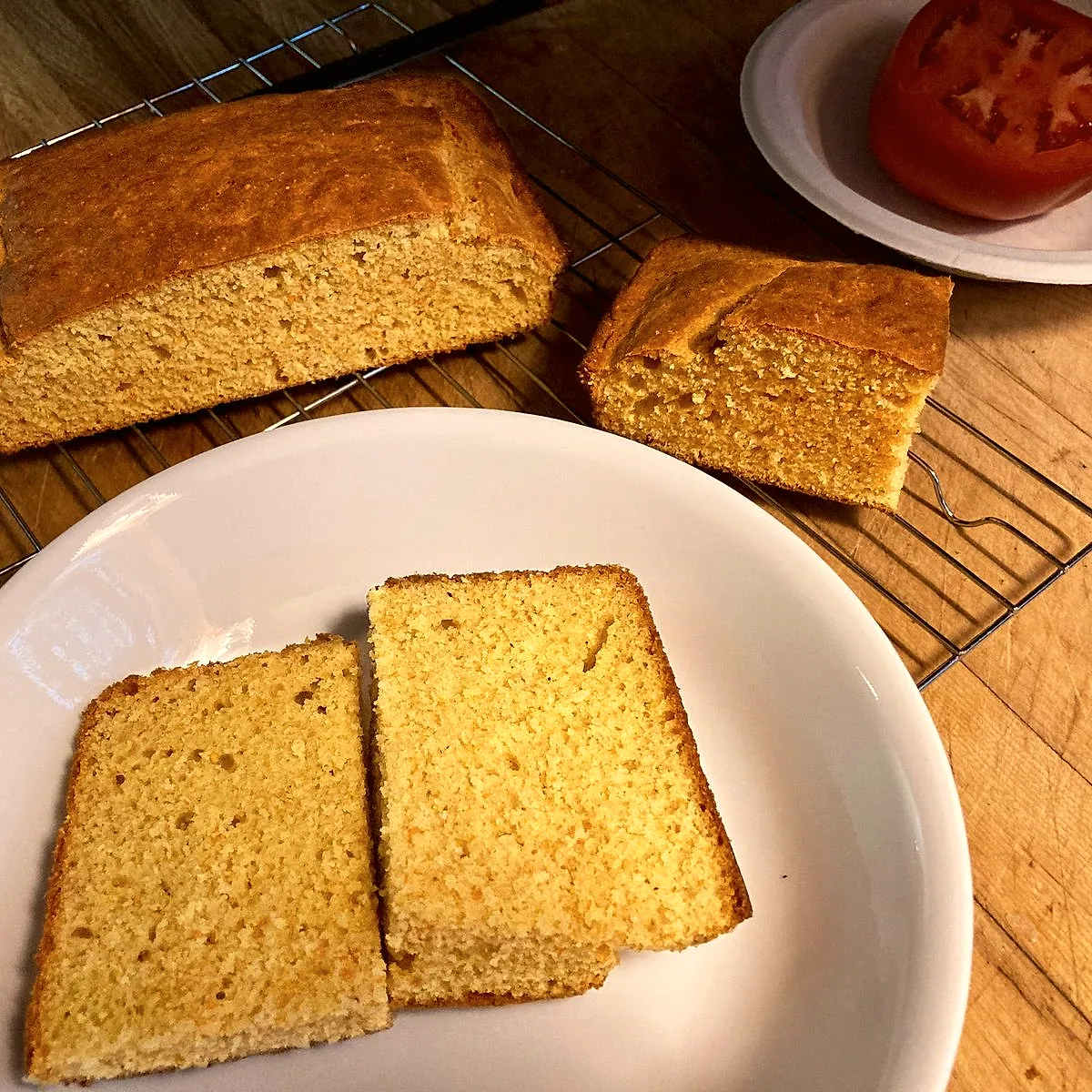

CC BY-SA 4.0. Cropped and colour-adjusted for this site.
The same dish, adapted. Every quantity, time and figure below changes with the version.
Method
Put a well-seasoned cast-iron skillet into the oven and heat it to 220 °C, letting it heat through for 10m while the batter is mixed.
Pouring batter into a skillet already hot from the oven sears the base on contact, which is what gives Southern cornbread its crisp, almost fried-tasting crust rather than a soft one.
Whisk the 200 g yellow maize meal, 100 g plain flour, 10 g baking powder, 3 g bicarbonate of soda and 6 g fine sea salt together in a large bowl.
Beat the 2 eggs (100 g) into the 300 ml cultured buttermilk, then stir this and the 60 g unsalted butter into the dry ingredients over 4m, mixing only until no dry streaks remain.
Common pitfallOvermixing once the buttermilk meets the flour develops gluten a cornbread has no use for, giving a tough crumb instead of the tender, crumbly one this ratio of cornmeal is meant to produce.
Carefully remove the hot skillet from the oven, add a little more butter and swirl it to coat the base and sides, then pour in the batter. It should sizzle on contact. Return the skillet to the oven and bake for 22m, until the top is golden and a skewer pushed into the centre comes out clean. Turn the cornbread out onto a board before cutting, so the crisp base stays crisp rather than steaming against the hot pan.
Method
Heat the oven to 190 °C and butter a square baking tin, allowing 12m for the oven to come to temperature.
Whisk the 150 g yellow maize meal, 150 g plain flour, 12 g baking powder, 4 g fine sea salt and 100 g caster sugar together in a large bowl.
Beat the 2 eggs (100 g) into the 250 ml milk, then stir this and the 75 g unsalted butter into the dry ingredients over 4m, mixing only until smooth and no dry streaks remain.
Common pitfallThis batter takes more sugar and flour than the skillet version and behaves more like a cake batter. Treat it the same way, stopping as soon as the dry ingredients disappear rather than beating it smooth.
Pour the batter into the prepared tin and bake for 25m, until golden and a skewer pushed into the centre comes out clean. Cool in the tin a little before cutting into squares.
Cornbread begins with Indigenous American agriculture, not with any settler kitchen. Native communities were grinding corn into meal and baking it into simple breads long before Europeans arrived, and it was this technique (corn dough wrapped in leaves or dropped onto a hot stone or ash bed) that colonists adapted once maize became their staple grain in the absence of familiar wheat [1]. Enslaved cooks, working with the same ground corn and few other ingredients, developed closely related breads known as hoecakes, ashcakes and corn pone, using methods that trace directly back to Indigenous practice [1].
The cast-iron skillet version most associated with the Deep South today is unsweetened, coarse-textured and savoury, baked hot enough in a well-seasoned pan to form a crisp crust [2]. A sweeter, cakier cornbread (closer to a quick bread than a savoury side) developed separately further north, where wheat flour was more available and was blended into the batter alongside more sugar. The two are still argued over as a matter of regional identity rather than treated as interchangeable recipes [2].
Buttermilk, eggs and chemical leavening were folded into the batter only once they became reliably available, turning what had been a plain corn-and-water bread into the two lighter, richer versions eaten now [1].
Sources
- Cornbread and the Development of Southern Identity, University of South Carolina, Scholar Commons (Senior Theses)Academic account of cornbread's Indigenous origins and its adoption across Southern communities.
- Good Southern Cornbread: History, Variations, and the Sugar Debate, Alabama Public TelevisionCovers the divide between unsweetened Southern cornbread and sweeter Northern versions.