American · Side
Collard Greens
Tough leafy greens simmered for hours in a smoked pork broth until silky, the broth itself served alongside as pot likker.
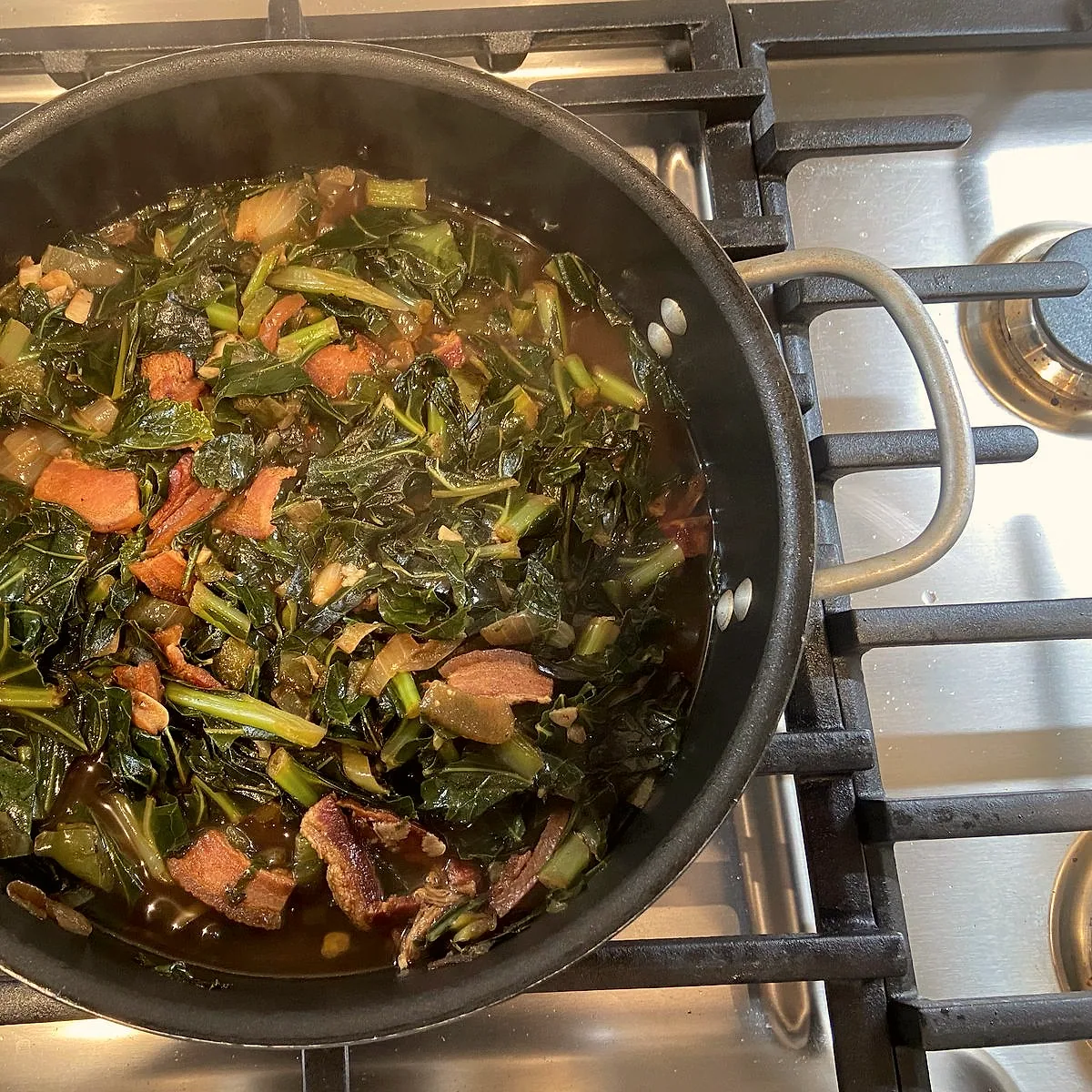

CC BY-SA 4.0. Cropped and colour-adjusted for this site.
Method
Combine the 300 g ham hock and the 1.2 L water in a large pot and bring to the boil.
Reduce the heat to a bare simmer and cook, partially covered, for 1h 30m, until the meat is tender enough to fall from the bone.
While the hock simmers, strip the stems from the 700 g collard greens and slice the leaves into ribbons. Slice the 100 g white onion and mince the 2 garlic cloves (10 g).
Lift out the hock and set it aside. Add the greens, onion and garlic to the pot, return to a simmer, and cook partially covered for 1h, stirring occasionally, until the leaves are tender and silky.
Collard leaves are tough and fibrous raw. A long, low simmer is what breaks down their cell walls into something silky rather than merely wilted.
Pick the meat from the hock, discarding the bone, skin and excess fat, and stir the meat back into the pot along with the 15 ml red wine vinegar, 1 g ground cayenne pepper, 4 g fine sea salt and 1 g ground black pepper. Serve the greens in bowls with plenty of the broth.
Common pitfallAdding the vinegar early stalls the greens from softening; acid firms up the cell walls it should be seasoning, so it goes in only once the leaves are already tender.
Collard greens are Eurasian, not African, in origin. They are a leafy, non-heading brassica the Romans and Greeks already knew. The long-standing account of how they reached the American South has been that European settlers brought them over in the sixteenth century as a garden crop, which enslaved Africans then took up and cooked in their own way [1].
That account is now being questioned rather than overturned. Researchers Bronwen Powell and Abderrahim Ouarghidi found collards growing among African diaspora communities in oases of southern Morocco and traced supporting evidence to a tenth-century Baghdad cookbook recipe for "kurunb Nabati" that closely matches the way collards are still cooked there today, alongside a nineteenth-century explorer's account and a surviving classical Arabic name for the plant in the region [1]. On that reading, collards may have travelled with Muslim traders from Iraq and Oman to North Africa centuries before any European ship carried them west. The researchers themselves describe the case as one for revisiting the traditional narrative, not replacing it outright, since no direct evidence yet links Morocco to the plant's arrival in America [1].
What is not in dispute is what enslaved cooks did with the plant once it was in the South. Cooking the tough leaves down slowly in a pot of water, rather than serving them fresh, and treasuring the broth left behind as "pot likker" is a practice with African roots, carried into a Southern dish built around a smoked pork bone for seasoning [2]. The dish also carries its New Year's Day symbolism from that same community: the flat green leaves are said to resemble folded paper money, and collards eaten alongside black-eyed peas on the first day of the year are supposed to bring prosperity for the months that follow [2].
Sources
- How an unexpected observation, a 10th-century recipe and an explorer's encounter with a cabbage thief upend what we know about collard greens' journey to the American South, The ConversationReports Bronwen Powell and Abderrahim Ouarghidi's Penn State research proposing a Moroccan waypoint for collards, against the older European-introduction account.
- Why Collard Greens Are A Beloved New Year's Day Tradition, Tasting TableSets out the pot-likker cooking method and the New Year's Day prosperity tradition.