American · Breakfast
Buttermilk Pancakes
A chemically leavened griddle batter soured with buttermilk, cooked in small rounds. One serving is three pancakes.
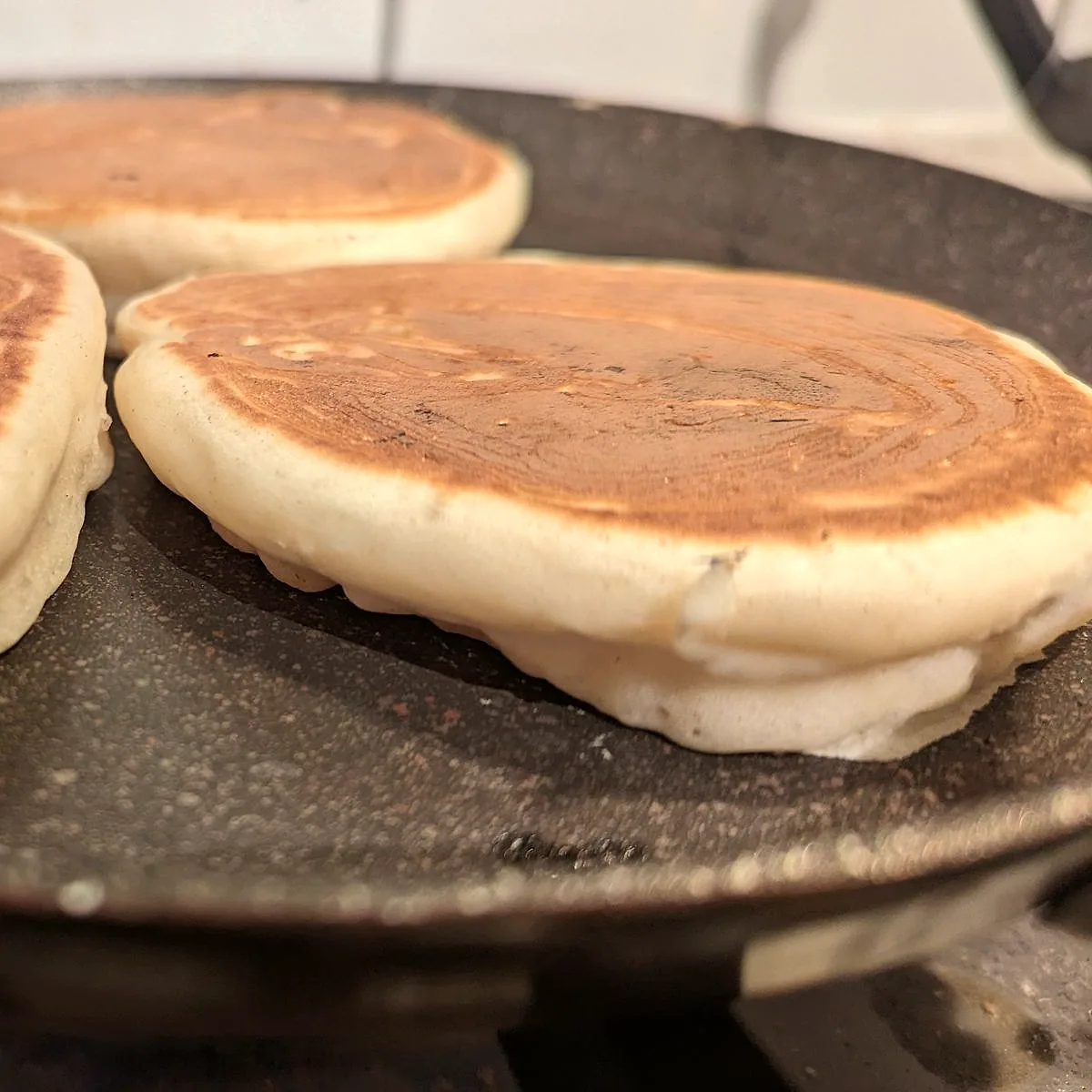

CC BY-SA 4.0. Cropped and colour-adjusted for this site.
Method
Whisk the 250 g plain flour, 8 g baking powder, 4 g bicarbonate of soda, 3 g fine sea salt and 25 g caster sugar together in a large bowl.
Beat the 2 eggs (100 g) into the 400 ml cultured buttermilk along with the 40 g unsalted butter, then pour this into the dry ingredients and stir over 3m, mixing only until no dry streaks remain; the batter should still look a little lumpy.
Common pitfallOvermixing once the buttermilk meets the flour develops gluten the batter has no use for, giving a tough, rubbery pancake instead of a tender one. Stop as soon as the dry flour disappears.
Leave the batter to stand for 5m before cooking.
A short rest lets the baking powder and soda begin working and the flour fully hydrate before the batter meets the griddle, giving a taller, more even pancake than one cooked straight away.
Ladle small rounds of batter onto a hot, lightly buttered griddle. Cook until bubbles rise steadily to the surface and the edges look set, then flip and cook the second side until golden. Repeat with the remaining batter, spending 15m in total, keeping cooked pancakes warm as they come off the griddle.
The word "flapjack" for a griddle cake is recorded in English by the early seventeenth century, well before it crossed the Atlantic [1]. What the English colonists found in New England, though, was not their own wheat batter but a corn-based one: the Narragansett and neighbouring peoples showed early settlers how to grind maize and cook it on a hot stone or griddle, a technique the colonists adapted into what they called journey cake or johnnycake [2].
Amelia Simmons's 1796 American Cookery, generally treated as the first cookbook written by an American, includes both a johnnycake recipe made with cornmeal and molasses and a separate "Indian slapjack" leavened with eggs rather than a rising agent, showing the two traditions (cornmeal griddle bread and egg-risen batter) already sitting side by side at the end of the eighteenth century [2].
The wheat-flour, chemically leavened pancake familiar today is a later development, arriving once baking soda and baking powder became household staples in the nineteenth century. Buttermilk earned its place in the batter for the same reason it did in biscuits and cornbread: it was the acid a farm kitchen already had on hand to react against the soda, and it left the pancake with a characteristic tang that a plain milk batter does not have [1].
Sources
- A Brief History of Pancakes, Smithsonian MagazineOverview of pancake history including its American colonial forms.
- The Long, Surprising History of Pancakes, National GeographicTraces johnnycakes to Indigenous corn-grinding knowledge shared with New England colonists.