British · Dessert
Apple Crumble
Baked spiced apples under a loose, buttery topping of flour, sugar and butter rubbed to coarse crumbs.
Not the same asApple pie (Pie encloses the apples in rolled pastry, top and often bottom; crumble is topped only, with a loose rubbed mixture rather than a rolled sheet of dough.)
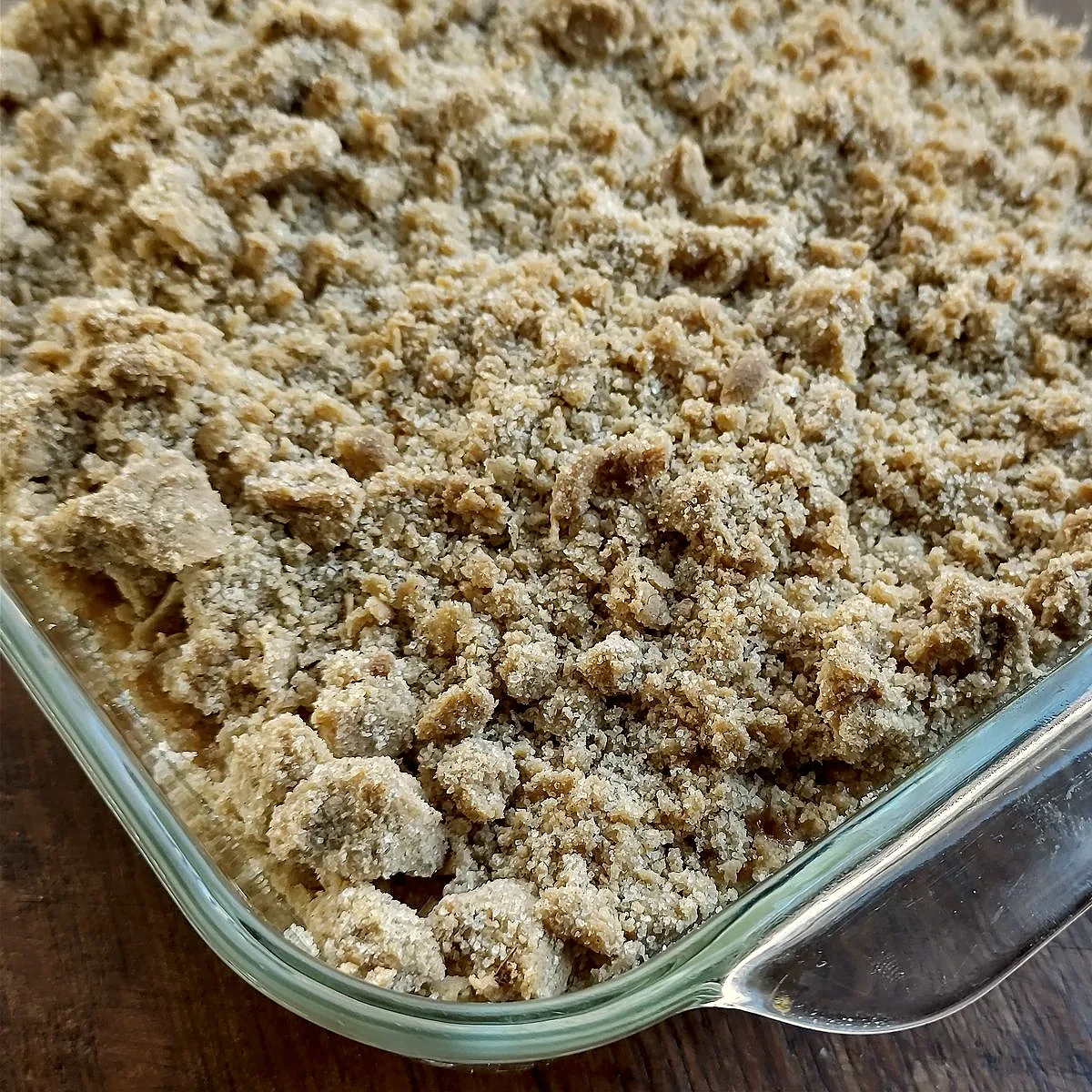

CC BY 4.0. Cropped and colour-adjusted for this site.
Method
Toss the 900 g apple with the 60 g caster sugar, the 3 g ground cinnamon and the 15 g freshly squeezed lemon juice and tip into a baking dish.
Rub the 90 g unsalted butter into the 180 g plain flour and the 1 g fine sea salt with the fingertips until the mixture looks like coarse crumbs, then stir in the 80 g demerara sugar.
Keeping the butter cold and rubbing it only to coarse crumbs, rather than a smooth paste, is what gives the topping its open, crumbly texture instead of baking into a solid biscuit layer.
Scatter the topping evenly over the apples, right to the edges of the dish, without pressing it down.
Bake at 190 °C for 40m, until the top is deep golden and the filling bubbles up around the edges.
Common pitfallCutting the apples too thickly leaves them underdone by the time the topping browns. Even, moderately thin slices cook through in the same time the top needs to colour.
Crumble is usually explained as a Second World War shortcut around pastry rationing: with butter and the quantities of flour needed for a shortcrust lid both restricted, a loose, rubbed topping dropped straight over stewed fruit needed far less fat and no rolling pin. The claim is taken seriously enough to appear in the Oxford Companion to Food, a standard reference on the subject, which states that crumble "probably originated during the Second World War, as a quicker, easier alternative to pastry," and it fits the wider, independently documented pattern of the wartime Ministry of Food employing home economists to develop recipes that worked around exactly the ingredients rationing had put out of reach [2][1].
The dish's own printed record is thinner than that story implies. Even the Oxford Companion to Food's account points only to a recipe in the 1950 edition of Fannie Farmer's Boston Cookbook as the earliest printed mention it can confidently identify, several years after the rationing that supposedly produced the dish had already ended [2]. Whatever the exact date crumble first reached print, the gap between the tidy wartime story and the thin paper trail behind it is itself the more honest account of how the dish is documented.
Sources
- Crumble, WikipediaOn the Ministry of Food's wartime employment of home economists to develop recipes, such as crumble, that used less rationed fat and flour than pastry.
- How to Make the Perfect Crumble, Gulf NewsReporting the Oxford Companion to Food's account of crumble's likely wartime origin, and its dating of the earliest printed crumble recipe to the 1950 edition of Fannie Farmer's Boston Cookbook.