
6.5×52mm Carcano
Introduced 1891CIP standard
Also known as 6.5×52mm Mannlicher-Carcano, 6,5 x 52 Carcano: the same cartridge under different names, all of which find this page.
Dimensions and pressure
Generated from the schema, like every specification table on this site, so a figure recorded on this entry cannot be missing from the table.
Identity
- Designed by
- not recorded
- Introduced
- 1891
- Production
- not recorded
- Standards body
- C.I.P.
- Case type
- Rimless
- Case shape
- Bottleneck
Dimensions
- Bullet diameter
- 6.8 mm0.2677 insource
Cartridge maximum, dimension G1.
- Bore diameter
- not recorded
- Case length
- 52.5 mm2.067 insource
Dimension L3.
- Overall length
- 76.5 mm3.012 insource
Dimension L6.
- Rim diameter
- 11.45 mm0.4508 insource
Dimension R1.
- Neck diameter
- 7.55 mm0.2972 insource
Dimension H2.
- Base diameter
- 11.41 mm0.4492 insource
Dimension P1.
Pressure
- Maximum pressure
- 285 MPa41,336 psisource
Pmax 2850 bar.
- Pressure standard
- C.I.P.
SAAMI and C.I.P. measure pressure differently and their figures are not interchangeable, which is why the body is always named beside the figure.
Loads
Velocity is recorded per barrel length as published. A gun page interpolates between these points and never projects beyond them.
10.5 g RN
- Bullet mass
- 10.5 g162.0 grestimated
From the Wikipedia infobox, uncited there. The C.I.P. datasheet gives dimensions and pressure only, not a bullet mass.
- Cartridge mass
- not recorded
- Bullet type
- RN
- G1 BC
- not recorded
- G7 BC
- not recorded
| Barrel | Velocity |
|---|---|
| 780 mm30.71 in | 700 m/s2,297 fps |
| 445 mm17.52 in | 661 m/s2,169 fps |
Chambered in
Computed from every entry that lists this cartridge. Nothing here is hand-maintained.
No entry on the site is chambered in it yet.
Gallery
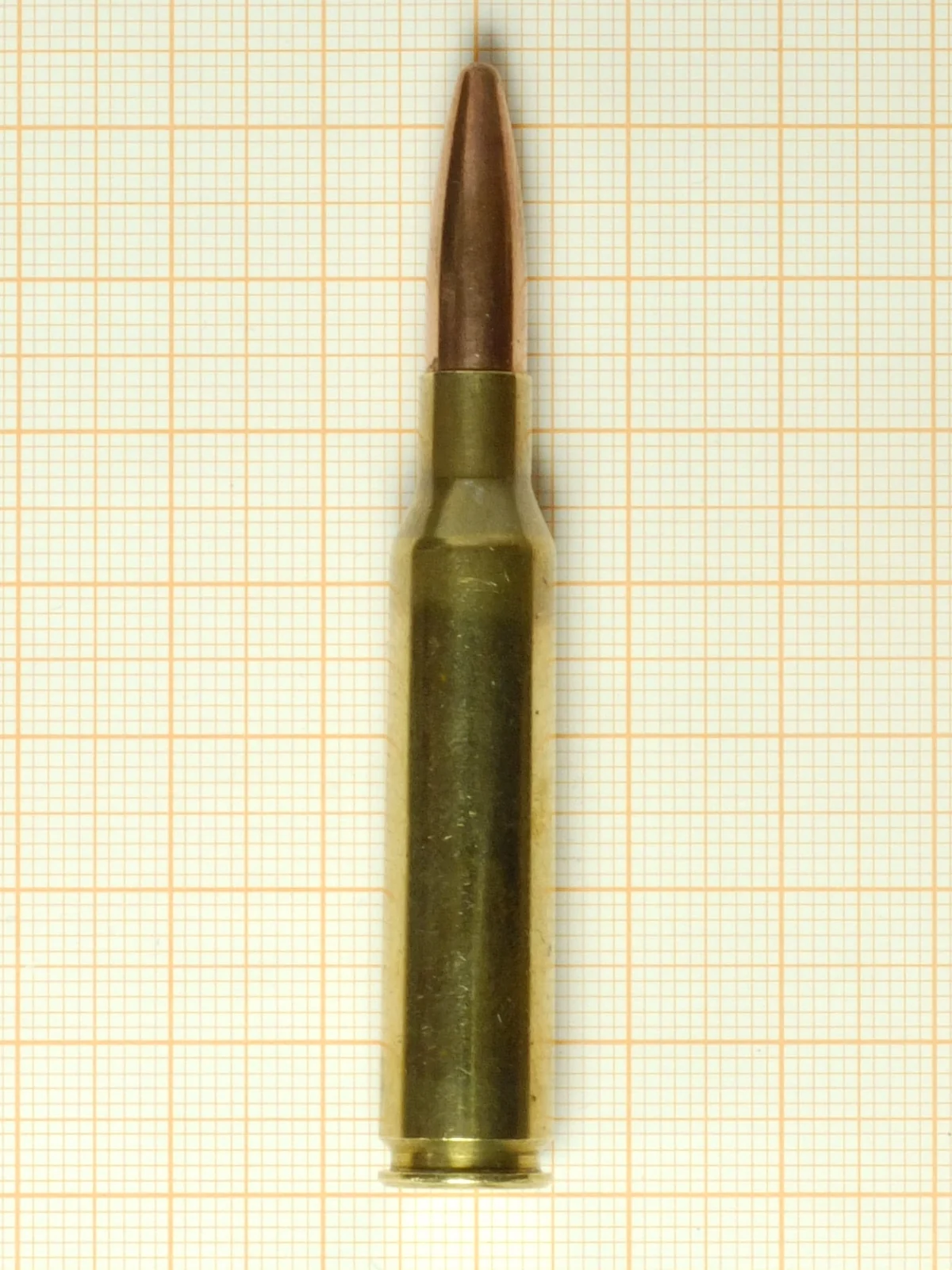
Image credit
- Title
- File:Cartridge 6,5mm Carcano CC BY-SA 4.0 by Grasyl.jpg
- Author
- Grasyl(attribution required)
- Licence
- CC BY-SA 4.0
- Source
- https://commons.wikimedia.org/wiki/File:Cartridge_6,5mm_Carcano_CC_BY-SA_4.0_by_Grasyl.jpg

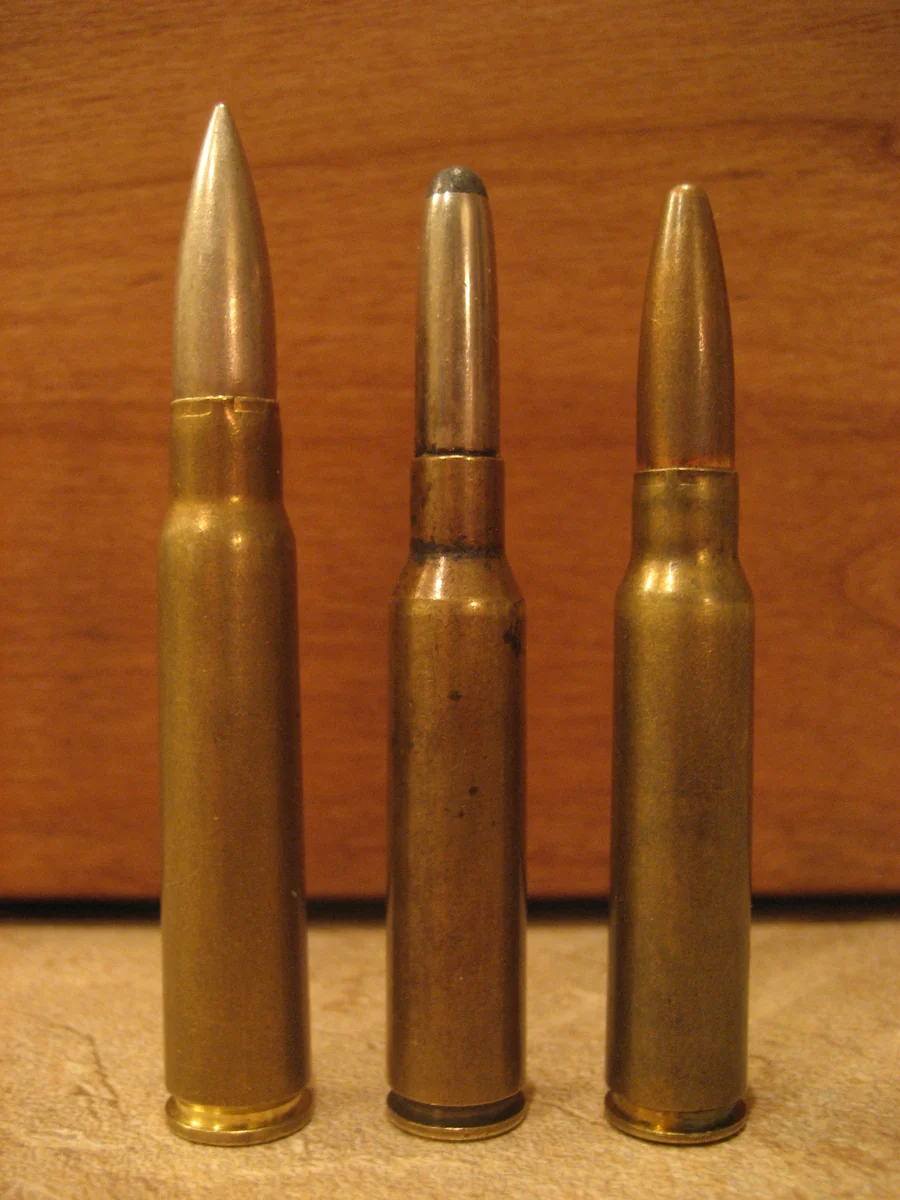
Image credit
- Title
- File:8mm, 7.35mm, 6.5mm.JPG
- Author
- Derek280
- Licence
- Public domain
- Source
- https://commons.wikimedia.org/wiki/File:8mm,_7.35mm,_6.5mm.JPG

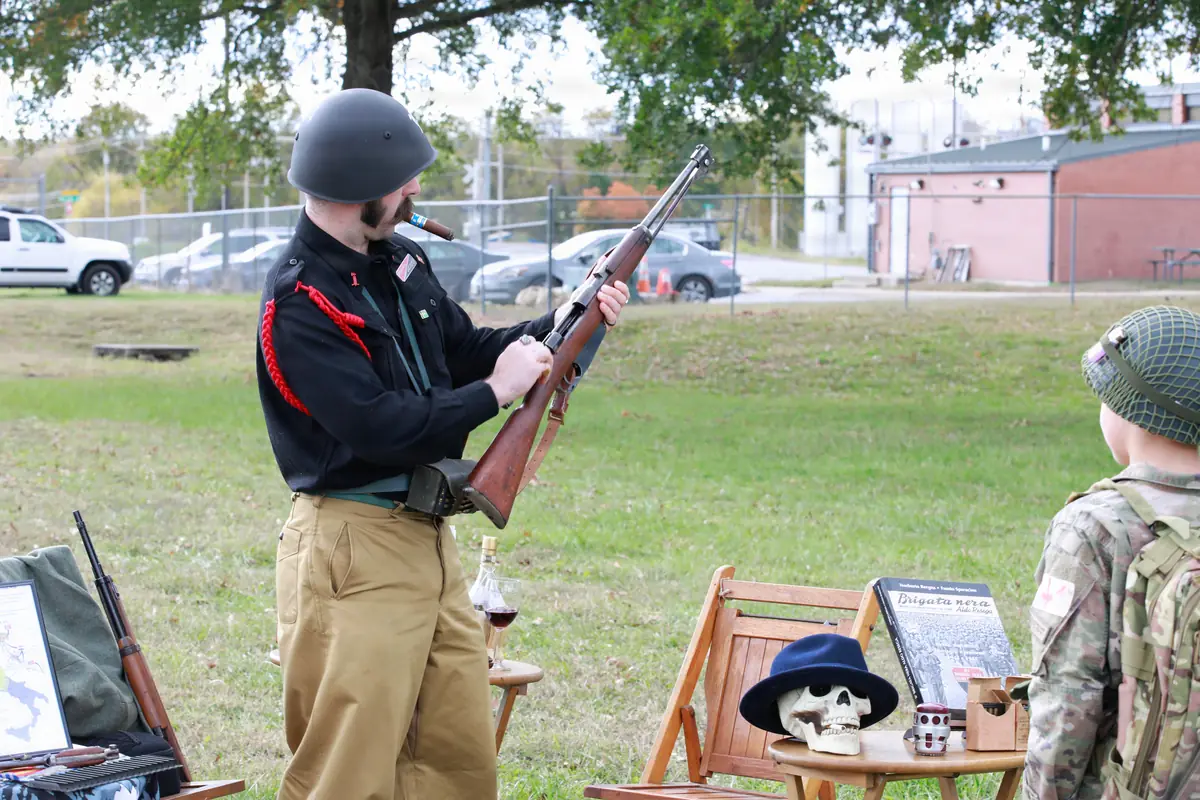
Image credit
- Title
- Museum of Missouri Military History's Annual Military Appreciation Weekend
- Author
- Spc. Kevin Norton
- Licence
- Public domain
- Source
- https://www.dvidshub.net/image/9407971/museum-missouri-military-historys-annual-military-appreciation-weekend
- Note
- Work of the United States Government, uncopyrighted under 17 U.S.C. §105: photographed for the Army (70th Mobile Public Affairs Detachment), VIRIN 251101-A-MK636-6027. DVIDS states no separate licence per asset.
Detail
The 6.5×52mm Carcano is the rimless bottleneck rifle cartridge Italy adopted in March 1890 for what became the Model 1891 Carcano rifle, developed under Italy’s Commissione delle Armi Portatili after that body’s Reale Laboratorio Pirotecnico di Bologna tested bullet diameters from 6 to 8mm. Major Antonio Benedetti of the Brescia Arsenal argued successfully for the smaller-bore option, and the cartridge was standardised a year before the rifle built around it. Italy’s original propellant loading proved too hot-burning and unstable in the field, and after testing several alternatives, including a British option, the state’s own explosives works in Liri developed a new, more stable formulation that was adopted in 1896 and remained unchanged for the rest of the cartridge’s military production.
The Carcano round was the first of a family of comparable small-bore military cartridges adopted by several European armies around the turn of the twentieth century, a group that also includes Japan’s 6.5×50mm Arisaka, the Dutch and Romanian 6.5×53mmR, Greece’s 6.5×54mm Mannlicher–Schönauer, Sweden and Norway’s 6.5×55mm, and Portugal’s 6.5×58mm Vergueiro. Its rifle’s adjustable rear sight was graduated for volley fire out to 2,000 metres, reflecting the massed-fire infantry doctrine of the period rather than a claim about aimed accuracy at that range. It remained in Italian service from 1891 until 1970, seeing use in Italy’s colonial wars, both world wars and the Spanish Civil War, and it was also used by Finland and by German forces that captured Italian stocks during the Second World War.
The dimensional and pressure figures on this page come from C.I.P.’s datasheet for the cartridge. That sheet publishes no velocity, so the two velocity points here, one for a full-length rifle barrel and one for a carbine-length barrel, are the uncited figures from the encyclopedia article and are recorded as estimates. No manufacturer’s current factory-ammunition velocity was found.
References
- 6.5×52mm Carcano · 1364147917 · read 2026-09-24
- C.I.P. TDCC datasheet — 6,5 x 52 Carcano · 2014-05-20 · read 2026-09-24
Last verified 2026-09-24 · review status: agent-populated