
.577 Snider
Introduced 1866Edward Mounier Boxer
Also known as 14.7×51mm: the same cartridge under different names, all of which find this page.
Dimensions and pressure
Generated from the schema, like every specification table on this site, so a figure recorded on this entry cannot be missing from the table.
Identity
- Designed by
- Edward Mounier Boxer
- Introduced
- 1866
- Production
- not recorded
- Standards body
- No standards body
- Case type
- Rimmed
- Case shape
- Straight
Dimensions
- Bullet diameter
- 14.48 mm0.5701 inestimated
From the Wikipedia infobox, uncited there (.570 in).
- Bore diameter
- not recorded
- Case length
- 50.8 mm2.000 inestimated
From the Wikipedia infobox, uncited there (2.0 in).
- Overall length
- 62.2 mm2.449 inestimated
From the Wikipedia infobox, uncited there (2.45 in).
- Rim diameter
- 18.97 mm0.7469 inestimated
From the Wikipedia infobox, uncited there (.747 in).
- Neck diameter
- 15.29 mm0.6020 inestimated
From the Wikipedia infobox, uncited there (.602 in).
- Base diameter
- 16.76 mm0.6598 inestimated
From the Wikipedia infobox, uncited there (.660 in).
Pressure
- Maximum pressure
- not recorded
- Pressure standard
- not recorded
SAAMI and C.I.P. measure pressure differently and their figures are not interchangeable, which is why the body is always named beside the figure.
Loads
Velocity is recorded per barrel length as published. A gun page interpolates between these points and never projects beyond them.
480 gr lead
- Bullet mass
- 31.1 g479.9 grestimated
From Wikipedia's lead sentence, uncited there (480 gr). A separate infobox figure gives 450 gr for a different loading; no source pairs either bullet weight with a stated test barrel length, so no velocity is recorded for this cartridge.
- Cartridge mass
- not recorded
- Bullet type
- lead
- G1 BC
- not recorded
- G7 BC
- not recorded
Chambered in
Computed from every entry that lists this cartridge. Nothing here is hand-maintained.
No entry on the site is chambered in it yet.
Gallery
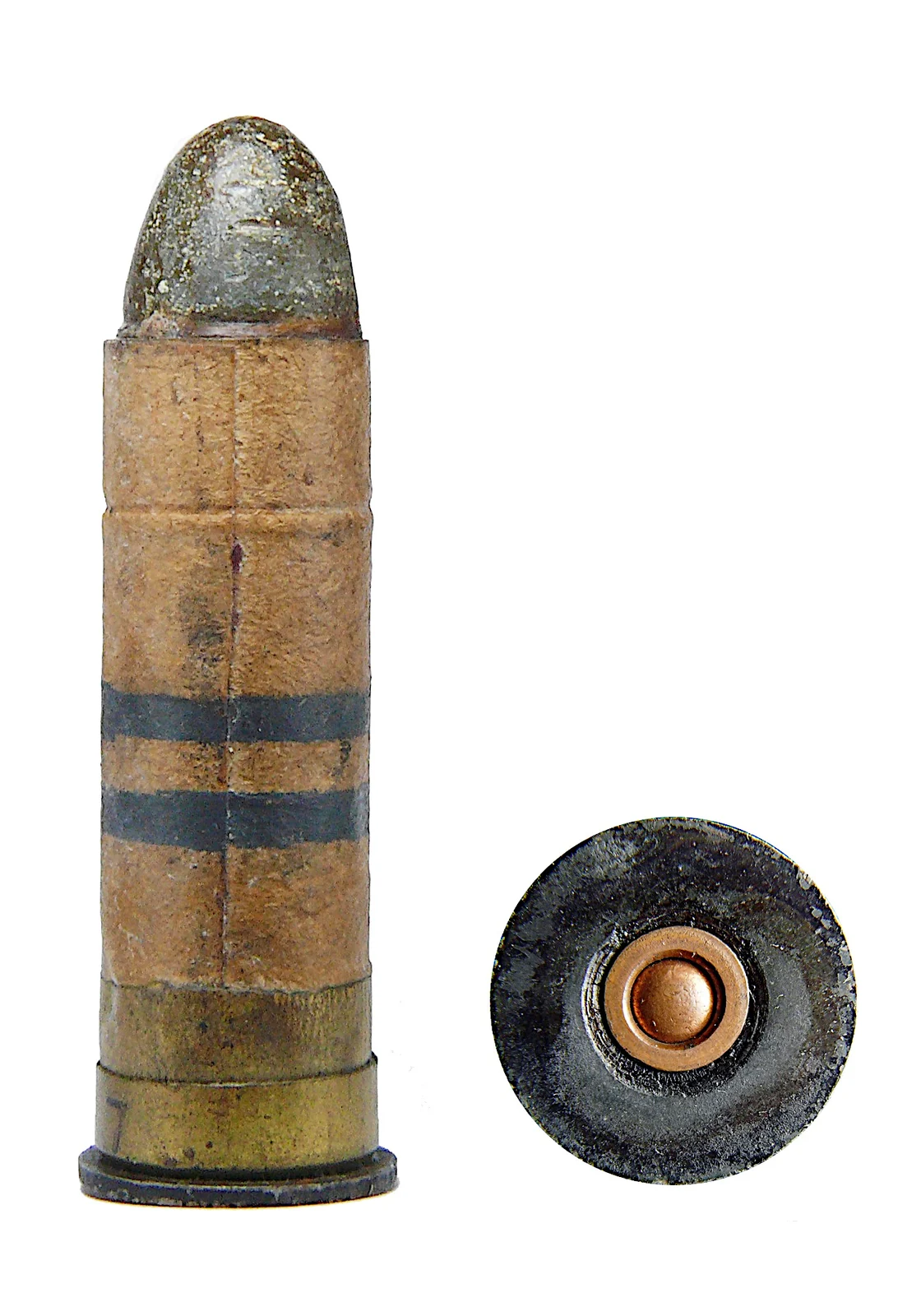
Image credit
- Title
- File:577 Snider uk 1869 MkVIII.jpg
- Author
- Jim Miles(attribution required)
- Licence
- CC BY-SA 4.0
- Source
- https://commons.wikimedia.org/wiki/File:577_Snider_uk_1869_MkVIII.jpg

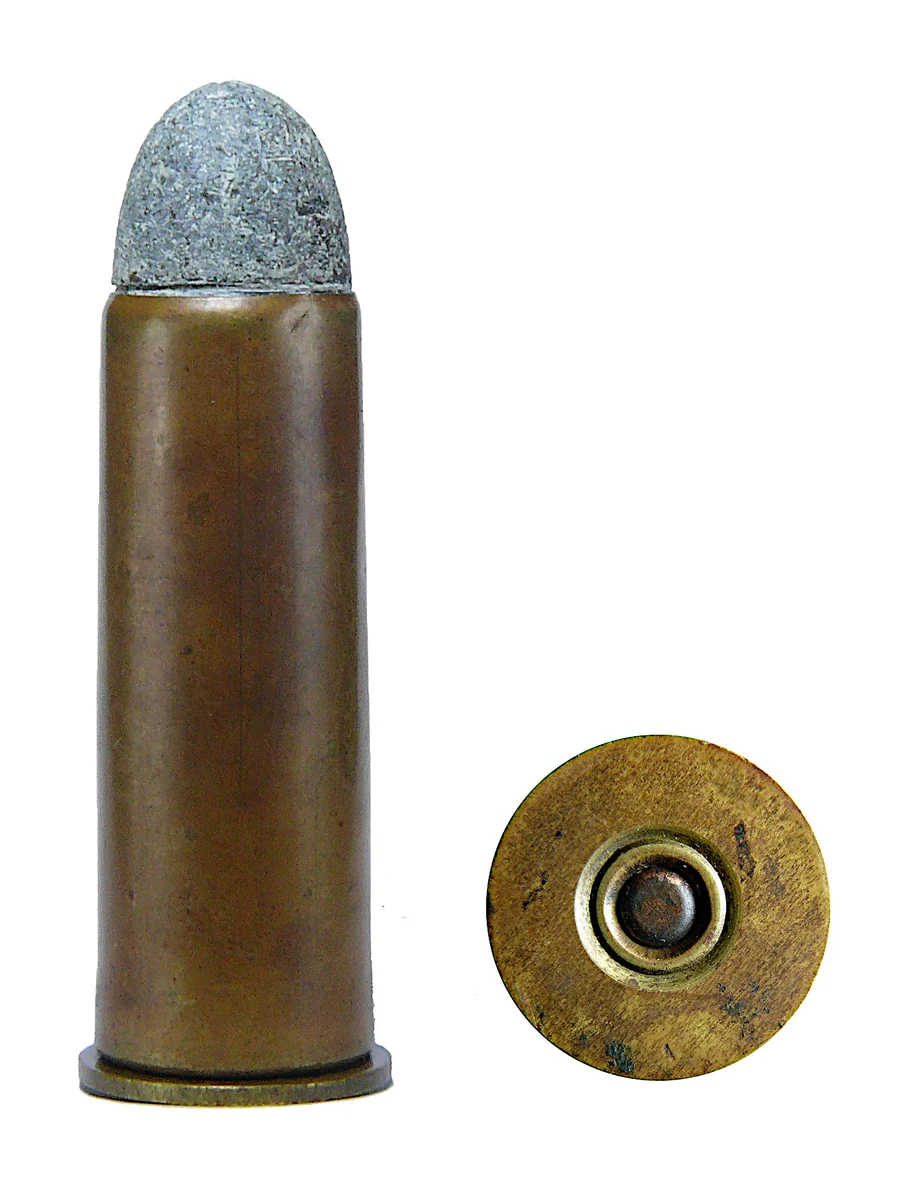
Image credit
- Title
- File:577 Snider nz 1886 D type.jpg
- Author
- Jim Miles(attribution required)
- Licence
- CC BY-SA 4.0
- Source
- https://commons.wikimedia.org/wiki/File:577_Snider_nz_1886_D_type.jpg

Detail
The .577 Snider is a British black-powder centrefire cartridge, designed in 1866 by Colonel Edward Boxer, Superintendent of the Royal Arsenal at Woolwich, specifically for the Snider–Enfield rifle, itself a conversion of the earlier Pattern 1853 Enfield muzzleloader to breech-loading. Boxer built his cartridge on a construction London gunmaker George H. Daw had developed shortly before for a centrefire shotgun round: a metal cup holding the primer, pressed into the base of a case body, with a perforated papier-mâché wad around the primer pocket to let the priming flame reach the powder charge. Boxer combined that cup with a paper-covered brass foil case and patented the result in June 1866, a year ahead of Daw’s own patent on the underlying idea.
Early Snider cartridges proved fragile: the case tended to split at the metal cup or at the join between cup and case body when fired, causing misfires and jammed extraction. Boxer revised the design through Mark II and Mark III versions, and it was this later, sturdier construction that became the pattern for British military-issue Snider ammunition. The type served as Britain’s standard rifle cartridge only briefly, from 1866 to 1871, before the Martini–Henry and its .577/450 cartridge replaced it.
No free dimensional standard exists for a mid-Victorian black-powder military cartridge like this one, so every dimension on this page comes from Wikipedia’s own uncited infobox and is recorded as estimated. Two different bullet weights are given in different parts of the same Wikipedia article (480 grains in the lead and 450 grains in the infobox), and neither is paired with a stated test barrel length, so this page records only a bullet mass and no velocity.
References
- .577 Snider · 1374588267 · read 2026-09-24
Last verified 2026-09-24 · review status: agent-populated