
Sangria
Red wine steeped with orange, lemon and brandy, lengthened with soda just before serving.
The same macerated-fruit build on white wine and peach rather than red wine and orange, for a paler, lighter pitcher.
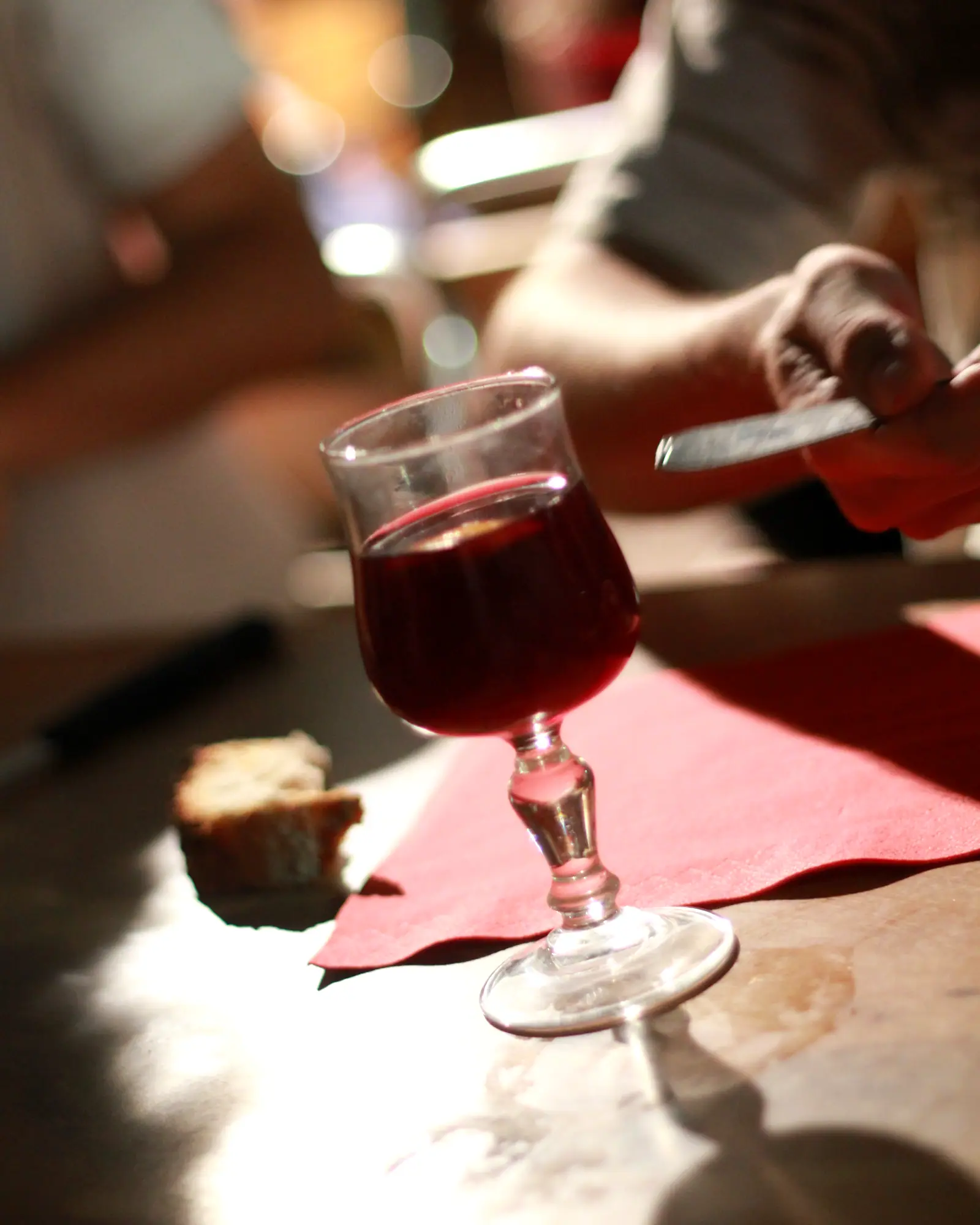

CC BY 3.0 · Cropped, white-balanced, graded and re-encoded to WebP by eXir.
A stemmed red wine glass filled with dark red sangria, on a red napkin with bread nearby
Serving
Drink spec, per drink
Every figure above is per drink and does not move with the count, which is what makes the two service modes comparable. Sugar per litre, strength and standard drinks stay in the units their own authorities publish, because they are figures for comparing rather than for pouring. Dilution is modelled rather than measured, as a fraction of the poured volume before any ice; dotted figures descend from that estimate.
Many red wines are fined with isinglass, gelatine or egg white or casein; unfiltered or vegan-labelled bottles are not. The finished wine contains at most a trace of the fining agent, but the label is the only way to know which was used for a given bottle.
Diet and allergen labels are computed from the ingredients listed on this page and nothing else. They cannot account for cross-contamination or for the particular product you buy, and they are not medical or safety guidance.
Ingredients
 300 ml red wine
 30 ml cognac
 20 ml simple syrup
 ½ orange (70 g)
 ½ lemon (29 g)
 40 ml soda water
- 300 ml red wine
- 30 ml cognac
- 20 ml simple syrup
- ½ orange (70 g)
- ½ lemon (29 g)
- 40 ml soda water
- ~44 ml water
Glass
Vessel
195 ml of liquid plus 170 ml of cubed ice occupies about 365 ml, inside the 600 ml the glass holds. The build fails if a recipe ever exceeds its stated vessel.
A batch needs a vessel that closes and fits a fridge shelf.
Drink spec, per drink
Every figure above is per drink and does not move with the count, which is what makes the two service modes comparable. Sugar per litre, strength and standard drinks stay in the units their own authorities publish, because they are figures for comparing rather than for pouring. Dilution is modelled rather than measured, as a fraction of the poured volume before any ice; dotted figures descend from that estimate.
White wine is routinely fined with isinglass, gelatine or casein, and a producer rarely states whether a given bottle was.
Diet and allergen labels are computed from the ingredients listed on this page and nothing else. They cannot account for cross-contamination or for the particular product you buy, and they are not medical or safety guidance.
Ingredients
 300 ml dry white wine
- 30 ml cognac
- 20 ml simple syrup
 40 ml white peach puree
- ½ lemon (29 g)
- 40 ml soda water
- 300 ml dry white wine
- 30 ml cognac
- 20 ml simple syrup
- 40 ml white peach puree
- ½ lemon (29 g)
- 40 ml soda water
- ~49 ml water
Glass
Vessel
215 ml of liquid plus 170 ml of cubed ice occupies about 385 ml, inside the 600 ml the glass holds. The build fails if a recipe ever exceeds its stated vessel.
A batch needs a vessel that closes and fits a fridge shelf.
Method
4 steps · 4h 1mCombine the 300 ml red wine, the 30 ml cognac, the 20 ml simple syrup, the ½ orange (70 g) and the ½ lemon (29 g) in a pitcher.
Refrigerate for 4h, stirring once or twice.
The fruit needs real time in the wine, not a quick stir, for its oils and juice to actually move into the liquid; a Sangria mixed and served within minutes tastes mostly of the 300 ml red wine and the 30 ml cognac with fruit floating in it rather than through it.
Pour over cubed ice into red wine glasses, dividing the fruit between them.
Top each glass with the 40 ml soda water.
Common pitfallThe 40 ml soda water is topped up per glass at the time of pouring rather than stirred into the pitcher; adding it early flattens before the drink is even served.
Keeping and make-ahead
Batched ahead, this keeps sealed and cold. The water line the engine adds is the dilution figure from the spec panel, not a rule of thumb.
Method
4 steps · 4h 1mCombine the 300 ml dry white wine, the 30 ml cognac, the 20 ml simple syrup, the 40 ml white peach puree and the ½ lemon (29 g) in a pitcher.
Peach stands in for the orange the red version is built on, chosen for white wine's own lighter, less tannic body, which a heavier citrus load would sit oddly against.
Refrigerate for 4h, stirring once or twice.
Pour over cubed ice into wine glasses, dividing the lemon between them.
Top each glass with the 40 ml soda water.
Keeping and make-ahead
Batched ahead, this keeps sealed and cold. The water line the engine adds is the dilution figure from the spec panel, not a rule of thumb.
About
Wine macerated with fruit and brandy, named for the Spanish word for blood after its red colour, with roots contested between an ancient wine-and-water tradition and an 18th-century Iberian coinage.
The name comes from the Spanish and Portuguese for "bloodletting," a reference to the drink's red colour, and Wikipedia dates the word's use for the drink specifically to the eighteenth century 1. A longer, looser lineage is traced further back by other accounts, to the Greek and Roman practice of cutting wine with water and flavouring it with whatever spice or fruit was on hand, partly because water alone was often unsafe to drink on its own 2. Spain's own wine tradition is dated by the same account to Phoenician vine planting around 1,100 BC, later expanded under Roman cultivation 2. Whether the drink served today is a continuous descendant of that ancient practice or a much later invention that merely resembles it is not settled between the sources.
Wikipedia traces a nearer precursor to medieval León, where a wine, orange, lemon, sugar and spice mixture nicknamed "Leonese lemonade" is identified as an ancestor, with the cocktail in something closer to its present form dated to the early nineteenth century and linked to sangaree, a similar wine punch drunk in the American colonies 1.
Sangria reached wide American attention through Spain's pavilion at the 1964 New York World's Fair, where it was served to a wide public audience and is credited with fixing the drink in American taste from that point on 2. Its status is now a matter of law rather than only custom: since 2014, European Union rules restrict the name "sangria" to wine drinks made in Spain and Portugal, with a defined minimum citrus content and an alcohol strength between roughly four and a half and twelve per cent; a similar drink made anywhere else must be sold under a different name inside the EU 1.
- 1Sangriaen.wikipedia.org
- 2The History Of Sangriavinepair.com