
Glogg
Red wine warmed with cardamom and cinnamon, fortified with aquavit and served with the raisins and almonds still in the glass.
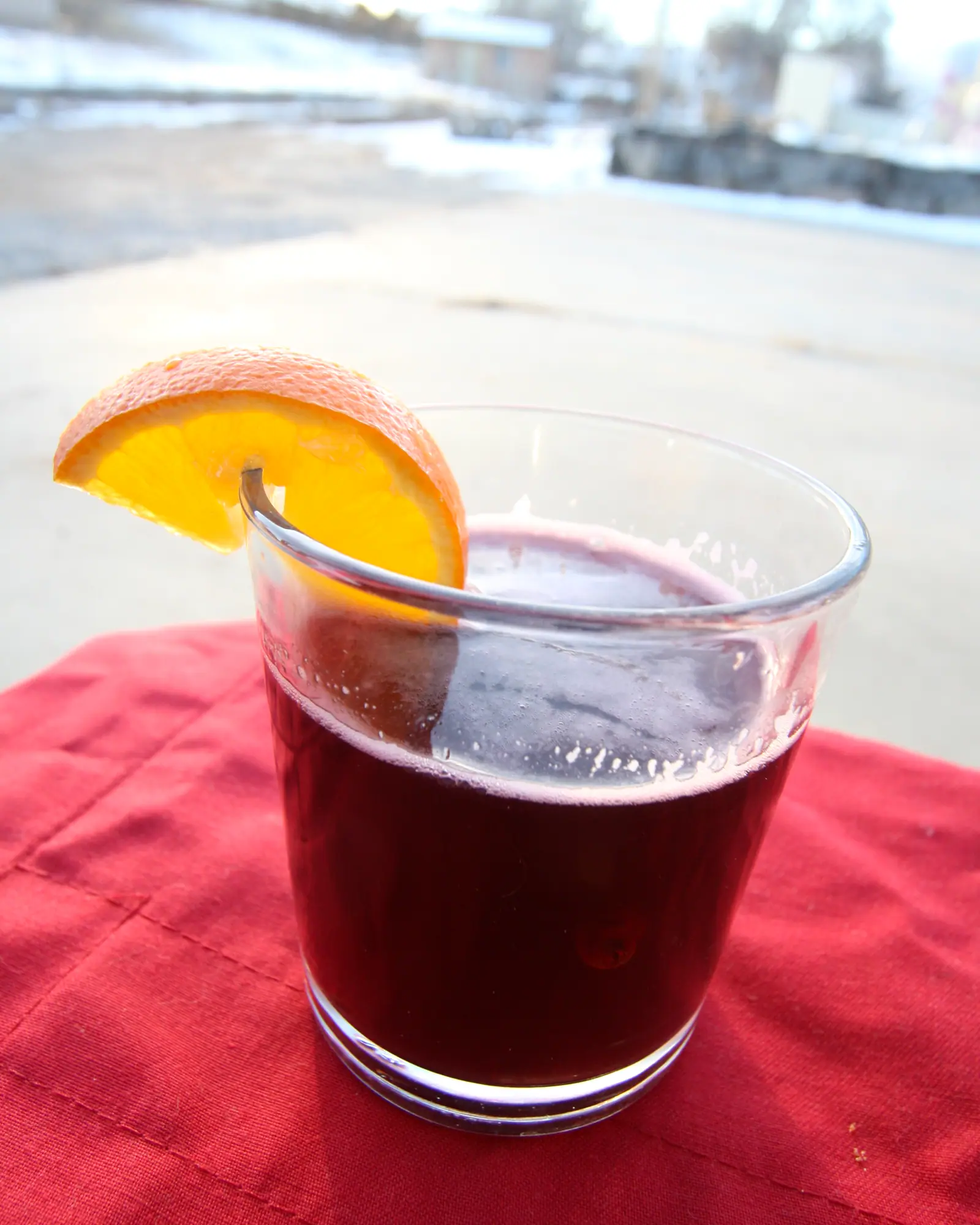

CC BY 2.0 · Cropped, white-balanced, graded and re-encoded to WebP by eXir.
A glass of dark red glögg mulled wine with an orange slice at the rim
Serving
Drink spec, per drink
Every figure above is per drink and does not move with the count, which is what makes the two service modes comparable. Sugar per litre, strength and standard drinks stay in the units their own authorities publish, because they are figures for comparing rather than for pouring.
Many red wines are fined with isinglass, gelatine or egg white or casein; unfiltered or vegan-labelled bottles are not. The finished wine contains at most a trace of the fining agent, but the label is the only way to know which was used for a given bottle.
Diet and allergen labels are computed from the ingredients listed on this page and nothing else. They cannot account for cross-contamination or for the particular product you buy, and they are not medical or safety guidance.
Ingredients
 240 ml red wine
 30 g demerara sugar
 2 g crushed cardamom pods
 4 g cinnamon bark
 1 g cloves
 ½ orange (20 g)
 45 ml aquavit
 12 g raisins
 10 g blanched almonds
- 240 ml red wine
- 30 g demerara sugar
- 2 g crushed cardamom pods
- 4 g cinnamon bark
- 1 g cloves
- ½ orange (20 g)
- 45 ml aquavit
- 12 g raisins
- 10 g blanched almonds
Glass
Vessel
152 ml of liquid, served without ice, inside the 350 ml the glass holds. The build fails if a recipe ever exceeds its stated vessel.
A batch needs a vessel that closes and fits a fridge shelf.
Method
3 steps · 15mWarm the 240 ml red wine with the 30 g demerara sugar, the 2 g crushed cardamom pods, the 4 g cinnamon bark, the 1 g cloves and the ½ orange (20 g) zest over low heat, then take it off the heat and let it steep, covered, for 10m.
Return to low heat and warm through for 5m, then stir in the 45 ml aquavit.
The wine is warmed gently rather than boiled, since a boil drives off the alcohol the 45 ml aquavit was added for and turns the spices bitter; it should steam without ever bubbling.
Divide the 12 g raisins and 10 g blanched almonds between mugs and strain the hot wine over them.
Common pitfallThe 12 g raisins and 10 g blanched almonds are eaten from the bottom of the cup with a small spoon once the wine is drunk, not strained out before serving; a Glogg poured through a strainer has left out half of what makes it this drink rather than a plain mulled wine.
Keeping and make-ahead
Batched ahead, this keeps sealed and cold. The water line the engine adds is the dilution figure from the spec panel, not a rule of thumb.
About
Spiced Swedish mulled wine fortified with aquavit and served with raisins and almonds in the cup, descended from a hot-wine tradition common to the Nordic countries since at least the sixteenth century.
Hot spiced wine has been drunk in the Nordic countries since at least the sixteenth century, and Glogg's name comes from the Swedish glödgat vin, literally "glow-heated wine" 1. One retelling credits King Gustav I Vasa, Sweden's sixteenth-century monarch, with popularising a version made from wine, sugar, honey and spices, and with a name that later contracted to Glogg 2; this is a widely repeated story rather than one traced to a contemporary document, and it is not addressed at all in some general accounts of the drink's history.
The recipe in something close to its modern form (built around cinnamon, cardamom, ginger and cloves) took shape in the nineteenth century and became especially associated with Sweden's Romantic period, when it settled into its role as a Christmas drink 1. Serving it with raisins and almonds spooned into the bottom of the cup is specifically dated to the twentieth century, alongside gingerbread biscuits and saffron buns as standard accompaniments 1.
What distinguishes Glogg from its German and British relatives is the addition of a spirit (vodka, aquavit, rum or brandy) stirred into the wine rather than left out, a detail that separates it from the plain, unfortified spiced wine served at German Christmas markets or in British mulled wine 1. The tradition spread beyond Sweden on this same shared Nordic base: Finland adopted its own glögi from the Swedish version toward the end of the nineteenth century, and Estonia took it up still later, in the 1980s and 1990s 1.
- 1Glöggen.wikipedia.org
- 2The History of Glögg and Its Global Reachcorkframes.com