American · Side · Main Course
Macaroni and Cheese
Boiled macaroni bound in a mustard-sharpened cheddar sauce, topped with more cheese and baked until the top browns. One serving is a generous side portion.
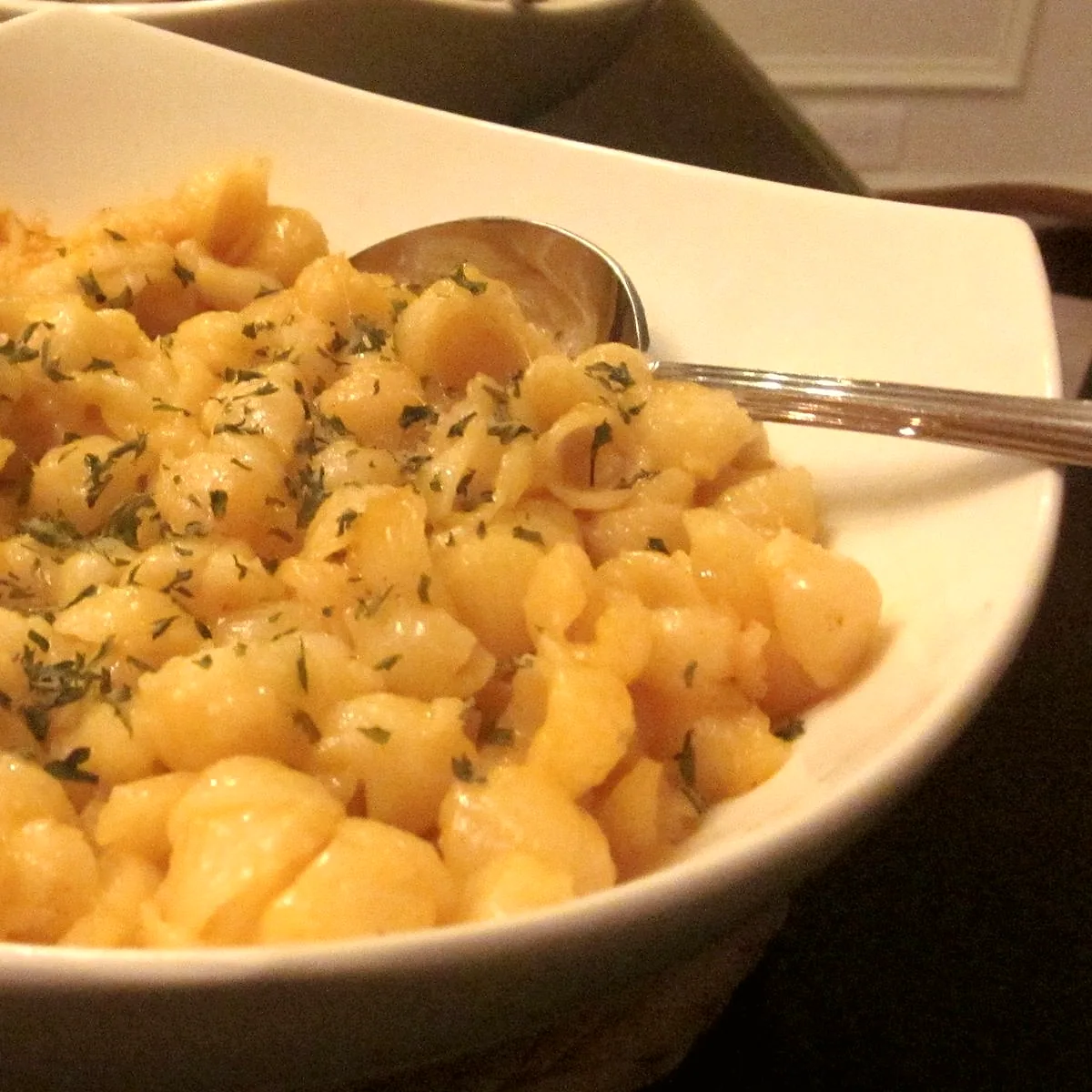
_(cropped).jpg)
CC BY-SA 2.0. Cropped and colour-adjusted for this site.
The same dish, adapted. Every quantity, time and figure below changes with the version.
Method
Bring the 3 L water to a rolling boil in a large pot, then add the 20 g fine sea salt.
Add the 300 g macaroni and cook for 9m, two minutes short of whatever the packet suggests, so it still has a firm bite. Drain well.
Common pitfallMacaroni cooked fully soft before it meets the oven turns to mush once baked in sauce. It should still have a firm bite when drained, since the bake finishes cooking it through.
While the pasta cooks, melt the 50 g unsalted butter in a separate pan and whisk in the 35 g plain flour, cooking over a low heat for 3m until smooth and no longer smelling raw.
Cooking the butter and flour together before the milk goes in is what stops the finished sauce tasting of raw flour, and it is the same principle behind any roux-based sauce.
Whisk the 450 ml milk into the roux gradually, working out any lumps, and cook over a medium heat for 8m, until thickened enough to coat the back of a spoon. Off the heat, stir in the 3 g mustard powder, the 220 g sharp cheddar, the 2 g fine sea salt and the 2 g ground white pepper until the cheese has melted into a smooth sauce.
Stir the drained macaroni through the cheese sauce and turn it into a buttered baking dish. Scatter the 60 g sharp cheddar evenly over the top, over 5m.
Bake at 200 °C for 20m, until the top is golden and bubbling at the edges.
Method
Bring the 3 L water to a rolling boil in a large pot, then add the 20 g fine sea salt.
Add the 300 g macaroni and cook fully through, until tender rather than firm to the bite, over 11m, since this version has no second cooking stage in the oven. Drain well.
While the pasta cooks, melt the 50 g unsalted butter in a separate pan and whisk in the 30 g plain flour, cooking over a low heat for 3m until smooth and no longer smelling raw.
Whisk the 500 ml milk into the roux gradually, working out any lumps, and cook over a medium heat for 8m, until thickened enough to coat the back of a spoon. Off the heat, stir in the 3 g mustard powder, the 280 g sharp cheddar, the 2 g fine sea salt and the 2 g ground white pepper until melted into a smooth sauce.
Stir the drained macaroni through the sauce until every piece is coated, over 3m, and serve at once.
Common pitfallSauce that looks right in the pan tightens noticeably once the macaroni sits, so it is stirred through and served straight away rather than left to stand.
Baked pasta and cheese has an Italian paper trail going back to the medieval cookbook Liber de Coquina, and the dish reached American tables by way of France rather than directly from Italy [2]. The credit for its American arrival is usually given to Thomas Jefferson, who owned a macaroni-making machine and served the dish at Monticello and at the President's House [1]. That framing understates the person who actually made it happen.
James Hemings, enslaved by Jefferson from childhood, travelled with him to Paris in 1784 and trained there under French chefs, including time with the caterer Monsieur Combeaux and in the kitchen of the Prince de Condé [2]. It was this training that let Hemings adapt the French version of macaroni and cheese into the dish Jefferson's household became known for; Jefferson supplied the opportunity and the imported ingredients, but the culinary skill and the cooking itself were Hemings's. Jefferson agreed to free Hemings in a 1796 deed of manumission, on the condition that he first train a replacement cook; Hemings died in 1801, several years after gaining his freedom [2].
The dish's later, thoroughly American form (elbow macaroni bound in a stovetop or baked cheese sauce rather than the French original's dressing) developed over the following century as cheddar and processed cheeses became the more common household cheeses, well after Hemings's own version had already established the dish at the American table.
Sources
- Macaroni, Thomas Jefferson's MonticelloMonticello's own encyclopedia entry on macaroni at Jefferson's table and the machine he had built to make it.
- Mac and Cheese Origin: Brought to America by a Founding Father's Slave, HistoryNetOn James Hemings's training in France and his role in bringing macaroni and cheese to Jefferson's household.