West African · Side
Fufu
Boiled cassava and green plantain pounded together into a smooth, stretchy dough, eaten in torn pieces alongside a soup or stew.
Not the same asPounded yam (Made from boiled yam alone rather than cassava and plantain, with a denser, less elastic result. It is a related but separate West African staple.)
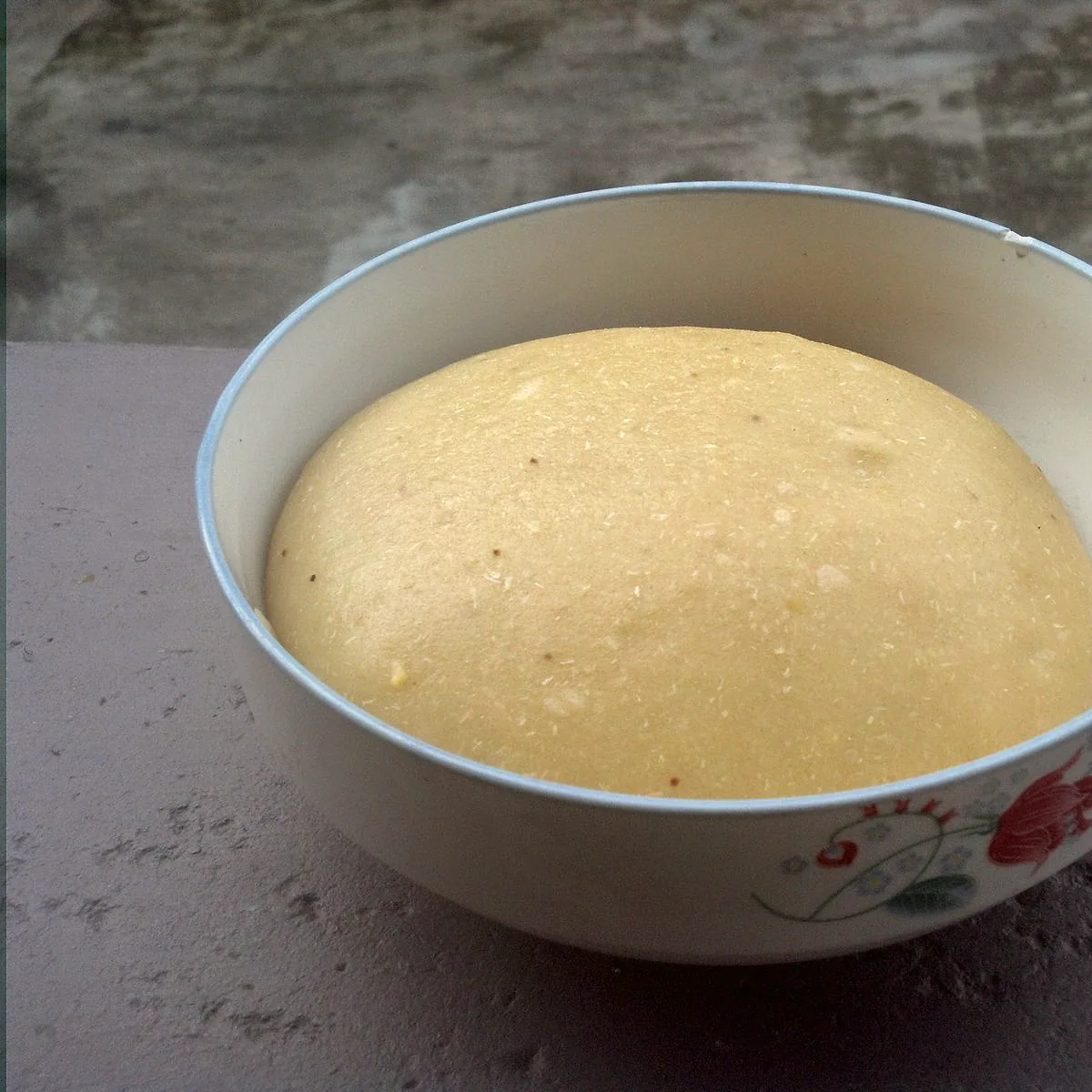

CC BY-SA 4.0. Cropped and colour-adjusted for this site.
The same dish, adapted. Every quantity, time and figure below changes with the version.
Method
Put the 700 g raw cassava and 350 g green plantain into a large pot, cover generously with water and bring to the boil. Cook for 30m, until both are completely soft and a knife slides through with no resistance. Drain, keeping back a little of the cooking water.
Common pitfallCassava and plantain cook at different rates. Cutting the cassava into smaller pieces than the plantain lets both finish soft at the same time instead of leaving one half-cooked.
Turn the drained cassava and plantain into a large mortar and pound with a pestle, turning and folding the mass between strokes and working in a splash of the reserved water now and then. Continue for 18m, until the dough is smooth, stretchy and free of lumps, and pulls away from the sides of the mortar as one piece.
The dough is worked until it turns smooth and elastic and pulls cleanly away from the sides of the mortar in one mass; that single change in behaviour, not a timer, is what tells you it is done.
Wet your hands and divide the dough into portions, shaping each into a smooth, rounded mound. This takes 5m. Serve warm, alongside a soup or stew.
Method
Peel the cocoyam corms and put them into a large pot along with the 250 g raw cassava, cover generously with water and bring to the boil. Cook for 30m, until both are completely soft and a knife slides through with no resistance, then drain to give the 600 g boiled cocoyam.
Turn the cocoyam and cassava into a large mortar and pound with a pestle, turning and folding the mass between strokes. Continue for 18m, until the dough is smooth, stretchy and free of lumps, and pulls away from the sides of the mortar as one piece.
Common pitfallCocoyam alone pounds into a mass too slack and sticky to hold its shape. The smaller quantity of cassava worked in alongside it is what gives the dough enough structure to form into a mound.
Wet your hands and divide the dough into portions, shaping each into a smooth, rounded mound. This takes 5m. Serve warm, alongside a soup or stew.
Fufu takes its name from Twi, the Akan language of Ghana, where historian Miller reads fufu as meaning simply "white", a plausible description of the pale, pounded cassava dough most associated with the dish today [1]. That association with cassava is, on the timescale of the dish itself, a recent one. West African communities had been pounding starchy roots into a smooth dough for a very long time before cassava arrived at all, working with whatever the region offered: yam, plantain and cocoyam chief among them [2].
Cassava only enters the story in the sixteenth century, brought across the Atlantic from South America by Portuguese traders [1]. It proved easier to grow than yam on poor soil and more resistant to drought, and in southern Ghana it gradually settled into a partnership with plantain rather than replacing the older starches outright; the pairing used here is that same cassava-and-plantain combination [1]. Elsewhere the balance tipped differently: fufu made solely from fermented cassava is the norm in much of Nigeria, while cocoyam remains the base, alongside cassava, in other parts of the region [1]. The pounding itself (starch and water worked by hand until it turns elastic and pulls cleanly from the mortar) is the one constant across all of these, older than any particular root that goes into it.
Sources
- Fufu, WikipediaAttributes the Twi word and its likely "white" meaning to the Akan peoples of Ghana, and covers the Portuguese introduction of cassava and the resulting regional variation in base starch.
- Where Is Fufu From? The Origins of Africa's Beloved Staple Food, RemitlyCorroborates fufu's likely Ghanaian origin and the long pre-cassava history of pounding yam, plantain and cocoyam into a smooth starch.