American · Breakfast
American Waffles
A baking-powder batter cooked in a deep-pocketed iron, in the American style commercially renamed "Belgian" in the 1960s. One serving is one waffle.
Also known asBelgian waffles · United States
Not the same asBelgian waffles (The yeasted Brussels and Liège waffles of Belgium itself, whose name this American baking-powder waffle borrowed.)
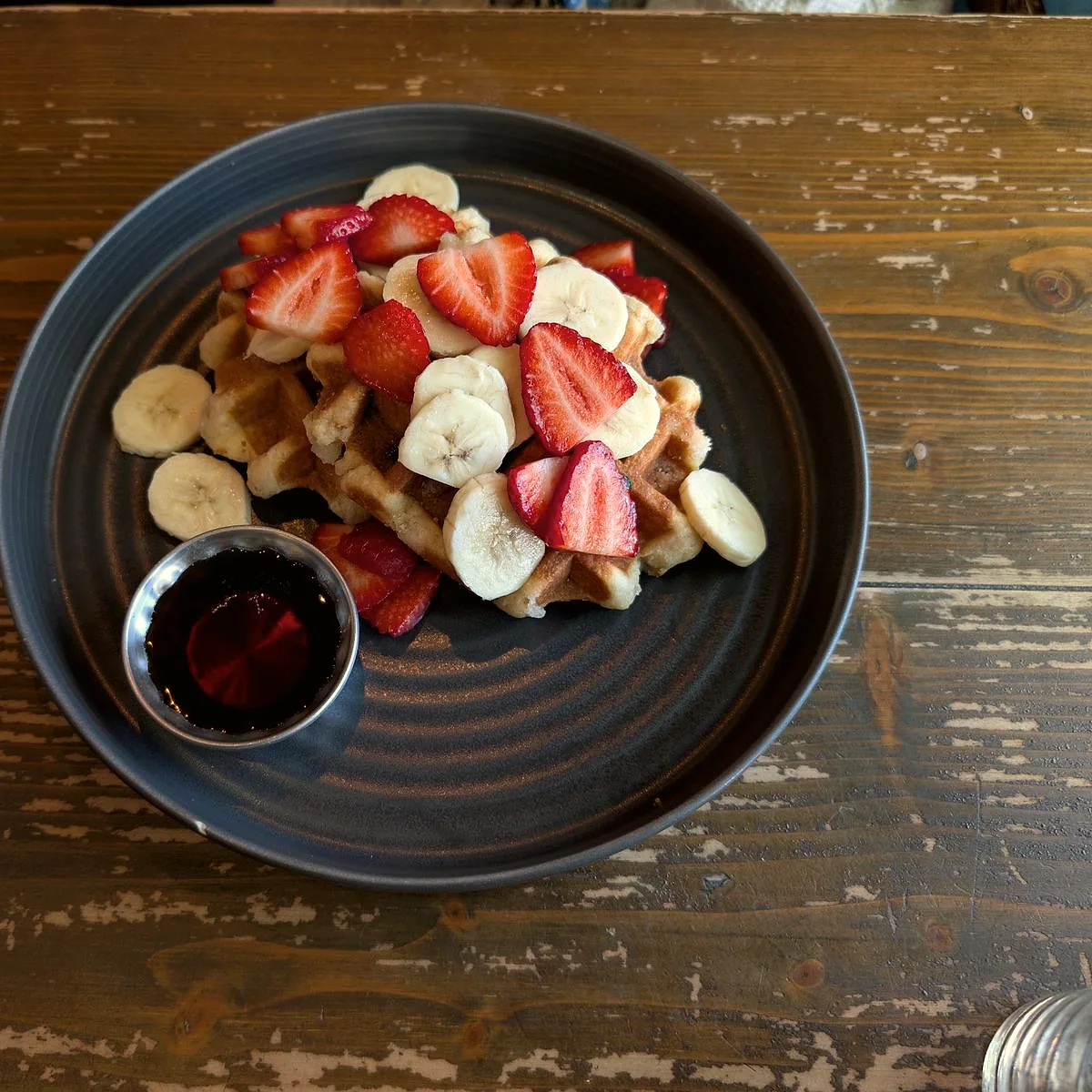

CC0. Cropped and colour-adjusted for this site.
Method
Heat the waffle iron and brush it lightly with butter, allowing 5m for it to come fully up to temperature.
Whisk the 250 g plain flour, 10 g baking powder, 3 g fine sea salt and 25 g caster sugar together in a large bowl.
Beat the 2 eggs (100 g) with the 400 ml milk, the 60 g unsalted butter and the 5 ml vanilla extract, then pour this into the dry ingredients and stir over 4m, mixing only until the last streaks of flour disappear; a few small lumps are no fault.
Common pitfallOvermixing once the wet and dry ingredients meet develops gluten the batter has no use for, giving a dense, chewy waffle instead of a light one with a crisp shell.
Ladle batter into the hot iron and cook until deep golden and crisp, releasing easily from the plates. Repeat with the remaining batter, spending 20m in total, and serve each waffle as soon as it is done.
American waffle-eating predates any Belgian connection by close to two centuries. Dutch settlers brought wafel irons to the colonies, and Thomas Jefferson returned from his posting in France in 1789 with several waffle irons of his own, reportedly sparking a fashion for "waffle frolic" parties once he was back home [3]. What is sold in the United States today as a "Belgian waffle" (thick, made from a lighter batter, with noticeably deeper squares than the older American griddle waffle) is a much newer invention with a traceable start date.
At the 1964 World's Fair in Flushing, Queens, Maurice and Rose Vermersch ran a stand selling a yeast-raised Brussels waffle topped with strawberries and whipped cream, serving reportedly thousands a day [1]. Believing American visitors would not recognise "Brussels" as a place, the family renamed the item after the country instead, and "Belgian waffle" stuck [2]. The Vermersches had tested the format two years earlier at the 1962 Seattle World's Fair before bringing it to New York [2].
The waffle eaten at most American breakfast tables today is a hybrid of both threads: thinner and less yeasted than a true Brussels waffle, but deep-pocketed in a way the American waffle iron sold before the 1964 fair did not produce [2], and still carrying the borrowed name.
Sources
- Belgian Waffles And Queens' 1964 World's Fair Retro-Futurism, ForbesOn the Vermersch family's Bel-Gem waffle stand at the 1964 New York World's Fair.
- How The 1964 World's Fair Helped Popularize The Belgian Waffle, Tasting TableDescribes the renaming of Brussels waffles to "Belgian waffles" for an American audience.
- A Brief History of Waffles, TimeOn Thomas Jefferson's return from France with waffle irons and the "waffle frolic" parties that followed.