Brazilian · Snack
Acarajé
A Bahian fritter of skinned, ground black-eyed peas, whipped light and deep-fried in red palm oil until the crust turns a deep, cracked orange-brown.
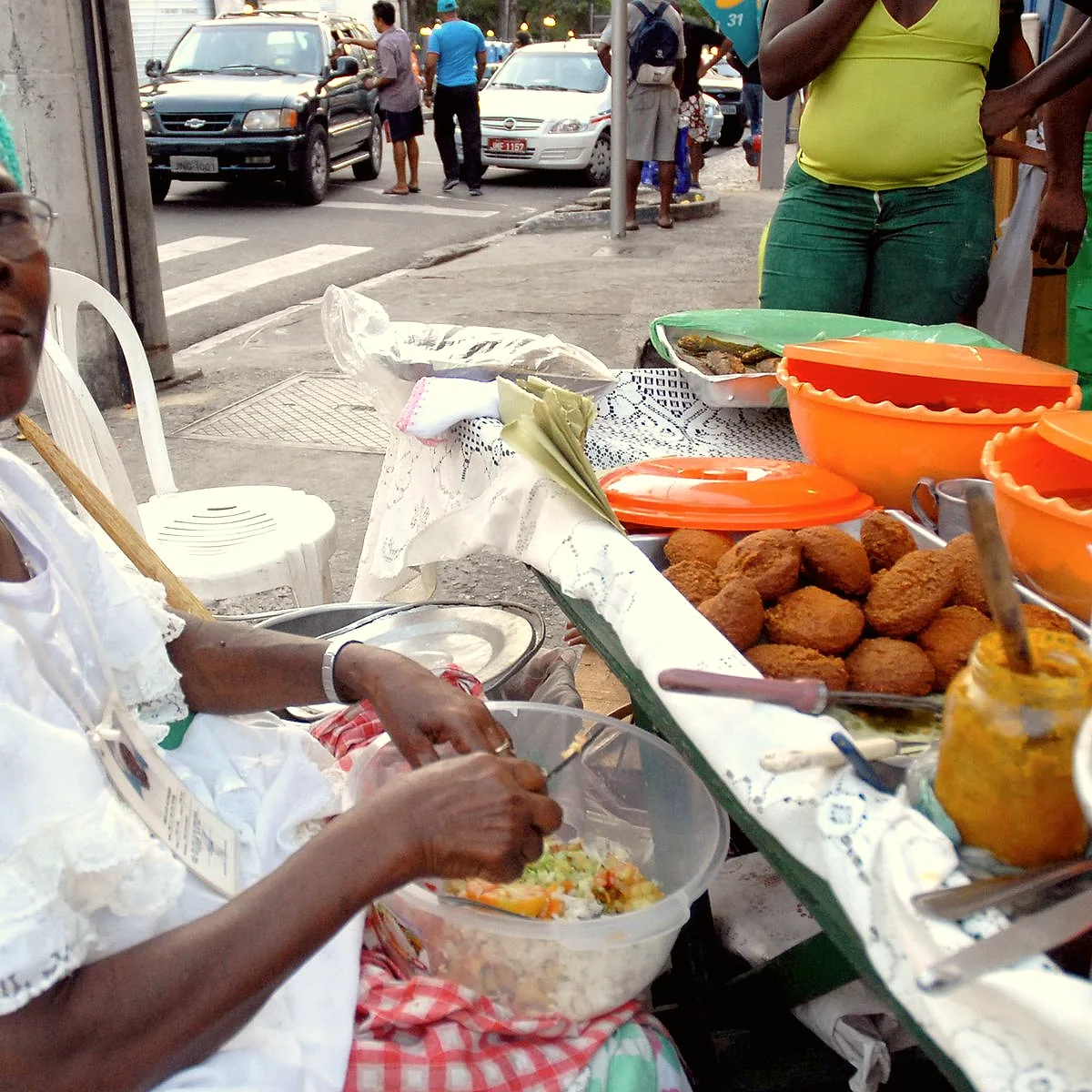

CC BY 3.0 br. Cropped and colour-adjusted for this site.
Method
Cover the 300 g black-eyed peas with the 900 ml water and leave to soak for 12h.
Rub the soaked peas between your hands in their soaking water to loosen the skins, then skim off and discard the skins as they float free. Drain the peas and grind them with the 100 g yellow onion and the 20 g dried shrimp to a smooth, thick paste, working for 30m. Season with the 7 g fine sea salt.
Common pitfallLeftover skins in the ground paste make it grainy and stop it holding air when whipped. Rubbing the soaked peas between the hands in their soaking water floats the skins free so they can be skimmed off before draining.
Beat the paste hard with a wooden spoon or in a stand mixer for 10m, until it lightens noticeably in colour and holds a soft peak.
Beating air into the ground paste before frying is what gives acarajé its light, aerated crumb inside a cracked, crisp crust; an unbeaten paste fries dense and heavy.
Heat the 800 ml palm oil in a deep pan to a steady, gentle bubble. Shape spoonfuls of the paste into ovals with two spoons and lower them in. Fry for 20m, turning once, until deep orange-brown and cracked on the surface. Lift out and drain.
The name comes from Yoruba: àkàrà, the fried bean fritter itself, and jẹ, to eat. This is a street vendor's call rather than a description, closer to "come and eat akara" than to a recipe title [1]. The fritter it names was brought to Brazil by enslaved Yoruba people during the transatlantic slave trade, along with the ingredients that still define it: black-eyed peas and palm oil, both African rather than native to Brazil [2].
In Bahia it took on two lives that still run alongside each other. As street food, it has been sold since the nineteenth century by the Baianas de acarajé: women, historically often enslaved or recently freed, who fried and sold it from trays and stalls, in some cases earning enough to buy family members' freedom [2]. In Candomblé, the Afro-Brazilian religion also carried over from West African belief, acarajé is not only eaten but offered, prepared as a ritual food for the orixás [1]. The two roles were never fully separate: the same fritter sold on a street corner in Salvador carries a devotional history most of its customers never have reason to think about.
The dendê palm oil it fries in is not a substitutable detail. Its colour and heavy, slightly bitter flavour are as much a part of what makes an acarajé an acarajé as the bean paste itself, which is why other West African and diaspora versions fried in a neutral oil are usually given a different name rather than called the same dish.
Sources
- Akara, WikipediaOn the Yoruba etymology of the name and the dish's transatlantic-slave-trade route from West Africa to Brazil, and its dual role as street food and Candomblé offering.
- Origin and History of Acarajé, Bahia.wsOn the nineteenth-century Bahiana street vendors and the dish's ingredients as African imports to Brazil.