
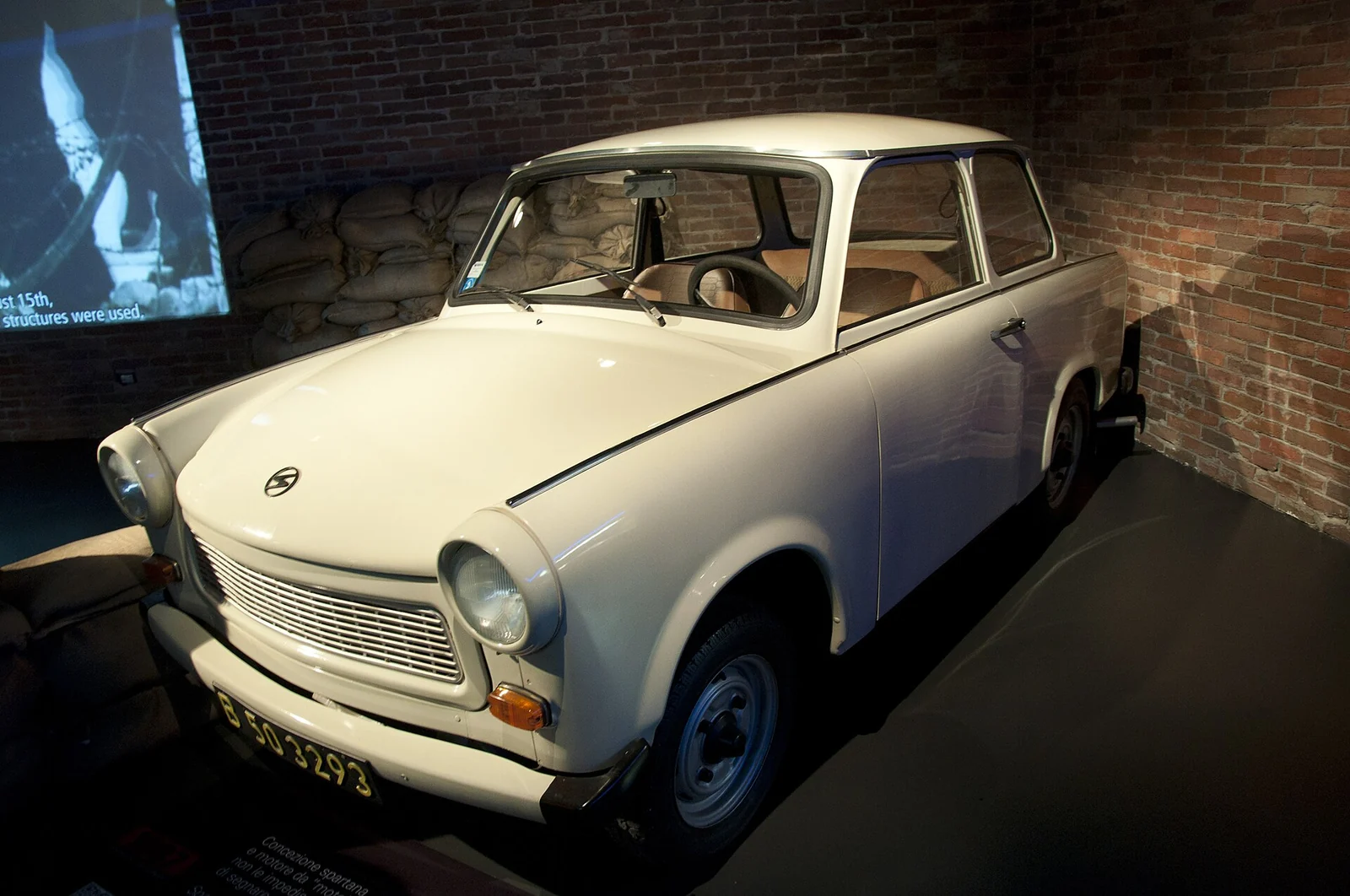
A 1964 restyle of the P60 (new front and rear ends, a new bonnet and roof pressing over the same P50 underpinnings) that the East German government kept in production, essentially unmodified, for 26 years while rejecting every more advanced replacement its own engineers designed, for want of the steel and aluminium a modern car would need.[1] Most of what made the Trabant a byword for stagnation dates from this generation: no tachometer, no fuel gauge, no external fuel filler, and a two-stroke engine that had to be fed a fuel/oil mix by hand at every fill-up, right up to the end of production in 1990.
A late change replaced that engine entirely. From 1989 the 601 was also sold, in parallel with the two-stroke original, as the 601 1.1, the same body with a licence-built Volkswagen Polo four-stroke engine, the product of a reunification-era trade deal between the two German states. It lasted eleven months before the car as a whole was discontinued.
The source states this generation’s top speed and its 0-100 km/h time as the same underlying fact (100 km/h took 21 seconds to reach, and 100 km/h was also as fast as the car went) rather than two independently measured figures, which is recorded here as a single data point rather than invented as two.